
Quick Overview: If You’re Searching For A “Battery Space Heater,” True Battery-Powered Models Are Limited. Most Portable Heaters Require AC Power Or Alternative Fuel; This Article Compares Compact Electric PTC Heaters And A Portable Propane Option That Work Best For Off-Grid Or Portable Scenarios When Paired With Appropriate Power Sources Or Outdoors-Safe Fuel.
| Product | Brand | Key Feature |
|---|---|---|
| Dreo Space Heater, Portable Electric Heaters With Thermostat | Dreo | 1500W PTC, Precise 41–95℉ Thermostat, Tilt Sensor |
| WINHL Small Portable Electric Heater With Oscillation | WINHL | 1500W PTC, Wide-Angle Auto Oscillation, Remote |
| VOCRS 1500W PTC Electric Heater With Thermostat | VOCRS | Three Power Modes, 1–12H Timer, Remote |
| Amazon Basics Ceramic Space Heater, 1500W | Amazon Basics | 1500W With Multiple Settings, Tip-Over/Overheat Protection |
| Mr. Heater Portable Buddy MH9BX (Propane) | Mr. Heater | 4,000–9,000 BTU Propane Radiant Heat, Indoor-Safe, No Electric |
Content Navigation
Dreo Space Heater, Portable Electric Heaters

Power And Heating Technology: Uses a Hyperamics 1500W PTC system with a heat funnel design for rapid warm-air delivery and extended circulation compared to basic ceramic units.
Safety Features: Includes tilt-detection sensor, V0 flame-retardant materials, overheat protection, and a safety plug. ETL certification is noted for electrical safety compliance.
Controls And Accuracy: Features an enhanced NTC chipset allowing thermostat adjustment from 41–95℉ in 1℉ increments, plus modes, digital display, remote, and a 12-hour timer.
Relevance To Battery Use: Designed for standard AC use; could be run from a high-capacity inverter and battery system if you plan off-grid operation. Consider inverter capacity and runtime before pairing.
Call 888-896-7031 for Free Local HVAC Quotes – Compare and Save Today!
Space Heater, WINHL Small Portable Electric Heaters

Heating Performance: 1500W PTC ceramic heating provides rapid heat-up. Built for bedrooms, offices, and small living rooms where quick localized warmth is needed.
Distribution And Convenience: Offers wide-angle automatic oscillation to spread heat more evenly across a space. Remote control allows adjustments without standing up.
Safety And Timers: Includes standard safety features such as tip-over and overheat protections and a 12-hour timer for scheduled shutoff.
Battery-Oriented Notes: As With Other 1500W Heaters, Power Draw Is Significant For Battery Use. Pairing With A Sufficient Inverter/Generator Or Using Short Bursts Of Heat Are Practical Options For Portable, Off-Grid Scenarios.
Small Portable Space Heater For Indoor Use – VOCRS

Call 888-896-7031 for Free Local HVAC Quotes – Compare and Save Today!
Mode Flexibility: Offers three heating settings (700W/1000W/1500W), which helps manage power consumption and adapt to smaller battery/inverter setups by choosing lower wattages.
Control And Schedule: Remote control and a 1–12 hour timer are included, plus an HD digital display for clear status feedback.
Safety: Typical protections include overheat and tip-over automatic shutoff for indoor safe operation.
Practical Off-Grid Use: The lower power modes make VOCRS more adaptable to limited power sources. Running at 700W or 1000W extends possible battery runtime versus constant 1500W operation.
Amazon Basics Ceramic Space Heater, 1500W

Options And Simplicity: Offers three modes — High (1500W), Low (900W), and Fan Only — letting users control heat and power draw based on needs.
Safety And Size: Compact and lightweight with built-in tip-over and overheat protection plus an indicator light. Designed for portability around a home or office.
Energy Management: The ability to select Low or Fan modes is helpful when operating from constrained power sources or when trying to reduce energy usage indoors.
Battery-Relevance: Low-power mode (900W) is more manageable for inverters and battery systems than a continuous 1500W load; still requires careful planning for battery capacity and inverter surge capability.
Mr. Heater Portable Buddy Heater MH9BX (Propane)
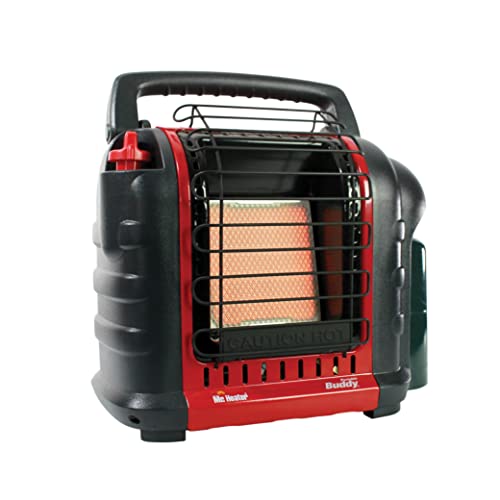
Off-Grid Heating Without Batteries: Uses propane to produce 4,000–9,000 BTU radiant heat and is designed as an indoor-safe propane heater with advanced safety features.
Ignition And Safety: Equipped with a Piezo igniter requiring no external electricity. Includes improved tip-over safety switch and features meant to improve safe operation in enclosed spaces (follow manufacturer ventilation guidance).
When To Choose Propane: Propane is a practical alternative when batteries or inverters are impractical. It provides significant heat output for workshops, campers, or situations where electrical infrastructure is unavailable.
Considerations: While labeled indoor-safe, propane heaters require adherence to ventilation, carbon monoxide awareness, and local codes. They are not a direct substitute if strict indoor electric-only policies apply.
Buying Guide For Battery-Oriented And Portable Heating
Power Source Options: Understand the main off-grid choices: battery + inverter, portable generator, or fuel-powered heaters (propane). Each has trade-offs in runtime, portability, noise, and safety.
Wattage And Battery Runtime: Calculate runtime by dividing battery capacity (Wh) by heater wattage (W), then adjust for inverter efficiency (~85–90%). Example: A 1500W heater on a 1000Wh battery provides limited runtime; lower heater settings extend battery life.
Inverter Sizing And Surge Capacity: Heaters have startup/surge currents. Choose an inverter rated above continuous heater wattage with adequate surge headroom to avoid trips or damage.
Lower-Power Modes Matter: Models With 700–1000W Modes Or Multiple Settings Offer Practical Battery Use. Lower modes reduce draw and extend run time while still providing targeted warmth.
Heat Distribution: Oscillation And Fan Distribution Help Heat Larger Areas More Evenly, Reducing The Need For High Continuous Output.
Safety Features: Look For Tip-Over Protection, Overheat Shutoff, Flame-Retardant Materials, And ETL/UL/CSA Certification For Electric Units. For Propane, Confirm Indoor-Safety Design And Follow Ventilation Guidelines.
Portability And Size: Consider weight, handle design, and footprint. Smaller personal heaters are easier to carry, while larger units deliver more heat but require stronger power sources.
Noise And Comfort: Fans And Oscillating Motors Produce Noise. Radiant Or PTC Heaters Often Offer Quieter Operation Than Forced-Air Systems.
Environmental And Safety Trade-Offs: Batteries And Inverters Produce Quiet, Clean Heat But Are Energy-Limited. Propane Delivers Substantial Heat Without Electricity But Requires Fuel Storage, Ventilation, And Carbon Monoxide Awareness.
Use Case Comparisons:
- Short-Term Personal Warmth (Desk/Small Room): Choose compact PTC or ceramic heaters with low-power modes for efficient, focused heating.
- Extended Off-Grid Use (No Electricity): Propane radiant heaters or a generator may be more practical than battery-only solutions unless you have large battery arrays and a capable inverter.
- Camping Or Travel With Limited Power: Consider propane heaters (where allowed) or 12V DC heating solutions designed for vehicles; standard 1500W AC heaters are typically impractical on small battery packs.
- Emergency Home Backup: Pair a compact heater with a dedicated inverter and a deep-cycle battery or portable power station; choose heaters with lower-wattage settings to extend runtime.
Maintenance And Durability: Keep heater grills and intake areas dust-free. For propane units, inspect fittings and hoses regularly and follow safe storage procedures for fuel canisters.
Final Practical Tips: Always read manufacturer instructions regarding power requirements and safe use. If planning to run an AC heater from a battery system, test the inverter-battery combination under load before relying on it in a real scenario.
Tips for Getting the Best HVAC Prices
- Prioritize Quality Over Cost
The most critical factor in any HVAC project is the quality of the installation. Don’t compromise on contractor expertise just to save money. - Check for Rebates
Always research current rebates and incentives — they can significantly reduce your overall cost. - Compare Multiple Quotes
Request at least three estimates before making your choice. You can click here to get three free quotes from local professionals. These quotes include available rebates and tax credits and automatically exclude unqualified contractors. - Negotiate Smartly
Once you've chosen a contractor, use the proven strategies from our guide — How Homeowners Can Negotiate with HVAC Dealers — to get the best possible final price.