
Choosing the right heater for a pole barn means balancing power, durability, safety, and installation type. The table below summarizes five top options selected for workshop, garage, and pole barn use.
| Product | Type | Power/Capacity | Mount/Portability |
|---|---|---|---|
| Dr. Infrared DR-966 | Electric Hardwired | 3000/6000W (240V) | Wall/Ceiling Mounted |
| TEMPWARE 5000W Garage Heater | Electric Hardwired | 3000/4000/5000W (240V) | Ceiling Mount |
| Mr. Heater Big Maxx MHU80NG | Natural Gas Unit Heater | 80,000 BTU (covers large areas) | Ceiling/Wall Unit — Requires Venting |
| Dura Heat EUH1465 | Forced Air Electric | 1500W / ~5,120 BTU | Portable With Pivoting Base |
| NewAir NGH160GA00 | Portable Garage Heater | 120V Ceramic Heating Plate — Heats ~160 sq ft | Portable/Tilt Head |
Content Navigation
- Dr. Infrared DR-966 240-Volt Hardwired Shop Garage Commercial Heater
- TEMPWARE Garage Heater Electric 240V 5000-Watt Ceiling Mount
- Mr. Heater F260560 Big Maxx MHU80NG Natural Gas Unit Heater
- Dura Heat EUH1465 Electric Forced Air Heater With Pivoting Base
- NewAir NGH160GA00 120V Electric Portable Garage Heater
- Buying Guide: Choosing The Right Heater For A Pole Barn
Dr. Infrared DR-966 240-Volt Hardwired Shop Garage Commercial Heater

This 240V hardwired electric heater is designed for heavier-duty garage and workshop environments. It offers selectable power at 3000W or 6000W in a single-phase configuration, making it suitable for medium to larger pole barns with adequate electrical service. The unit is UL/CUL listed and ships with mounting brackets for wall or ceiling installation.
Key features include heavy-duty construction and a bracket for secure mounting. The unit requires professional electrical connection since a power cord isn’t included. For barns with 240V supply and a desire to avoid combustion-based heating, this model provides continuous, forced-air electric heating without venting needs.
TEMPWARE Garage Heater Electric 240V 5000-Watt Ceiling Mount

The TEMPWARE 5000W ceiling-mounted heater is a hardwired 240V fan-forced option with adjustable louvers and three power settings (3000W, 4000W, 5000W). It includes a built-in thermostat, ECO mode, and a timer for automated operation, useful for managing runtime in a pole barn with varying insulation levels.
Call 888-896-7031 for Free Local HVAC Quotes – Compare and Save Today!
This unit emphasizes directed airflow and adjustable mounting angle to aim heat where needed. Safety features include overheat protection and a temperature sensor. The model is positioned for enclosed indoor use and works best when installed centrally or above work zones to distribute warm air efficiently.
Mr. Heater F260560 Big Maxx MHU80NG Natural Gas Unit Heater
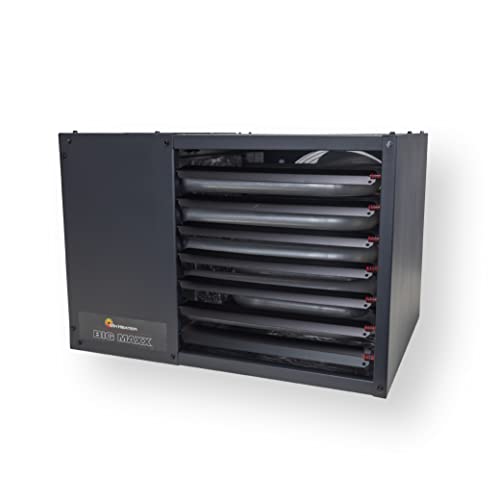
While not electric, the Mr. Heater Big Maxx is included for comparative perspective for large pole barns. It delivers 80,000 BTU and is rated to cover up to ~2,000 sq. ft. It requires a natural gas connection and provides high output for spaces where electric infrastructure is limited or where rapid, high-capacity heat is needed.
Included features include brackets for mounting and options for venting orientation. The heater operates with 120V controls for ignition and fan, but its primary heat source is natural gas. It requires proper clearances and ventilation planning, making it a practical alternative when electric supply or costs make high-power electric heating impractical.
Dura Heat EUH1465 Electric Forced Air Heater With Pivoting Base
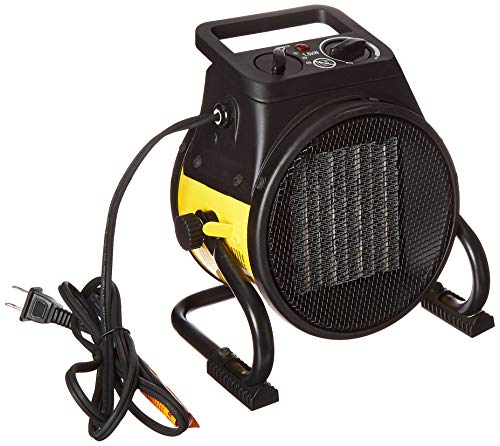
This compact forced-air heater supplies 1500W of ceramic PTC heating for fast, focused warmth. Constructed with a rugged steel body, it’s intended for small workspaces, tool zones, or as a supplemental source inside a pole barn.
Call 888-896-7031 for Free Local HVAC Quotes – Compare and Save Today!
It offers heat and fan-only settings and a pivoting base to aim warm air. The portability and lower electrical demand make it an option for barns without 240V service or as temporary/spot heating. For larger or poorly insulated barns, multiple units or a larger hardwired system will be necessary.
NewAir NGH160GA00 120V Electric Portable Garage Heater

The NewAir 120V portable heater features a ceramic heating plate and a powerful fan, designed to heat up to ~160 sq. ft. Safety features include cool-to-the-touch surfaces, internal thermostat, and automatic shut-off to reduce overheating risks.
Adjustable temperature control, two heat modes, and a tilting head make it suitable for targeted warming near work areas. It is best used in smaller, insulated sections of a pole barn or as short-term supplemental heating rather than whole-building primary heat for larger barns.
Buying Guide: Choosing The Right Heater For A Pole Barn
Selecting a heater for a pole barn depends on multiple factors. Consider the building size, insulation level, electrical service, installation complexity, and safety requirements.
Heating Capacity And Coverage
- Square Footage vs Output: For electric heaters, calculate required watts: roughly 10–15 watts per sq ft for basic comfort if the barn is insulated; more if uninsulated. For gas, use BTU ratings (e.g., 80,000 BTU for large spaces).
- Spot Vs Whole-Building Heating: Portable 120V or 1500W units excel at spot heating; hardwired 240V or gas units are better for whole-barn heating.
Fuel Type: Electric Versus Gas
- Electric Heaters: Simpler installation for portable units; hardwired 240V options require professional wiring but avoid combustion byproducts and venting.
- Gas Heaters: Higher output and lower operating cost in some regions; require gas hookup, venting, and clearances. Consider carbon monoxide and ventilation needs.
Installation And Electrical Requirements
- 240V Hardwired Units: Offer higher continuous power—check panel capacity and circuit rating. Professional installation usually required.
- 120V Portable Units: Plug-and-play but limited in output; can be moved to target work areas or staged as supplemental heat.
Mounting And Airflow
- Ceiling/Wall Mounted Heaters: Good for distributing warm air across a larger area and keeping floor space clear.
- Directional Louvers & Fans: Adjustable louvers and pivoting bases help aim heat to work zones, improving perceived warmth without heating the entire barn.
Safety Features
- Overheat Protection & Tip-Over Switches: Essential for portable electric units used in busy workshops.
- Ventilation & Clearances: Required for gas units; ensure compliance with manufacturer guidelines and local codes.
Durability And Environmental Resistance
- Construction: Rugged steel housings and corrosion-resistant finishes help in barn environments where dust and moisture are present.
- Indoor vs Outdoor Rating: Verify IP ratings or intended use if the unit will be exposed to humidity or drafts.
Controls, Thermostats, And Energy Management
- Built-In Thermostats & Timers: Help maintain setpoints and save energy by avoiding unnecessary runtime.
- Remote Controls & ECO Modes: Provide convenience and can reduce energy costs when used to modulate output.
Maintenance, Serviceability, And Warranty
- Filter And Fan Access: Easier maintenance improves long-term performance; check parts availability.
- Warranty And Support: Longer warranty periods and accessible customer support can be beneficial for commercial use.
Comparison Perspectives
- Cost-To-Operate: Electric heaters are simpler but may cost more on electric-heavy operation. Gas options often provide lower operating costs per unit heat for large spaces.
- Safety/Permitting: Electric units avoid combustion risk and complex venting permits; gas units may need inspections and clearances.
- Scalability: Hardwired units and gas heaters scale to larger spaces better than single portable units.
Use these considerations to match a heater to your pole barn’s size, insulation level, electrical service, and intended usage patterns. Prioritize safety features and professional installation for hardwired or gas systems.
Tips for Getting the Best HVAC Prices
- Prioritize Quality Over Cost
The most critical factor in any HVAC project is the quality of the installation. Don’t compromise on contractor expertise just to save money. - Check for Rebates
Always research current rebates and incentives — they can significantly reduce your overall cost. - Compare Multiple Quotes
Request at least three estimates before making your choice. You can click here to get three free quotes from local professionals. These quotes include available rebates and tax credits and automatically exclude unqualified contractors. - Negotiate Smartly
Once you've chosen a contractor, use the proven strategies from our guide — How Homeowners Can Negotiate with HVAC Dealers — to get the best possible final price.