
Sheds rarely have built-in heating; solar solutions focus on ventilation, temperature control, and supplemental warmth using fans, batteries, and lighting that reduce moisture and retain heat. This guide compares compact solar fans and lights suitable for shed environments to improve comfort and protect stored items.
| Product | Type | Key Feature |
|---|---|---|
| DC HOUSE 20W Solar Powered Exhaust Fan | Solar Exhaust Fan | Plug-and-play, waterproof |
| ecoCalm Solar Fan With Battery And Thermostat | Solar Fan With Battery | Adjustable thermostat, bifacial panel |
| SHENVITASO 25W Solar Exhaust Fan 8″ | High-Flow Solar Fan | High airflow (430 CFM), adapter for mains |
| Auzev Solar Exhaust Fan With 12000mAh Battery | Battery-Backed Solar Fan | Large battery for day & night operation |
| Aqonsie Solar Shed Light 176LED | Solar Pendant Light | Motion sensor, daytime available modes |
Content Navigation
- DC HOUSE 20W Solar Powered Exhaust Fan For Small Sheds
- ecoCalm Solar Fan With Battery And Adjustable Thermostat
- SHENVITASO 25W Solar Panel And 8″ Ventilation Fan
- Auzev Solar Exhaust Fan With 12000mAh Battery For Continuous Ventilation
- Aqonsie 176LED Solar Shed Light With Motion Sensor
- Buying Guide: Choosing A Solar Solution For Shed Heating And Ventilation
- 1. Understand Objectives: Ventilation vs. Heating
- 2. Solar Panel Wattage And Efficiency
- 3. Battery Backup And Night Operation
- 4. Airflow (CFM) And Fan Size
- 5. Installation And Mounting Considerations
- 6. Power Options And Hybrid Operation
- 7. Durability And Weather Resistance
- 8. Safety And Local Regulations
- 9. Integration: Pairing Fans With Insulation And Heat Sources
- 10. Maintenance And Replacement Parts
DC HOUSE 20W Solar Powered Exhaust Fan For Small Sheds

This kit is a simple solar exhaust fan solution intended for small spaces such as sheds, greenhouses, and pet houses. The unit runs entirely on solar energy and is designed for easy, plug-and-play installation. The included solar panel mounts via pre-drilled holes and connects to the fan using a waterproof connector.
Key features listed by the manufacturer include removal of hot air and improved airflow for small spaces, no external wiring or mains power, and weatherproof components intended for outdoor mounting. This product suits owners seeking straightforward ventilation without electrical work.
ecoCalm Solar Fan With Battery And Adjustable Thermostat
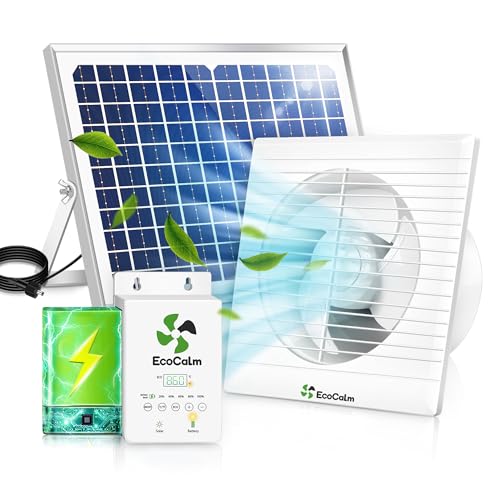
The ecoCalm unit integrates a bifacial solar panel with a 3000mAh rechargeable battery and an intelligent temperature control system. The battery supports operation during the night or cloudy conditions for up to the manufacturer-stated duration after a full charge. The thermostat allows users to set an ambient temperature threshold for the fan to switch on and off automatically.
Call 888-896-7031 for Free Local HVAC Quotes – Compare and Save Today!
Manufacturing notes highlight bifacial panel technology (power generation from both sides) to increase charging efficiency and an intelligent switching system that chooses battery or direct-solar power based on conditions. This product targets sheds needing automated ventilation and occasional night operation without wiring to the grid.
SHENVITASO 25W Solar Panel And 8″ Ventilation Fan

This kit pairs a 25W high-efficiency solar panel with an 8-inch exhaust fan, rated for high airflow (manufacturer-stated 430 CFM) and high RPM. The kit includes an adjustable panel bracket and an anti-backflow valve to prevent pests entering the shed when the fan stops.
Notable features include a long power cord for roof placement and an optional power adapter to operate the fan from mains power if solar is unavailable. The unit is positioned as a high-flow option for larger or warmer sheds where stronger air exchange is required to reduce heat buildup and humidity.
Auzev Solar Exhaust Fan With 12000mAh Battery For Continuous Ventilation

Auzev offers a combination of a 22W solar panel and a large 12000mAh battery pack for extended day-and-night operation. The fan is presented as an efficient ventilation option for sheds, barns, and greenhouses, with a focus on continuous performance and quiet operation (manufacturer-stated low dB levels).
Call 888-896-7031 for Free Local HVAC Quotes – Compare and Save Today!
Manufacturer features include 2000 RPM fan speed for active extraction of heat, moisture, and odors, and an IP-rated design for outdoor use. This kit is targeted at users who prioritize uninterrupted ventilation without relying on grid power.
Aqonsie 176LED Solar Shed Light With Motion Sensor

Although not a heating device, the Aqonsie solar pendant light provides daytime-available illumination and motion-activated lighting modes suitable for sheds. The split design separates the light from the solar panel via a long waterproof cable, enabling flexible panel placement for best sun exposure.
Key features include multiple lighting modes, motion sensor response, and remote control functionality (per manufacturer). Proper lighting can complement ventilation solutions by extending usable workspace time inside the shed and allowing safer use of small electric heaters where permitted.
Buying Guide: Choosing A Solar Solution For Shed Heating And Ventilation
Selecting the right solar-powered equipment for a shed depends on the objective: reduce heat buildup and moisture, supplement warmth, or simply increase comfort. Below are central considerations and comparisons to guide selection.
1. Understand Objectives: Ventilation vs. Heating
- Ventilation (fans): Removes hot air, reduces humidity, prevents mold, and protects stored items. Fans do not produce heat but can improve perceived comfort and protect insulation.
- Supplemental Heating: Solar fans and lights do not generate significant heat. To heat a shed, battery-backed electric heaters, propane, or passive solar design are typical options. If you need actual warmth, consider pairing ventilation with insulation and a dedicated heater rated for shed use.
2. Solar Panel Wattage And Efficiency
- Higher wattage panels (e.g., 25W vs. 16W) yield greater runtime and support more powerful fans or larger batteries.
- Bifacial panels or higher conversion rates increase output when sunlight reflects onto the rear surface, beneficial for limited-panel area installations.
3. Battery Backup And Night Operation
- If you need ventilation at night or during cloudy days, choose kits with integrated batteries (e.g., 3000mAh or 12000mAh options). Battery capacity determines duration; larger batteries provide longer run times and can support intermittent heater loads if compatible.
- Check intelligent power switching that prioritizes solar when available and uses battery power otherwise to extend operation and preserve battery life.
4. Airflow (CFM) And Fan Size
- Airflow measured in CFM determines effectiveness. Higher CFM values are better for larger sheds or heavy ventilation needs. An 8-inch fan rated near 400 CFM will move air more rapidly than smaller fans.
- Consider whether the fan’s noise level (dB) is acceptable for your setting; quieter fans are preferred for near-living or workspace sheds.
5. Installation And Mounting Considerations
- Assess roof or wall mounting options for solar panels and exhaust fans. Long cable lengths in some kits provide flexibility for panel placement on roofs or sunny walls.
- Look for waterproof connectors, pre-drilled mounting holes, and anti-backflow valves to reduce pest ingress and weather exposure.
6. Power Options And Hybrid Operation
- Some kits include power adapters or allow mains connection for hybrid operation—useful if uninterrupted performance is required and mains backup is permitted.
- Confirm voltage compatibility and wiring needs for any AC adapter before purchase.
7. Durability And Weather Resistance
- Choose IP-rated and waterproof components for outdoor installations. Solar panels and fans exposed to rain, wind, and temperature swings should use rated hardware and UV-resistant materials.
- Anti-corrosion brackets and sealed battery enclosures improve longevity in humid or coastal environments.
8. Safety And Local Regulations
- When adding heating elements to a shed, verify local codes and safe clearances. Small enclosed spaces require proper ventilation when using fuel-burning heaters.
- Solar fans are electrically low-risk, but battery systems require correct charging circuitry and secure mounting to avoid short circuits.
9. Integration: Pairing Fans With Insulation And Heat Sources
- For actual heat retention, pair ventilation with insulation (wall/roof), weatherstripping of doors, and thermal barriers. Proper insulation reduces the heating load and improves the performance of any supplemental heater.
- Consider a combined strategy: daytime passive solar gain, insulation retention, and battery-backed fans to circulate warm air when needed.
10. Maintenance And Replacement Parts
- Choose products with accessible connectors and replacement parts. Fans exposed to dust, pollen, or animal nests may need periodic cleaning to maintain airflow.
- Solar panels should be cleaned seasonally for optimal output; batteries may require eventual replacement depending on charge cycles and temperature exposure.
Comparison Perspectives
- Small Shed, Minimal Needs: A DC HOUSE-style small solar fan offers simple installation and daytime ventilation without wiring.
- Moderate Use With Night Ventilation: Battery-backed systems like ecoCalm or Auzev provide runtime after sunset and automated thermostat control.
- Larger Sheds Or High Heat: Higher wattage panels and higher CFM fans such as the SHENVITASO 25W kit provide stronger air exchange; consider hybrid mains support for consistent operation.
- Lighting And Safety: Adding a solar pendant light enhances workspace usability and safety; motion and daytime modes support off-grid practicality.
When focusing on heating specifically, note that the products reviewed primarily address ventilation and lighting. For active space heating in sheds, combine ventilation controls, improved insulation, and a dedicated heating unit appropriate to the shed’s size and local regulations.
Tips for Getting the Best HVAC Prices
- Prioritize Quality Over Cost
The most critical factor in any HVAC project is the quality of the installation. Don’t compromise on contractor expertise just to save money. - Check for Rebates
Always research current rebates and incentives — they can significantly reduce your overall cost. - Compare Multiple Quotes
Request at least three estimates before making your choice. You can click here to get three free quotes from local professionals. These quotes include available rebates and tax credits and automatically exclude unqualified contractors. - Negotiate Smartly
Once you've chosen a contractor, use the proven strategies from our guide — How Homeowners Can Negotiate with HVAC Dealers — to get the best possible final price.