
Finding the right electric torpedo heater for a garage, shop, or jobsite means balancing power, installation, and safety. Below is a quick comparison of the selected models followed by focused reviews and a detailed Buying Guide.
| Model | Type | Key Feature | Coverage |
|---|---|---|---|
| Dura Heat EWH5510 | Hardwired Electric | Remote & Thermostat | Up To 750 Sq. Ft. |
| Dura Heat EUH1465 | Portable PTC Electric | Pivoting Base | Small Spaces |
| VAGKRI 42″ Infrared Tower | Infrared Electric | 9 Heat Levels, IPX5 | Small To Medium Rooms |
| VEVOR Electric Garage Heater | Hardwired High-Power | 10000W, Wall/Ceiling | Large Garages/Workshops |
| ProTemp PT-140T-KFA | Fuel Torpedo (Included For Comparison) | High Airflow Up To 12,000 CFM | Large Warehouses (Fuel) |
Content Navigation
- Dura Heat EWH5510 Electric Forced Air Heater With Remote Control
- Dura Heat EUH1465 Electric Forced Air Heater With Pivoting Base
- VAGKRI 42″ 1500W Electric Outdoor Infrared Heater With Remote
- VEVOR Electric Garage Heater 10000-Watt Digital Fan-Forced Heater
- ProTemp 140,000 BTU Kerosene/Diesel Forced Air Torpedo Heater (For Comparison)
- Buying Guide: How To Choose An Electric Torpedo Heater
- 1. Heater Type And Heating Method
- 2. Power, BTU Equivalent, And Coverage
- 3. Electrical Requirements & Installation
- 4. Controls, Thermostat, And Timers
- 5. Safety Features And Certifications
- 6. Portability And Mounting Options
- 7. Noise, Air Movement, And Ventilation
- 8. Energy Efficiency And Operating Costs
- 9. Intended Use Case
- 10. Compare Electric Versus Fuel Torpedo Heaters
Dura Heat EWH5510 Electric Forced Air Heater With Remote Control

This hard-wired 240V electric garage heater provides 17,060 BTU (5,000W) output intended for large spaces. It is designed for permanent installation and requires professional electrical wiring. A built-in LED indicator confirms correct installation.
- Coverage: Up to 750 sq. ft., suited for 1–2 car garages and medium workshops.
- Controls: Remote control with adjustable thermostat (45–99°F) and LED display simplifies temperature management.
- Installation: Hardwired 240V/30A—plan for electrician costs and permanent mount.
Use this unit when you need continuous, high-output electric heat with thermostat control and prefer a fixed installation. Observe local electrical code and clearance requirements for safe operation.
Dura Heat EUH1465 Electric Forced Air Heater With Pivoting Base
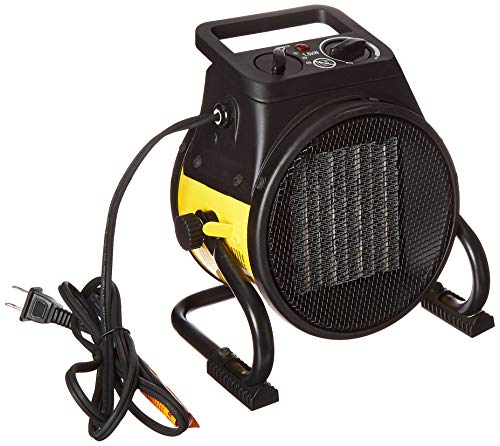
The EUH1465 is a portable PTC ceramic forced-air heater delivering 1500W for quick warmth in smaller areas. Its durable steel construction and pivoting base add versatility for bench, floor, or temporary jobsite placement.
Call 888-896-7031 for Free Local HVAC Quotes – Compare and Save Today!
- Heating Modes: Heat and fan-only settings for year-round use.
- Build: Rugged steel housing suitable for garages and workshops.
- Portability: Lightweight and maneuverable for spot heating needs.
This model suits users who need a compact, plug-in heater to warm a specific area quickly without permanent installation. Check outlet capacity for 1500W loads and keep clearances from combustible materials.
VAGKRI 42″ 1500W Electric Outdoor Infrared Heater With Remote

This 42″ tower-style infrared heater uses infrared elements to provide near-instant radiant warmth across a 100° wide-angle. With 9 heat levels and IPX5 weather resistance, it is marketed for patios, garages, and indoor rooms.
- Power Levels: Adjustable from 620W up to 1500W for energy flexibility.
- Response Time: Claims fast (1s) heat delivery through infrared emission.
- Weather Rating: IPX5 splash resistance allows outdoor-covered use; avoid direct exposure to heavy rain.
Infrared heating warms objects and people directly rather than heating the entire air mass. Choose this if you prefer directional, near-instant warmth and variable power settings for smaller to medium spaces.
VEVOR Electric Garage Heater 10000-Watt Digital Fan-Forced Heater

The VEVOR unit is a high-capacity, hardwired electric heater designed for large garages or workshops. With two power levels and digital controls, it aims to provide even convection heating and tight temperature control.
Call 888-896-7031 for Free Local HVAC Quotes – Compare and Save Today!
- Output: 10,000W capacity for broad coverage; stated area coverage up to about 90 m².
- Controls & Safety: Digital thermostat with 9-hour timer and overheat protection; ETL certification is noted.
- Mounting: Wall or ceiling mount for permanent installation and even air distribution.
This heater is appropriate when permanent, high-output electric heating is required and when building wiring supports heavy loads. Plan for hardwiring and professional mounting to meet code and maintain safety clearances.
ProTemp 140,000 BTU Kerosene/Diesel Forced Air Torpedo Heater (For Comparison)

Although not an electric torpedo heater, the ProTemp PT-140T-KFA is included for comparison as a high-capacity forced-air torpedo used widely on jobsites. It uses kerosene/diesel fuel and emphasizes very high airflow.
- Airflow: Direct-drive motors and blades rated up to 12,000 CFM for fast area warming.
- Use Case: Suited for large, well-ventilated warehouses or construction sites where fuel heaters are permitted.
- Considerations: Fuel-fired units require ventilation, fuel handling, and may pose combustion-byproduct concerns indoors.
Compare electric torpedo heaters against fuel-fired units when ventilation and emissions are constraints. Fuel units can deliver more raw heat output but have different safety and operational profiles.
Buying Guide: How To Choose An Electric Torpedo Heater
Choosing the right unit involves assessing space size, power availability, installation preferences, and safety needs. Below are key factors to compare and questions to ask before buying.
1. Heater Type And Heating Method
- Fan-Forced Electric (Torpedo-Style): Moves heated air rapidly; good for warming air in garages and workshops.
- Infrared Electric: Radiant heating that warms objects/people directly; efficient for spot heating or semi-outdoor areas.
- Permanent Hardwired vs. Portable Plug-In: Hardwired units provide higher continuous power but require professional installation. Portable plug-in models offer flexibility and no permanent wiring.
2. Power, BTU Equivalent, And Coverage
- Wattage To BTU: 1 watt ≈ 3.412 BTU/hr. Determine required wattage based on area, insulation, and ceiling height.
- Coverage Estimates: Manufacturer coverage is a guideline. Consider higher heat loss in uninsulated garages or open bays.
3. Electrical Requirements & Installation
- Circuit Capacity: High-wattage hardwired heaters may require dedicated 240V circuits and 30A+ breakers.
- Professional Wiring: For hardwired models, factor in electrician costs and permit compliance.
4. Controls, Thermostat, And Timers
- Adjustable Thermostat: Improves comfort and reduces energy use by maintaining target temperature.
- Remote & Timer: Convenient for scheduled warm-up and remote adjustments.
5. Safety Features And Certifications
- Overheat Protection & Auto Shutoff: Prevents thermal runaway and reduces fire risk.
- Certifications: Look for ETL/UL/CSA markings for electrical safety; fuel-fired units require additional approvals.
- Clearances: Follow manufacturer-specified clearances from combustibles and mounting instructions.
6. Portability And Mounting Options
- Portable Units: Ideal for spot heating and flexible use across locations.
- Wall/Ceiling Mount: Better for permanent, distributed heating and to save floor space.
7. Noise, Air Movement, And Ventilation
- Fan Noise: Fan-forced torpedo heaters produce significant airflow noise; consider acoustic tolerance in workshops or living-adjacent spaces.
- Ventilation Needs: Electric units do not produce combustion byproducts and generally need no exhaust ventilation, unlike fuel heaters.
8. Energy Efficiency And Operating Costs
- Electric Cost Considerations: High-wattage electric heaters can be costly to run; calculate expected runtime and local electricity rates.
- Zoning And Controls: Using thermostats, timers, and targeted heating zones reduces overall run time and cost.
9. Intended Use Case
- Small Garage Or Spot Heating: Portable 1500W units or infrared towers work well.
- Large Garage/Workshop: Hardwired 5,000W–10,000W units provide continuous, even heat when permanent installation is acceptable.
- Outdoor Or Semi-Outdoor: Choose IP-rated infrared models or use sheltered placement; avoid exposing electric components to direct rain.
10. Compare Electric Versus Fuel Torpedo Heaters
- Electric Advantages: No combustion emissions, simpler installation for plug-in models, safer for enclosed spaces.
- Fuel Advantages: Higher maximum BTUs and lower fuel cost per heat unit in some settings, but require ventilation and fuel storage.
- Decision Point: Use electric where indoor air quality and ventilation are priorities; use fuel only when ventilation and regulatory allowances exist.
Use the buyer considerations above to match the heater’s power, controls, and installation requirements to your space and usage patterns. Verify electrical capacity and local codes before selecting a hardwired unit.
Tips for Getting the Best HVAC Prices
- Prioritize Quality Over Cost
The most critical factor in any HVAC project is the quality of the installation. Don’t compromise on contractor expertise just to save money. - Check for Rebates
Always research current rebates and incentives — they can significantly reduce your overall cost. - Compare Multiple Quotes
Request at least three estimates before making your choice. You can click here to get three free quotes from local professionals. These quotes include available rebates and tax credits and automatically exclude unqualified contractors. - Negotiate Smartly
Once you've chosen a contractor, use the proven strategies from our guide — How Homeowners Can Negotiate with HVAC Dealers — to get the best possible final price.