
Basements need reliable, safe, and efficient portable heating solutions that handle larger spaces, lower ceilings, and variable ventilation. Below is a concise comparison of five well-reviewed portable heaters suitable for basement use, followed by individual product overviews and a buying guide to help you choose the right option.
| Product | Type | Key Strength |
|---|---|---|
| Dreo 25″ Ceramic Space Heater | Ceramic Tower | Fast 11.5 ft/s airflow, quiet operation |
| Dreo 1500W Ceramic Heater (Oscillating) | Ceramic Portable | Oscillation, multiple safety protections |
| Dreo 2025 Upgraded Digital Heater | Ceramic with Digital Thermostat | Precise temperature control, extended reach |
| Dura Heat EUH1465 Forced Air Heater | Forced-Air PTC Ceramic | Rugged steel build for workshops/basements |
| Dr Infrared 1500W Portable Heater | Infrared + PTC Hybrid | Dual heating system for larger coverage |
Content Navigation
- Dreo Space Heater For Indoor Use, 25″ Ceramic Tower
- Dreo 1500W Electric Heater With Oscillation
- Dreo 2025 Upgraded Portable Heater With Digital Thermostat
- Dura Heat EUH1465 Electric Forced Air Heater With Pivoting Base
- Dr Infrared Heater Portable 1500W With Dual Heating System
- Buying Guide: How To Choose The Best Portable Heater For Your Basement
Dreo Space Heater For Indoor Use, 25″ Ceramic Tower

Type: Ceramic tower heater designed for large rooms. Heating Design: Features a 25″ tower layout with Hyperamics thermal design and an extended impeller that boosts airflow up to 11.5 ft/s to move warm air farther into open basement spaces.
Safety Features: Constructed with V0 flame retardant materials, includes 45° tip-over protection and certified overheat protection. A child lock setting provides added security around family areas in finished basements.
Noise And Comfort: Engineered for quiet operation down to 32 dB, which helps maintain a low-noise environment for basements used as offices, media rooms, or workshops.
Best Use Cases: Ideal for homeowners who want a tower-style unit that circulates heat farther than compact heaters, while keeping sound levels low in finished basement living areas.
Call 888-896-7031 for Free Local HVAC Quotes – Compare and Save Today!
Dreo 1500W Electric Heater With Oscillation

Type: 1500W PTC ceramic heater with 70° oscillation. Heating Coverage: Designed to cover spaces around 200 sq. ft., which aligns with many basement rooms or segmented areas.
Safety And Controls: ETL-certified, V0 flame-retardant materials, tip-over and overheat protection, and a 12-hour timer. Manufacturer warnings note to plug directly into a wall outlet rather than an extension cord.
Operational Features: Offers multiple modes (including quiet mode at ~34 dB), remote control, and a 12-hour automatic shutoff. Oscillation helps spread heat across larger basement zones rather than concentrating it in one spot.
Best Use Cases: Useful for basements that serve as multi-use spaces where distributing heat evenly is important, such as hobby rooms, home offices, or finished rec rooms.
Dreo 2025 Upgraded Portable Heater With Digital Thermostat

Call 888-896-7031 for Free Local HVAC Quotes – Compare and Save Today!
Type: Advanced PTC ceramic heater with digital display and precise thermostat control. Temperature Range: Adjustable between 41–95°F in 1°F increments for tight temperature management in basements.
Heat Delivery: Uses Hyperamics and a heat funnel design to deliver heat quickly and increase warm-air reach versus traditional models. This helps address cooling pockets in larger or irregular basement layouts.
Safety: Includes tilt-detection, overheat protection, ETL-certified V0 materials, and a safety plug. These features are desirable in basements where foot traffic or storage can pose tip-over risks.
Best Use Cases: Suitable for finished basements where precise climate control is desired for activities like workout spaces, media rooms, or indoor hobby areas.
Dura Heat EUH1465 Electric Forced Air Heater With Pivoting Base
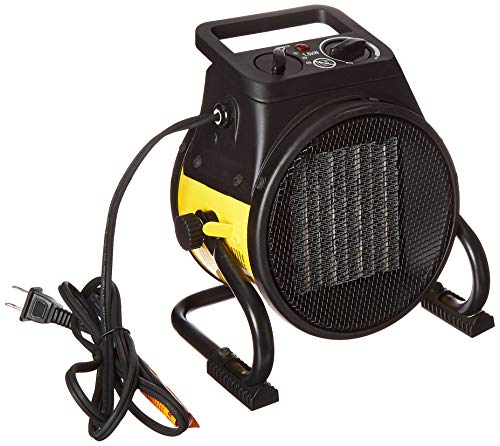
Type: Forced-air PTC ceramic heater with rugged steel construction. Build Quality: Designed for heavy-duty use—workshops, garages, and basements—where durability and resistance to impact are priorities.
Heat Output And Flexibility: Delivers 1500W of PTC ceramic heating and offers heat and fan-only modes. The pivoting base helps direct airflow to targeted areas, useful in basements with specific cold spots.
Application Considerations: The robust steel housing is built for rougher environments, making this unit appropriate for unfinished basements, utility rooms, or areas with tools and storage where a plastic housing may not be ideal.
Dr Infrared Heater Portable 1500W With Dual Heating System
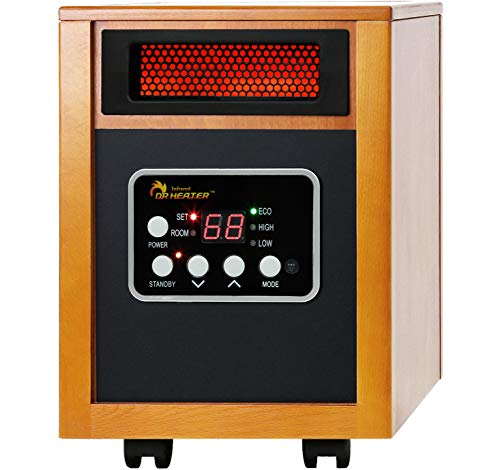
Type: Hybrid infrared quartz tube plus PTC ceramic heating system. Heating Performance: Designed to deliver enhanced warmth and coverage, with manufacturer-rated output near 5200 BTU and an energy-saving auto mode.
Noise And Controls: Features a high-pressure, low-noise blower with a reported noise level around 39 dB, a remote control, and a 12-hour timer for scheduled operation.
Safety And Suitability: Includes tip-over and overheat protection. The infrared element provides direct radiant heat to people and objects, which can be beneficial in basements with higher ceilings or open layouts.
Best Use Cases: Well-suited for mixed-use basements where a combination of radiant and convective heat helps maintain comfort across both occupied and unoccupied areas.
Buying Guide: How To Choose The Best Portable Heater For Your Basement
Assess Basement Type And Ventilation
Finished Basements: Opt for quieter units with digital thermostats and safety certifications to integrate with living spaces and media rooms.
Unfinished Or Workshop Basements: Choose rugged, forced-air models or hybrid units that can withstand dust and occasional rough handling, and prioritize units with steel housings and pivoting bases for directional heat.
Ventilation Considerations: Basements often have limited ventilation. Prefer ETL/UL-certified electric heaters with tip-over and overheat protection. Avoid indoor use of unvented combustion heaters unless the unit is explicitly certified for indoor use and you follow manufacturer ventilation guidance.
Heat Output And Coverage
Wattage And Coverage: Most portable electric heaters are 1500W and suitable for rooms up to ~200 sq. ft. For larger basements, consider multiple units or models with stronger air movement or hybrid heating. Check manufacturer coverage estimates and BTU equivalents for clarity.
Airflow And Oscillation: Oscillation and higher airflow speeds (e.g., tower designs) help distribute heat across open basement floors. Pivoting bases or directed forced-air units can address specific cold spots effectively.
Safety Features
Tip-Over Protection: Essential in basements with foot traffic, tools, or storage. Look for tilt-detection sensors and automatic shutoff.
Overheat Protection: A mandatory feature in most certified electric heaters. Ensure the unit uses flame-retardant materials and certified plugs.
Use Of Extension Cords: Many manufacturers warn against extension cords. Plan to place heaters where they can plug directly into grounded wall outlets.
Energy Efficiency And Operating Costs
Power Settings: Multiple heat settings, ECO modes, and programmable timers enable lower energy use. Use thermostats and timers to avoid running at full power for extended periods.
Infrared Vs. Convection: Infrared provides direct radiant warmth and can feel warmer at lower air temperatures, which may reduce runtime. Convection/forced-air units circulate warm air to raise ambient temperature throughout the basement.
Noise, Placement, And Use Cases
Noise Levels: Aim for models with noise ratings below ~40 dB for finished basements used as offices or media areas. Workshops may tolerate higher noise if durability is the priority.
Placement: Keep heaters away from flammable materials, water sources, and high-traffic walkways. Maintain manufacturer-recommended clearances and avoid obstructing airflow.
Durability And Maintenance
Housing Material: Plastic housings are lighter and suitable for living areas. Steel housings offer better durability for utility basements and workshop environments.
Filter And Dust Considerations: Basements can be dustier; choose units that are easy to clean and have accessible grills for routine dust removal to maintain performance and safety.
Controls And Convenience
Thermostats And Timers: Digital thermostats with 1°F increments help maintain steady temperatures and reduce energy use. Timers let you heat only when needed.
Remote And Mobility: Remote controls and carry handles add convenience when placing units in larger basements or moving between areas.
Safety For Specific Basement Scenarios
Finished Family Areas: Prioritize low noise, precise thermostats, and child-lock features.
Workshop Or Garage-Like Basements: Choose robust, steel-bodied forced-air heaters with pivoting bases for directed heat and easier cleaning.
High-Ceiling Or Open Layouts: Consider hybrid infrared + convection models to combine direct radiant warmth with circulated air for more even comfort.
Regulatory And Installation Notes
Certifications: Look for ETL/UL listings and flame-retardant material claims. These indicate compliance with recognized safety standards.
Electrical Load: Check the circuit capacity of basement outlets. High-power heaters (1500W) draw significant current; avoid running multiple high-wattage appliances on the same circuit to prevent tripping breakers.
Comparison Perspectives
Quiet Comfort: Tower and advanced PTC models with low dB ratings are best for finished basements used for media or sleeping.
Durability And Aimable Heat: Forced-air steel units and pivoting bases are advantageous in garages, workshops, or unfinished basements.
Rapid Warmth And Direct Comfort: Hybrid infrared plus PTC systems provide both radiant and convective heat for spaces with variable occupancy and ceiling heights.
Tips for Getting the Best HVAC Prices
- Prioritize Quality Over Cost
The most critical factor in any HVAC project is the quality of the installation. Don’t compromise on contractor expertise just to save money. - Check for Rebates
Always research current rebates and incentives — they can significantly reduce your overall cost. - Compare Multiple Quotes
Request at least three estimates before making your choice. You can click here to get three free quotes from local professionals. These quotes include available rebates and tax credits and automatically exclude unqualified contractors. - Negotiate Smartly
Once you've chosen a contractor, use the proven strategies from our guide — How Homeowners Can Negotiate with HVAC Dealers — to get the best possible final price.