
Compact Guide: This article compares five propane and gas wall and free-standing heaters that include thermostat control or regulate room temperature without relying on household electricity. Each product summary references the manufacturer’s listed features to help identify options that operate with minimal or no external electrical supply.
| Product | Type | BTU | Thermostat |
|---|---|---|---|
| Mr. Heater MHVFBF20LPT | Vent Free Blue Flame | 20,000 | Included |
| ProCom ML250TPA-B | Ventless Infrared | 25,000 | Included |
| Heatstar 30,000 (Mr. Heater) | Vent Free Radiant | 30,000 | Top-mounted Thermostat |
| Comfort Glow 11,000 | Direct Vent Wall Heater | 11,000 | Built-in Controls |
| Comfort Glow 17,000 | Direct Vent Wall Heater | 17,000 | Built-in Controls |
Content Navigation
- Mr. Heater MHVFBF20LPT 20,000 BTU Blue Flame Vent Free Propane Heater
- ProCom ML250TPA-B Ventless Propane Gas Infrared Space Heater With Thermostat
- Heatstar 30000 Btu Vent Free Radiant Propane Heater With Thermostat And Blower
- Comfort Glow 11,000 BTU Direct Vent Liquid Propane Wall Heater
- Comfort Glow 17,000 BTU Direct Vent Liquid Propane Wall Heater
- Buying Guide: Choosing A Propane Heater With Thermostat And No Electricity
Mr. Heater MHVFBF20LPT 20,000 BTU Blue Flame Vent Free Propane Heater
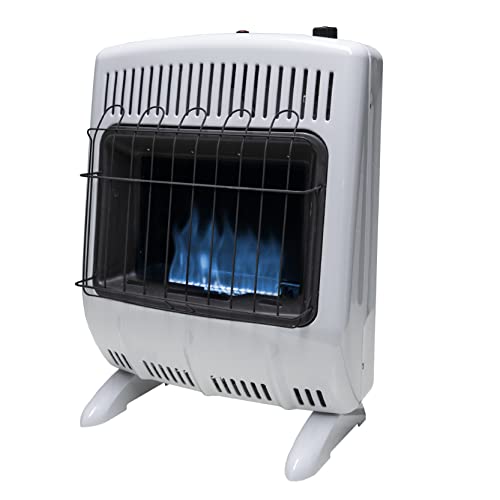
This vent-free blue flame wall heater provides up to 20,000 BTUs and is rated to warm spaces up to 700 sq. ft. The product listing highlights a built-in thermostat for temperature control and a battery-powered electronic ignition with the battery included.
Key listed features include reliable performance at elevations up to 4,500 ft and a fuel consumption rate of 0.926 lbs per hour. The heater includes a factory-standard Oxygen Depletion Sensor (ODS) that shuts the unit off if oxygen levels fall below a safe threshold. The manufacturer lists the unit as suitable for cold rooms, additions, sun rooms, cabins, and garages.
ProCom ML250TPA-B Ventless Propane Gas Infrared Space Heater With Thermostat

The ProCom ML250TPA-B is described as a ventless infrared heater producing up to 25,000 BTU on liquid propane and designed to heat areas up to approximately 1,150 sq. ft. The product listing notes thermostat control with High/Medium/Low settings to manage heat output.
Call 888-896-7031 for Free Local HVAC Quotes – Compare and Save Today!
Features include a slim design with wall-mount hardware and base feet included. The manufacturer positions this model for residential rooms, offices, and similar spaces where a ventless infrared heat source and thermostat regulation are desired. The listing emphasizes dependable thermostat control and multiple heat levels.
Heatstar 30000 Btu Vent Free Radiant Propane Heater With Thermostat And Blower

Listed as a vent-free radiant heater with 30,000 BTU capacity, this model includes a top-mounted comfort control adjustable thermostat. The product listing notes a battery-operated electronic ignition requiring one AA battery (included).
Installation flexibility is called out: wall mount or free-standing with the included feet kit. The manufacturer highlights the combination of thermostat control and a blower for heat distribution. The listing presents this as suitable for larger rooms and garages where higher output and thermostat regulation are necessary.
Comfort Glow 11,000 BTU Direct Vent Liquid Propane Wall Heater
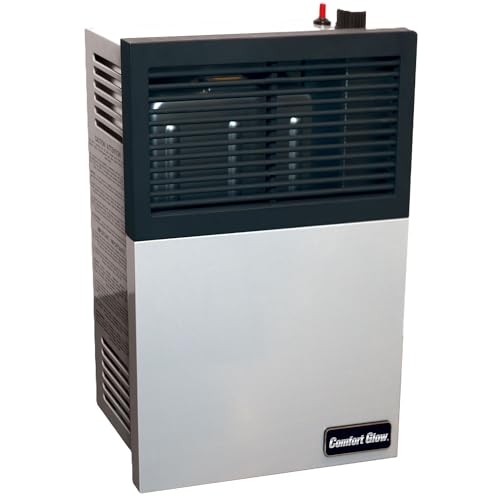
This direct vent propane wall heater is listed at 11,000 BTU and covers up to 375 sq. ft. The manufacturer emphasizes a sealed burn system and a matchless piezo ignition, plus a built-in safety pilot and pressure regulator that stops gas flow if the pilot is extinguished.
Call 888-896-7031 for Free Local HVAC Quotes – Compare and Save Today!
The listing highlights a compact, space-saving design intended for wall mounting. As a direct vent unit with piezo ignition, the product’s features indicate operation without household electrical supply for ignition, relying instead on mechanical ignition and sealed combustion for indoor safety.
Comfort Glow 17,000 BTU Direct Vent Liquid Propane Wall Heater

The Comfort Glow 17,000 BTU direct vent model increases capacity to heat areas up to 570 sq. ft. The listing again calls out a sealed burn system and matchless piezo ignition, with a safety pilot and built-in pressure regulator for controlled gas shutoff if the pilot goes out.
This larger direct vent option is presented for medium spaces needing a wall-mounted propane solution with sealed combustion and mechanical ignition. The product details emphasize safety features and a compact footprint for wall installation.
Buying Guide: Choosing A Propane Heater With Thermostat And No Electricity
Understand Ignition Type: “No electricity” can mean purely mechanical ignition (piezo or matchless pilot) or battery-operated ignition. Check product listings for piezo/matchless ignition vs. battery-powered electronic ignition. Piezo systems do not require batteries or household power, whereas electronic ignitions often use an included battery.
Ventless vs. Direct Vent: Ventless (vent-free) heaters release combustion products into the room and usually include Oxygen Depletion Sensors (ODS). They are high-efficiency and require adequate ventilation per codes. Direct vent units seal combustion and exhaust to the outside and are preferred where indoor air quality or code restrictions limit ventless use.
Thermostat Type And Control: Some units have a built-in mechanical thermostat or adjustable comfort dial; others incorporate electronic thermostats requiring power. Verify whether the thermostat operates without external electricity or relies on small internal batteries.
Safety Features: Prioritize listed safety controls: Oxygen Depletion Sensor (ODS), safety pilot/pressure regulators, and automatic shutoff functions. For ventless units, ODS is commonly listed. For direct vent models, sealed combustion reduces indoor air interactions.
Installation Location And BTU Needs: Calculate the area you need to heat and select a BTU rating that matches room size. The product listings include suggested coverage (sq. ft.). Ensure clearance, mounting type (wall or free-standing), and whether a blower is needed for distribution.
Fuel Type And Availability: Confirm liquid propane availability and local codes. Some listed models are for natural gas rather than propane—double-check compatibility if you require propane.
Elevation And Performance: If you live at higher elevations, check listings for elevation ratings. Some manufacturers specify operation up to certain elevations, which can affect burner performance and BTU output.
Installation Complexity And Local Codes: Many heaters require professional installation and must meet local building and venting codes. Direct vent systems often require a penetration for exhaust; ventless units require clearance and ventilation considerations.
Noise And Blower Options: Models with blowers or fans can move heat more effectively but may require power. If avoiding electricity entirely, choose units that distribute heat via convection or radiant transfer without an electric blower.
Maintenance And Serviceability: Look for accessible pilot assemblies, replacement parts, and manufacturer service information. Regular inspection of burners, pilot lights, and seals is recommended for safe, efficient operation.
Comparison Perspectives:
- Efficiency vs. Air Quality: Ventless units maximize room heat but interact with indoor air; direct vent systems maintain indoor air quality at the cost of more installation.
- Ignition Independence: Purely mechanical piezo ignition offers independence from batteries and mains power; battery ignitions add convenience but rely on periodic battery replacement.
- Thermostat Precision: Electronic thermostats can be more precise but may require power; mechanical thermostats are simpler and may be built into models that operate without external electricity.
Use the product features listed by manufacturers to confirm which models meet your requirement for minimal or no household electrical dependence while providing thermostat-managed comfort and necessary safety controls.
Tips for Getting the Best HVAC Prices
- Prioritize Quality Over Cost
The most critical factor in any HVAC project is the quality of the installation. Don’t compromise on contractor expertise just to save money. - Check for Rebates
Always research current rebates and incentives — they can significantly reduce your overall cost. - Compare Multiple Quotes
Request at least three estimates before making your choice. You can click here to get three free quotes from local professionals. These quotes include available rebates and tax credits and automatically exclude unqualified contractors. - Negotiate Smartly
Once you've chosen a contractor, use the proven strategies from our guide — How Homeowners Can Negotiate with HVAC Dealers — to get the best possible final price.