
Choosing the right wall-mounted propane heater depends on room size, venting preference, and safety features. The table below summarizes five top wall propane heaters selected for broad use in homes, cabins, garages, and additions. Each model features its core heating type, BTU output, and recommended coverage.
| Product | Heating Type | BTU Output | Recommended Coverage |
|---|---|---|---|
| Dyna-Glo IR30PMDG-1 | Infrared (Radiant), Vent Free | 6,000–30,000 | Up To 1,000 Sq. Ft. |
| Mr. Heater MHVFBF20LPT | Blue Flame, Vent Free | 20,000 | Up To 700 Sq. Ft. |
| Dyna-Glo 30,000 BTU Blue Flame | Blue Flame, Vent Free | 24,000–30,000 | Up To 1,000 Sq. Ft. |
| Mr. Heater 30,000 BTU Radiant | Infrared (Radiant), Vent Free | 30,000 | Up To 1,000 Sq. Ft. |
| Comfort Glow 11,000 BTU Direct Vent | Direct Vent (Vented) | 11,000 | Up To 375 Sq. Ft. |
Content Navigation
- Dyna-Glo IR30PMDG-1 30,000 BTU Infrared Vent Free Wall Heater
- Mr. Heater MHVFBF20LPT 20,000 BTU Blue Flame Vent Free Propane Heater
- Dyna-Glo 30,000 BTU Liquid Propane Blue Flame Vent Free Wall Heater
- Mr. Heater 30,000 BTU Vent Free Radiant Propane Heater
- Comfort Glow 11,000 BTU Direct Vent Liquid Propane Gas Wall Heater
- Buying Guide: How To Choose A Wall-Mounted Propane Heater
Dyna-Glo IR30PMDG-1 30,000 BTU Infrared Vent Free Wall Heater

Heating Technology: Infrared radiant heating that warms objects and people directly rather than just the air.
BTU Range & Coverage: Variable output from 6,000 to 30,000 BTU, rated for spaces up to 1,000 sq. ft.
Fuel & Installation Notes: Designed for liquid propane and marked as fuel conversion not permitted. Vent-free design requires compliance with local codes and adequate room ventilation.
Performance Characteristics: Radiant heaters typically provide a sun-like warmth and are efficient for targeted heating of living areas, entryways, and workspaces. As a vent-free unit, it provides high heat output without a chimney or ductwork.
Call 888-896-7031 for Free Local HVAC Quotes – Compare and Save Today!
Mr. Heater MHVFBF20LPT 20,000 BTU Blue Flame Vent Free Propane Heater
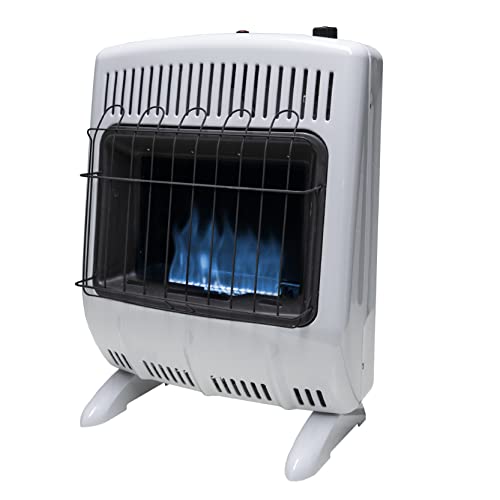
Heating Technology: Blue flame convective heater that warms air by direct combustion, distributing heat more evenly through convection.
BTU & Coverage: Rated at 20,000 BTU, suitable for rooms up to 700 sq. ft. and designed to operate at elevations up to 4,500 ft.
Controls & Safety: Includes a thermostat for temperature control and a battery-powered electronic ignition. Equipped with an Oxygen Depletion Sensor (ODS) for automatic shutoff if oxygen levels fall below safe thresholds.
Fuel Use: Listed fuel consumption and efficient operation make it suitable as a primary supplemental heater for moderately sized rooms and work areas.
Dyna-Glo 30,000 BTU Liquid Propane Blue Flame Vent Free Wall Heater

Call 888-896-7031 for Free Local HVAC Quotes – Compare and Save Today!
Heating Technology: Blue flame convective system designed to warm the air like a central heating system for even distribution.
BTU Range & Coverage: Variable 24,000 to 30,000 BTU output with an estimated coverage up to 1,000 sq. ft.
Installation & Fuel: Liquid propane ready with wall-mount configuration. Conversion between fuels is not permitted, so plan fuel source accordingly.
Application: Suited for larger living spaces, open-plan areas, and situations where even air heating is preferred over targeted radiant warmth.
Mr. Heater 30,000 BTU Vent Free Radiant Propane Heater

Heating Technology: Radiant infrared design using multiple burner tiles to deliver direct, sun-like warmth to people and surfaces.
BTU Output & Coverage: 30,000 BTU capacity intended to heat spaces up to 1,000 sq. ft.
Fuel Efficiency: Fuel consumption is specified per hour and runtime estimates assume typical LP cylinder sizes; recommended to follow manufacturer guidance on cylinder capacity and installation.
Use Cases: Ideal for supplemental heating where radiant comfort is preferred—such as cold rooms, additions, sunrooms, and cabins.
Comfort Glow 11,000 BTU Direct Vent Liquid Propane Gas Wall Heater
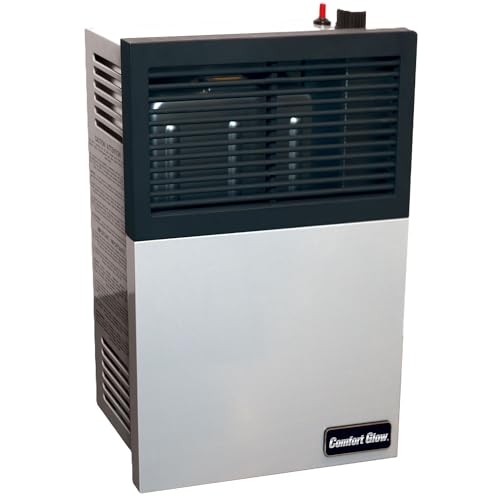
Heating Technology: Direct vent (sealed combustion) system that draws combustion air from outside and vents exhaust outdoors.
BTU & Coverage: 11,000 BTU output suitable for areas up to 375 sq. ft. Compact footprint for tight wall spaces.
Safety & Features: Sealed burn system with Matchless Piezo Ignition and a safety pilot that includes a built-in pressure regulator to stop gas flow if the pilot is extinguished.
Best Fit: Interior spaces where indoor air quality and venting are concerns or where local codes discourage vent-free appliances. The sealed system isolates combustion from living space air.
Buying Guide: How To Choose A Wall-Mounted Propane Heater
Heating Type (Radiant vs Blue Flame vs Direct Vent): Radiant (infrared) heaters warm objects and people directly and are effective for targeted comfort. Blue flame (convective) heaters warm the air for more even distribution. Direct vent (sealed combustion) units exhaust outdoors and maintain indoor air quality.
Vent Free vs Direct Vent: Vent-free models deliver high efficiency and easy installation but rely on indoor air and may be restricted by local codes; they require good ventilation and ODS safety features. Direct vent units are safer for indoor air quality and often allowed where vent-free is prohibited, but require exterior wall venting.
BTU Output & Room Size: Match BTU output to room square footage, insulation level, and ceiling height. As a rough guide: 10,000–15,000 BTU for 300–500 sq. ft., 20,000 BTU for ~700 sq. ft., 30,000 BTU for ~1,000 sq. ft., but adjust for climate and insulation.
Fuel Compatibility & Installation: Confirm the unit is configured for liquid propane (LP) and whether fuel conversion is allowed. Some models prohibit conversion. Consider required cylinder size and professional installation for hard-piped connections or venting.
Safety Features: Look for Oxygen Depletion Sensors (ODS), automatic shutoffs, sealed combustion, and certified ignition systems. Follow clearances and mounting instructions in the manual to prevent fire risks and ensure proper airflow.
Controls & Convenience: Thermostatic control, electronic or piezo ignition, and adjustable BTU settings provide comfort control and fuel savings. Consider units with electronic ignition or battery-powered ignition for quick startups.
Efficiency & Operating Cost: Vent-free units offer high heat efficiency to the living space, but may have different fuel consumption rates. Compare listed fuel consumption and runtime on a typical LP cylinder to estimate operational needs without referencing specific prices.
Indoor Air Quality & Local Codes: Check local building codes and regulations regarding vent-free appliances. In some regions, vent-free heaters are restricted in bedrooms, bathrooms, or certain building types. Direct vent models avoid many code limitations by exhausting outdoors.
Placement & Clearance: Wall-mounted heaters require proper clearances from furniture, curtains, and combustibles. Ensure the selected model’s dimensions and mounting hardware suit your space and that you maintain manufacturer-recommended distances.
Maintenance & Serviceability: Regular inspection of burner ports, pilot assemblies, and gas connections is important. Choose models with accessible components and manufacturer support for replacement parts and servicing.
Comparison Perspectives: Consider whether you prioritize targeted radiant warmth (infrared) or even air heating (blue flame). If indoor air quality and code compliance are priorities, favor direct vent models. For portable or easy-install supplemental heat, vent-free blue flame or radiant units offer high output with simpler installation, provided code permits.
Tips for Getting the Best HVAC Prices
- Prioritize Quality Over Cost
The most critical factor in any HVAC project is the quality of the installation. Don’t compromise on contractor expertise just to save money. - Check for Rebates
Always research current rebates and incentives — they can significantly reduce your overall cost. - Compare Multiple Quotes
Request at least three estimates before making your choice. You can click here to get three free quotes from local professionals. These quotes include available rebates and tax credits and automatically exclude unqualified contractors. - Negotiate Smartly
Once you've chosen a contractor, use the proven strategies from our guide — How Homeowners Can Negotiate with HVAC Dealers — to get the best possible final price.