
Efficient garage heating helps protect tools, vehicles, and comfort while reducing energy waste. Below is a concise comparison of top-rated options covering portable, hardwired, ceiling-mounted, and fan-forced designs selected for high efficiency and practical garage use.
| Product | Type | Key Feature |
|---|---|---|
| DR Infrared Portable Space Heater (1500W) | Portable Infrared | Dual heating (Infrared + PTC), auto energy saving |
| Dura Heat EUH1465 | Forced Air Portable | Rugged steel build, PTC ceramic heating |
| NewAir NGH160GA00 | Portable Garage Heater | Cool-to-touch, internal thermostat, 200 CFM fan |
| Comfort Zone CZ230ER | Ceiling-Mount Hardwired | Ceiling mount, 7,500W, heats large areas up to ~1250 sq. ft. |
| CTSC 10000W Electric Garage Heater | Wall/Shop Hardwired | High output 10000W, digital thermostat, voltage display |
Content Navigation
- DR Infrared Heater Portable Space Heater, Original
- Dura Heat EUH1465 Electric Forced Air Heater
- NewAir NGH160GA00 120V Electric Portable Garage Heater
- Comfort Zone Hard-Wired Ceiling Mount Garage Heater (CZ230ER)
- CTSC 10000W Electric Garage Heater With Digital Thermostat
- Buying Guide: How To Choose A High Efficiency Garage Heater
- 1. Heater Type And How It Affects Efficiency
- 2. Sizing: Watts, BTU, And Coverage
- 3. Power Supply And Installation Constraints
- 4. Safety Features
- 5. Controls And Efficiency Enhancers
- 6. Durability And Build
- 7. Airflow And Distribution
- 8. Insulation And Garage Envelope
- 9. Maintenance And Noise
- 10. Comparison Perspectives
DR Infrared Heater Portable Space Heater, Original
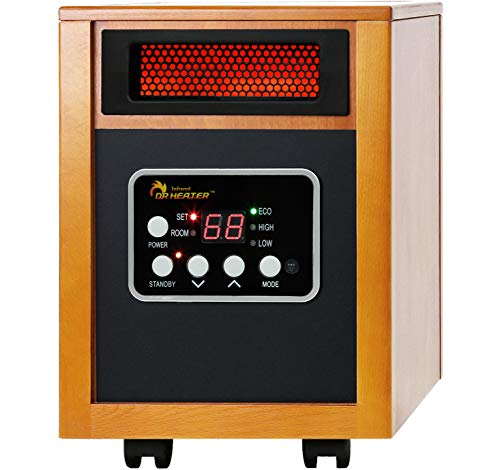
This portable infrared unit combines an infrared quartz tube and a PTC ceramic element to provide rapid, even warmth. The dual heating system is designed to increase effective heat output by up to roughly 60% over single-source units.
- Features Referenced: Dual heating system (Infrared Quartz + PTC), Auto energy saving mode, 12-hour timer, tip-over and overheat protection, low noise blower (~39 dB).
- Efficiency Notes: Infrared heat directly warms objects and people rather than only heating air, which can reduce runtime in poorly insulated spaces.
- Use Case: Best for small-to-medium garages or workspaces where portability and quieter operation matter.
Dura Heat EUH1465 Electric Forced Air Heater
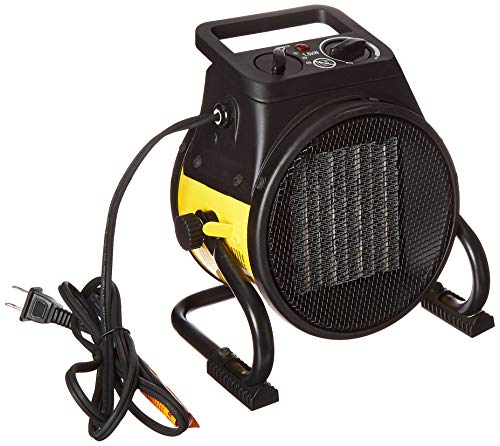
This forced air heater uses a PTC ceramic element to convert electrical input into quick hot airflow. The steel housing and pivoting base are designed for durable, directional heat delivery in garages and workshops.
- Features Referenced: 1500W PTC ceramic heating, rugged steel construction, heat and fan-only settings.
- Efficiency Notes: PTC elements maintain a stable resistance and self-regulate temperature, often increasing operational safety and reducing wasted energy compared to basic resistive coils.
- Use Case: Suitable for garages needing fast localized heat, workbenches, or spot heating where airflow distribution is important.
NewAir NGH160GA00 120V Electric Portable Garage Heater

Call 888-896-7031 for Free Local HVAC Quotes – Compare and Save Today!
The NewAir portable heater focuses on safety and steady airflow with a ceramic plate and a powerful fan to move heat quickly. It features an internal thermostat and automatic shutoff to prevent overheating.
- Features Referenced: Cool-to-the-touch design, internal thermostat, automatic shut-off, adjustable temperature control, two heat modes, 200 CFM fan, tilting head and carry handle.
- Efficiency Notes: Ceramic heating plates with a controlled fan speed can produce rapid comfort while limiting excess current draw in 120V circuits.
- Use Case: Best for small garages, near work areas, or when portability and safety features are priorities.
Comfort Zone Hard-Wired Ceiling Mount Garage Heater (CZ230ER)

This ceiling-mounted fan-forced heater frees up floor space while delivering higher output suitable for larger garages and workshops. With heavy-gauge steel construction and directional louvers, it is meant for permanent installation.
- Features Referenced: Ceiling mount design, 7,500 Watt capacity, variable louvers, digital thermostat, 12-hour timer, overheat protection, heavy steel build, coverage up to ~1250 sq. ft.
- Efficiency Notes: Hardwired units reduce connection losses and allow higher wattage operation to heat larger volumes efficiently when properly sized for the space.
- Use Case: Recommended for insulated or semi-insulated garages where a professional hardwired installation is acceptable to heat a broad area without floor obstructions.
CTSC 10000W Electric Garage Heater With Digital Thermostat

This high-output shop heater targets commercial garages and large residential shops. It offers multiple heat settings, an innovative voltage display, and ETL certification for safety-critical installations.
- Features Referenced: 10000W with three heat settings (10000W, 7500W, fan only), voltage display screen for installation troubleshooting, SPCC cold-rolled steel construction, overheating protection, ETL listed, digital touch panel and remote control, ECO function, timer.
- Efficiency Notes: Multiple heat stages and digital controls allow matching output to demand, improving energy use in spaces with varying occupancy or insulation levels.
- Use Case: Best for large unheated garages, shops, and commercial spaces where hardwired, high-wattage solutions are required for quick recovery and sustained comfort.
Buying Guide: How To Choose A High Efficiency Garage Heater
Choosing the right heater requires matching heater type, capacity, installation, and control features to your garage size, insulation, and intended use. The following checklist helps compare options objectively.
Call 888-896-7031 for Free Local HVAC Quotes – Compare and Save Today!
1. Heater Type And How It Affects Efficiency
- Infrared Heaters: Heat objects and people directly; efficient for spot heating and when the garage door opens frequently. Less effective for evenly warming large, poorly insulated volumes.
- Forced-Air (Fan) Heaters: Move warm air throughout a space and provide quick warm-up; best for distributing heat in medium-to-large garages but can lose heat with ventilation.
- Ceiling/Hardwired Units: Deliver high output without occupying floor space; suitable for larger spaces and long-term use but require professional installation.
- Portable Ceramic/PTC Heaters: Offer safe, self-regulating heat with portability; PTC elements are energy-stable and can be more efficient than simple resistive coils.
2. Sizing: Watts, BTU, And Coverage
Estimate required heat by volume and insulation: a common rule is 10–20 BTU per square foot for insulated garages; uninsulated spaces may need double. Convert Watts to BTU (1 watt ≈ 3.412 BTU) when comparing specs. Choose a unit with adjustable settings so you can scale output to conditions.
3. Power Supply And Installation Constraints
- 120V Portable Units: Plug-and-play convenience; limited to lower wattage (typically up to 1500W) which suits small garages or spot heating.
- 240V Hardwired Units: Provide higher wattage for whole-space heating; require proper wiring and often professional installation.
- Circuit Capacity: Verify circuit amperage and breaker capacity before installation; high-output heaters demand dedicated circuits.
4. Safety Features
- Overheat Protection: Shuts off element or fan to prevent damage.
- Tip-Over Switch: Important on portable units used near benches or on floors.
- Cool-To-Touch Housing: Useful in shared spaces or around children/pets.
- Certifications: Look for ETL/UL listings for electrical safety compliance.
5. Controls And Efficiency Enhancers
- Thermostat Control: Maintains setpoint and reduces cycling losses; digital thermostats improve accuracy.
- Multiple Heat Levels: Allow matching output to conditions to reduce wasted energy.
- Timers and Remote Control: Enable scheduled operation to warm the space only when needed.
- Zone Heating: Consider heating only the active workspace or vehicle area rather than entire garage.
6. Durability And Build
Steel housings, corrosion-resistant finishes, and robust fans extend longevity in dusty or workshop environments. For ceiling/wall units, check mounting hardware and louvers for aimed airflow performance.
7. Airflow And Distribution
CFM (cubic feet per minute) ratings and adjustable louvers influence how evenly heat is distributed. High-CFM units suit larger spaces; directional louvers help target benches or vehicle bays.
8. Insulation And Garage Envelope
Efficiency gains are strongly tied to insulation quality: sealing drafts, insulating doors, and adding weatherstripping reduces required runtime and allows smaller heaters to perform adequately.
9. Maintenance And Noise
- Fan-Forced Units: Require periodic cleaning of filters and fan blades; noisy fans can be disruptive in attached living spaces.
- Infrared Units: Typically lower maintenance; occasional dusting of elements recommended.
10. Comparison Perspectives
- Cost vs. Output: Hardwired, high-wattage units cost more to install but can heat large spaces faster and may be more efficient per square foot in the long run.
- Spot Heat vs. Whole-Room Comfort: Infrared and portable units excel at spot heating; ceiling and wall heaters are better for whole-room comfort.
- Portability vs. Permanence: If your needs change often or you use the heater in multiple locations, a portable PTC/infrared unit provides flexibility.
Use this buying guide to match heater type, capacity, and features to your garage size, insulation level, and operational preferences. Properly sized and controlled heaters can deliver comfortable, energy-efficient garage heating while protecting equipment and improving usability.
Tips for Getting the Best HVAC Prices
- Prioritize Quality Over Cost
The most critical factor in any HVAC project is the quality of the installation. Don’t compromise on contractor expertise just to save money. - Check for Rebates
Always research current rebates and incentives — they can significantly reduce your overall cost. - Compare Multiple Quotes
Request at least three estimates before making your choice. You can click here to get three free quotes from local professionals. These quotes include available rebates and tax credits and automatically exclude unqualified contractors. - Negotiate Smartly
Once you've chosen a contractor, use the proven strategies from our guide — How Homeowners Can Negotiate with HVAC Dealers — to get the best possible final price.