
Finding The Right Convection Baseboard Heater means balancing room size, thermostat control, installation, and safety features. Below is a quick comparison of five convection-style baseboard heaters selected for performance, safety, and user features.
| Model | Brand | Key Features |
|---|---|---|
| Comfort Zone CZ650B | Comfort Zone | Digital Thermostat, 1500W, Tip-Over & Overheat Protection |
| Cadet F Series 36″ 750W | Cadet | All-Metal Construction, Requires Thermostat, 120V |
| Dimplex LC2507W31 | DIMPLEX | Linear Convector Design, 240V, Quick Convection Heating |
| Marley 2542NW 2′ Baseboard | Marley | Natural Convection, Large Wiring Compartment, 240V |
| BEYOND HEAT 1500W | BEYOND HEAT | Digital Thermostat, Overheat & Tip-Over Protection, Quiet |
Content Navigation
Comfort Zone Baseboard Heater With Digital Thermostat

The Comfort Zone CZ650B is a convection baseboard heater designed for medium-sized rooms. It features a digital adjustable thermostat and two heat settings for precise temperature control. The unit emphasizes quiet operation, making it suitable for bedrooms and offices.
Safety is addressed with a tip-over switch, overheat protection, and a stay-cool body to reduce burn risk. The heater’s construction includes dent-proof end panels for added durability.
Installation requires standard electrical connections compatible with the model; check local codes for wiring and thermostat compatibility. The digital display supports straightforward adjustments for consistent room temperature.
Cadet F Series 36″ Electric Baseboard Heater
Call 888-896-7031 for Free Local HVAC Quotes – Compare and Save Today!
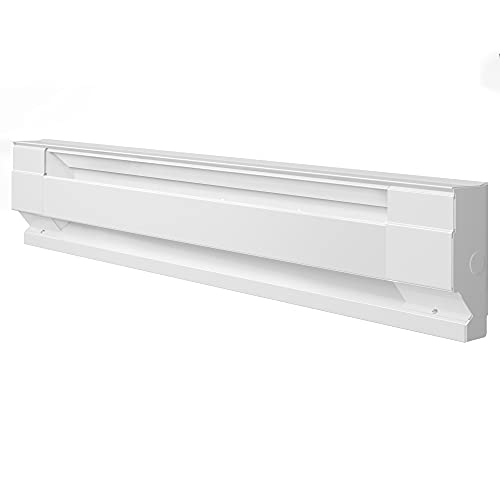
The Cadet F Series 36″ (3F750-1W) is a 750W, 120V convection baseboard heater intended for smaller areas or supplemental heat. Built from 25 gauge steel and featuring a 20 gauge junction box with ground, it offers robust all-metal construction and a powder-coated finish.
This model requires an external thermostat, allowing flexibility to pair with a wall-mounted or programmable thermostat for more refined control. Its straightforward, durable design suits permanent installation and long-term use.
Cadet’s unit is a basic convection heater without built-in digital controls; installers should ensure the selected thermostat matches electrical specifications and local wiring codes.
Dimplex 25″ Linear Convector Baseboard Heater

The Dimplex LC2507W31 is a 25″ linear convector designed to deliver efficient convection heat. As a linear convector baseboard heater, it focuses on circulating warm air naturally from floor to ceiling without using fans.
Quality engineering emphasizes quick convection heating and reliable performance. This design typically integrates well with zoned electric heating and can be paired with compatible thermostats for improved control.
Call 888-896-7031 for Free Local HVAC Quotes – Compare and Save Today!
Confirm voltage and wattage compatibility with your installation. Linear convectors are favored where silent operation and even heat distribution are priorities.
Marley 2542NW 2′ Baseboard Heater
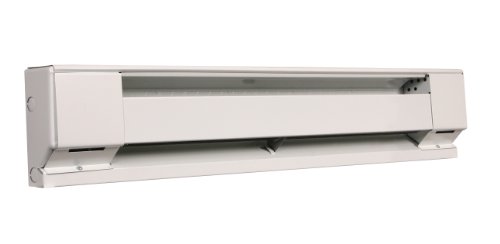
The Marley 2542NW baseboard heater provides natural convection heating to reduce hot and cold zones and maintain even temperatures throughout the room. Its airflow design avoids fans, minimizing airborne dust circulation and allergens.
Installation is simplified by a large wiring compartment, dual knockouts, and a built-in cable clamp for easier wiring access. These features suit both retrofit and new installations when matched to the correct voltage and circuit capacity.
Marley models are commonly specified in property and multi-room systems for reliable, passive convection heating where low maintenance and even heat delivery are desired.
BEYOND HEAT 1500W Convection Baseboard Heater

The BEYOND HEAT 1500W convection heater includes a digital adjustable thermostat and two heat settings for simple temperature control. It highlights quiet operation through convection heating, making it compatible with bedrooms and quiet spaces.
Safety features include overheat protection, a tip-over switch, and a stay-cool body with dent-proof end panels. These protections are standard for portable electric baseboard units intended for indoor use.
For effective performance, match the unit wattage to room size and evaluate thermostat placement for optimal sensing of room temperature without draft or direct heat interference.
Buying Guide: How To Choose A Convection Baseboard Heater
Room Size And Wattage: Calculate required wattage by square footage. Typical guidance is 10–20 watts per square foot depending on insulation and climate. For medium rooms, 1500W models are common; smaller rooms may use 750W units.
Voltage And Circuit Requirements: Confirm whether the heater is 120V or 240V and ensure existing circuits, breakers, and wiring gauge match installation needs. Higher-voltage models may require dedicated circuits.
Thermostat Options: Decide between built-in thermostats, digital displays, or external wall thermostats. Programmable thermostats or smart thermostats can improve comfort and reduce energy use.
Safety Features: Look for overheat protection, tip-over switches (for portable or freestanding units), and a stay-cool exterior to reduce burn risk. Dent-proof panels and grounded junction boxes add durability and electrical safety.
Installation And Wiring Access: Check for accessible wiring compartments, knockouts, and cable clamps to simplify installation. Professional installation is recommended when modifying household wiring or installing 240V units.
Convection Performance: Compare linear convectors and standard baseboard convectors. Linear convectors often emphasize quick, even convection, while standard designs vary in airflow patterns. Silent operation is a benefit of pure convection models without fans.
Materials And Durability: Metal construction and powder-coated finishes resist denting and corrosion. Thicker gauge steel and all-metal junction boxes improve longevity in installed systems.
Control Precision: Digital thermostats generally provide better temperature precision than simple dial controls. For multi-room setups, consider zone control for efficiency.
Allergy And Dust Considerations: Convection heaters without blowers are less likely to circulate dust and allergens. If indoor air quality is a concern, prioritize models that rely on natural convection.
Regulatory And Local Codes: Verify local electrical codes and any permit requirements. Some installations require licensed electricians, especially for 240V circuits or modifications to existing wiring.
Comparison Perspectives: Evaluate heaters by performance (wattage and convection efficiency), safety (built-in protections and construction), installation complexity (voltage and wiring), and controls (digital, programmable, or external thermostat compatibility).
Tips for Getting the Best HVAC Prices
- Prioritize Quality Over Cost
The most critical factor in any HVAC project is the quality of the installation. Don’t compromise on contractor expertise just to save money. - Check for Rebates
Always research current rebates and incentives — they can significantly reduce your overall cost. - Compare Multiple Quotes
Request at least three estimates before making your choice. You can click here to get three free quotes from local professionals. These quotes include available rebates and tax credits and automatically exclude unqualified contractors. - Negotiate Smartly
Once you've chosen a contractor, use the proven strategies from our guide — How Homeowners Can Negotiate with HVAC Dealers — to get the best possible final price.