
Cruising or living in a camper van requires reliable heating and hot water. This guide compares five compact heating solutions suitable for camper vans, including portable propane space heaters, vent-free wall heaters, and portable propane water heaters. Use the summary table below to quickly compare core features before reading the full product details.
| Product | Type | Key Benefit |
|---|---|---|
| Mr. Heater MH9BXRV Buddy | Portable Propane Radiant Heater | Indoor-safe, compact heating up to 225 sq ft |
| Mr. Heater MHVFBF20LPT | Vent-Free Wall Propane Heater | High BTU, thermostat control for larger spaces |
| TOPWISH Propane Water Heater | Portable Tankless Propane Water Heater | Instant hot water for showers and sinks |
| Hike Crew Portable Propane Water Heater | Portable Heater + Shower Pump | All-in-one shower and hot water system with battery |
| VEVOR Diesel Heater All In One | Diesel Air Heater (alternative) | Self-contained parking heater for continuous heat |
Content Navigation
- Mr. Heater MH9BXRV Buddy Grey Indoor-Safe Portable RV Radiant Heater
- Mr. Heater MHVFBF20LPT 20,000 BTU Blue Flame Vent Free Propane Heater
- TOPWISH Propane Water Heater Tankless Portable 10L
- Hike Crew Portable Propane Water Heater & Shower Pump
- VEVOR Diesel Heater All In One 8KW Diesel Air Heater With LCD
- Buying Guide: Choosing The Right Camper Van Heater
- Heat Output And Space Size
- Fuel Type And Availability
- Installation & Ventilation
- Safety Features
- Altitude And Climate Performance
- Hot Water Needs Versus Space Heating
- Power Requirements And Controls
- Portability And Installation Complexity
- Noise And Comfort
- Maintenance And Serviceability
- Comparison Perspectives
Mr. Heater MH9BXRV Buddy Grey Indoor-Safe Portable RV Radiant Heater
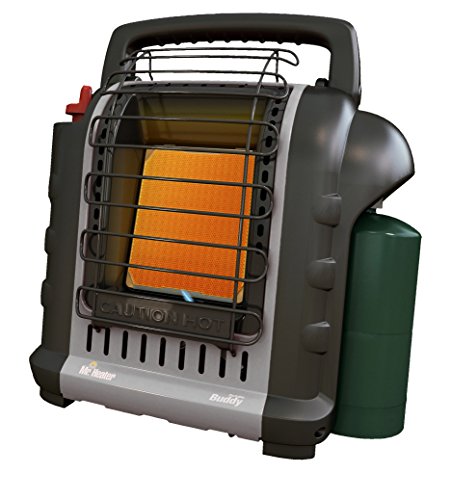
The Mr. Heater Buddy is a compact, radiant propane heater designed for indoor/outdoor RV use. It outputs 4,000–9,000 BTU, suitable for heating up to about 225 square feet. It’s described as clean-burning and nearly 100% efficient, making it a common choice for small vans and camper interiors when ventilation and safety are managed.
Safety features include auto shut-off if tipped, if the pilot light goes out, or if low oxygen levels are detected. The unit may shut off at elevations above 7,000 ft, so altitude considerations matter for mountain camping. Its portability and low footprint make it a practical option for short-term heating and spot-warming.
Mr. Heater MHVFBF20LPT 20,000 BTU Blue Flame Vent Free Propane Heater
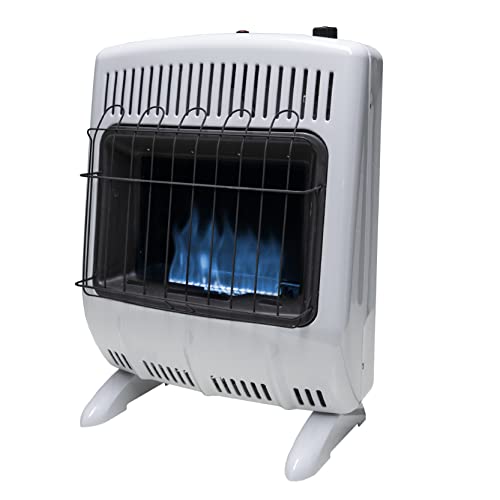
This vent-free wall heater delivers up to 20,000 BTU, designed to warm larger enclosed spaces such as cabins or roomy vans converted for living. It includes a thermostat for precise temperature control and battery-powered electronic ignition for reliable starts.
Call 888-896-7031 for Free Local HVAC Quotes – Compare and Save Today!
Safety is addressed with an Oxygen Depletion Sensor (ODS) that shuts the unit off if oxygen levels fall. The heater is rated for performance at elevations up to 4,500 ft, so high-altitude van dwellers should check compatibility. Vent-free models emit combustion byproducts into the living space, so adequate ventilation and proper installation are important considerations.
TOPWISH Propane Water Heater Tankless Portable 10L
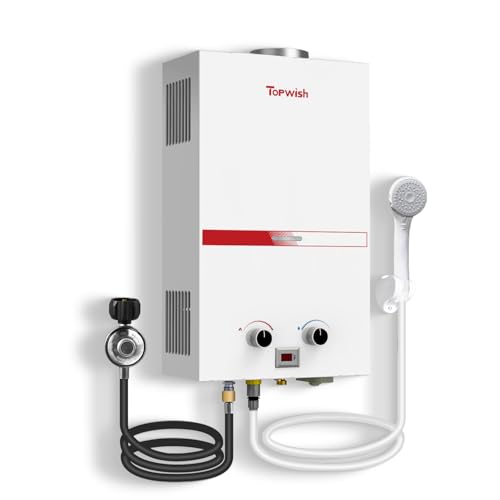
The TOPWISH portable propane tankless water heater weighs about 16 lbs and offers up to 2.6 GPM hot water flow. It’s designed for camping and RV showers, with quick heat-up times and a wide water pressure range. This model emphasizes portability and instant hot water for van owners who need an on-demand shower or sink supply.
Built-in safety features include overheat, dry-burning, flame detection, anti-freeze, low-flow, and high-pressure protection. These protections help maintain reliable operation in varied conditions. Installation and venting requirements differ from space heaters because the unit’s combustion is typically external or vented according to the manufacturer’s instructions.
Hike Crew Portable Propane Water Heater & Shower Pump
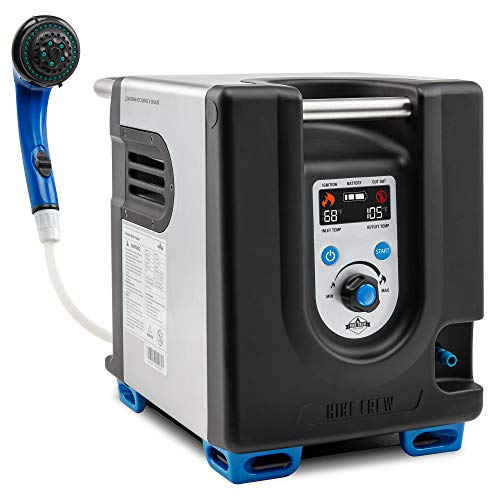
The Hike Crew system combines a propane-powered heater with an integrated pump and built-in battery. It’s a 2-in-1 solution for portable showers, dishwashing, and outdoor cleaning. The kit includes hoses, regulator, showerhead, and carry case—aimed at off-grid or boondocking setups.
Call 888-896-7031 for Free Local HVAC Quotes – Compare and Save Today!
Temperature control is user-friendly and the shower head provides multiple spray settings. The built-in battery supports around 50 minutes of operation, and adapters allow AC/DC and car power options. This unit targets users who prioritize an all-in-one shower and hot water solution without complex installation inside the van.
VEVOR Diesel Heater All In One 8KW Diesel Air Heater With LCD

Although not propane, the VEVOR Diesel Heater is included as an alternative heating approach for camper vans. It’s a self-contained 8 kW diesel air heater with LCD and remote, offering rapid heat for enclosed spaces around 215–269 ft². It’s promoted as an installation-free option for temporary use, and it emphasizes low fuel consumption.
Key features include a sandblasted aluminum heat exchanger for fast warming, a long-range remote and LCD for control, and adjustable temperature settings. Diesel heaters operate differently from propane devices and may appeal to users who prefer diesel fuel or seek a self-contained unit that provides continuous heat while parked.
Buying Guide: Choosing The Right Camper Van Heater
Selecting a heater for a camper van depends on room size, ventilation, fuel type, installation complexity, and intended use. Below are core considerations to compare models and fit them to your van lifestyle.
Heat Output And Space Size
- BTU Rating: Higher BTUs deliver more heat. For small camper vans, 4,000–9,000 BTU units often suffice for short bursts; larger living builds may need higher output or supplemental systems.
- Coverage Estimate: Use manufacturer square-foot guidance, but adjust for insulation, windows, and expected outdoor temperatures.
Fuel Type And Availability
- Propane is common in RVs and camper vans and pairs with portable heaters, tankless water heaters, and wall-mounted units.
- Diesel heaters tie to the vehicle fuel system or separate tank and may provide efficient, continuous heat without consuming propane tanks.
- Consider refill logistics for extended boondocking or remote travel.
Installation & Ventilation
- Portable Propane Heaters often require minimal installation but need ventilation and carbon monoxide/oxygen monitoring for safe indoor use.
- Vent-Free Wall Heaters are more permanent and release combustion byproducts into the cabin; professional installation and CO/ODS safety measures are strongly recommended.
- Tankless Water Heaters require proper exhaust routing or adherence to manufacturer external combustion design to avoid indoor combustion issues.
Safety Features
- Look for ODS (Oxygen Depletion Sensor), tip-over shutoff, pilot/flame failure protection, and overheat cutoffs.
- Install a CO detector and propane gas detector inside the van as standard safety equipment.
Altitude And Climate Performance
- Some units shut off or lose efficiency at high elevations; check altitude ratings if camping in mountains.
- Freeze protection or automatic anti-freeze modes are useful for cold-weather van life.
Hot Water Needs Versus Space Heating
- Tankless propane water heaters (TOPWISH, Hike Crew, others) are focused on continuous hot water for showers and sinks and are different systems than air heaters.
- Determine whether you need a dedicated space heater, hot water system, or both—and whether one propane source can supply multiple appliances safely.
Power Requirements And Controls
- Electronic ignitions, fans, and pump systems often require 12V power; check battery capacity and whether inverter or shore power is needed.
- Remote controls and thermostats add convenience for preheating and temperature regulation.
Portability And Installation Complexity
- Portable units offer flexibility and minimal installation. They are ideal for renters or temporary setups but may require manual monitoring.
- Fixed or built-in heaters provide integration and control but require more planning and potentially professional installation.
Noise And Comfort
- Combustion heaters with fans produce some noise; diesel air heaters often run quietly but check decibel claims and user reports if noise is a priority.
- Radiant heaters deliver quiet, focused warmth without forced-air noise, but circulation may be limited.
Maintenance And Serviceability
- Choose units with accessible parts and documented maintenance procedures. Propane lines, regulators, and burners require periodic checks.
- Consider manufacturer support and availability of replacement parts for long-term ownership.
Comparison Perspectives
- For short-term heating and portability: Mr. Heater MH9BXRV Buddy is a common, compact choice.
- For whole-van heating with a thermostat: consider a vent-free wall heater if ventilation and safety setup permit.
- For hot water needs: tankless propane water heaters and portable shower systems meet on-demand hot water requirements without a storage tank.
- For continuous, self-contained heating: diesel air heaters offer an alternative fuel approach that can integrate with vehicle systems.
Before installing any heating or hot water device in a camper van, review manufacturer instructions, local regulations regarding venting and combustion appliances, and ensure appropriate detectors and ventilation are in place for safe operation.
Tips for Getting the Best HVAC Prices
- Prioritize Quality Over Cost
The most critical factor in any HVAC project is the quality of the installation. Don’t compromise on contractor expertise just to save money. - Check for Rebates
Always research current rebates and incentives — they can significantly reduce your overall cost. - Compare Multiple Quotes
Request at least three estimates before making your choice. You can click here to get three free quotes from local professionals. These quotes include available rebates and tax credits and automatically exclude unqualified contractors. - Negotiate Smartly
Once you've chosen a contractor, use the proven strategies from our guide — How Homeowners Can Negotiate with HVAC Dealers — to get the best possible final price.