
Finding the right indoor propane fireplace heater requires balancing heating power, safety features, installation needs, and room size. The table below summarizes five well-regarded ventless and vent-free propane fireplace heaters selected for indoor residential use, showing key specs to help quick comparisons.
| Product | BTU | Coverage | Type / Notable Feature |
|---|---|---|---|
| ProCom Ventless 25,000 BTU | 25,000 | Up To 1,100 Sq. Ft. | Ventless Dual Fuel, Thermostat |
| Mr. Heater 30,000 BTU Garage Heater | 30,000 | Up To 1,000 Sq. Ft. | Blue Flame, Thermostat, ODS |
| Duluth Forge Dual Fuel 32,000 BTU | 32,000 | Up To 1,500 Sq. Ft. | Dual Fuel Mantle System, Remote |
| ProCom ML100TBA 10,000 BTU | 10,000 | Up To 500 Sq. Ft. | Compact Blue Flame, Wall Or Floor |
| Flame King ALOGFIRE Ambiance Log | 8,200 (max) | Up To 300 Sq. Ft. | Portable Ambiance Log, Multi-Protection |
Content Navigation
- ProCom Ventless 25,000 BTU Free Standing Fireplace
- Mr. Heater 30,000 BTU Vent Free Blue Flame Heater
- Duluth Forge Dual Fuel 32,000 BTU Fireplace System
- ProCom ML100TBA-B 10,000 BTU Blue Flame Heater
- Flame King ALOGFIRE Propane Ambiance Log Fireplace
- Buying Guide: Selecting The Right Indoor Propane Fireplace Heater
ProCom Ventless 25,000 BTU Free Standing Fireplace
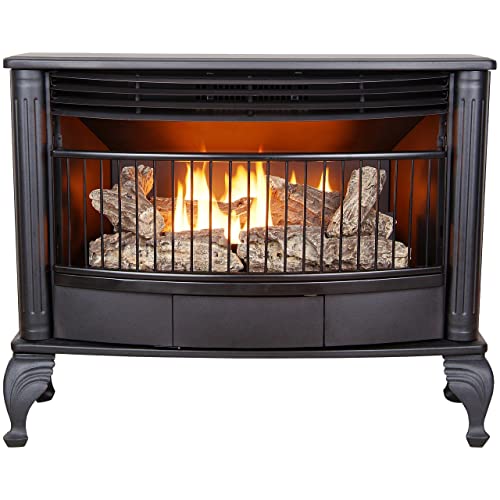
This ventless indoor gas fireplace produces 25,000 BTUs and is rated to heat up to 1,100 sq. ft. It features hand-painted, cast concrete logs and refractory ceramics intended to mimic a real wood look while improving durability. The built-in thermostat-operated control and variable heat settings allow users to maintain a desired temperature and customize warmth levels. As a ventless unit, it requires no chimney or external venting and is designed for indoor placement where ventless appliances are permitted. Consideration should be given to room ventilation and local codes when installing ventless systems.
Mr. Heater 30,000 BTU Vent Free Blue Flame Heater

This blue flame vent-free heater delivers 30,000 BTUs, suitable for areas up to 1,000 sq. ft. It includes a thermostat and battery-powered electronic ignition for convenient startup. Designed for reliable performance at elevations up to 4,500 ft, the unit incorporates an Oxygen Depletion Sensor (ODS) that automatically shuts the heater off if oxygen levels fall below a safe threshold. The model is commonly used in garages, cabins, and larger rooms where continuous, efficient heating is needed without venting.
Duluth Forge Dual Fuel 32,000 BTU Fireplace System

Call 888-896-7031 for Free Local HVAC Quotes – Compare and Save Today!
This ventless dual fuel fireplace system offers 32,000 BTUs with a claimed capacity up to 1,500 sq. ft. The unit supports both natural gas and liquid propane, and includes a furniture-grade mantle, six hand-painted ceramic fiber logs, and a remote with LCD for manual or thermostat control. The product emphasizes high efficiency and integrated aesthetics for living spaces where a decorative focal point is desired along with supplemental heating. Installation typically requires appropriate clearances and adherence to local regulations for ventless appliances.
ProCom ML100TBA-B 10,000 BTU Blue Flame Heater

This compact blue flame mini heater produces up to 10,000 BTUs and is rated for spaces up to 500 sq. ft. Thermostat control includes high/medium/low settings, and the unit ships with both wall-mount hardware and base feet for floor placement. Its slim profile is intended for bedrooms, offices, or smaller living rooms where a lower-output ventless heater is appropriate. The design focuses on flexibility and a modern appearance while delivering convected heat for enclosed spaces.
Flame King ALOGFIRE Propane Ambiance Log Fireplace

The Flame King ALOGFIRE is a portable ambiance log designed for indoor or outdoor use with a compact footprint and easy-grip handle. It produces up to 8,200 BTU on the 1 lb. tank (longer runtimes on a standard 20 lb. tank), with an estimated coverage around 300 sq. ft. Safety features include flameout protection, tip-over shut-off, and a low-oxygen safety sensor. The product targets users seeking realistic dancing flames and a smokeless effect for patios, workshops, campers, or small rooms where a portable propane flame feature is desirable.
Buying Guide: Selecting The Right Indoor Propane Fireplace Heater
Purpose And Room Size
Call 888-896-7031 for Free Local HVAC Quotes – Compare and Save Today!
Start by defining the primary purpose: supplemental zone heating, decorative ambiance, or whole-room warmth. Match the heater’s BTU output to room size. As a rule of thumb, 10,000 BTU covers around 300–500 sq. ft., 20,000–30,000 BTU covers 700–1,100 sq. ft., and higher outputs (30k+) can approach 1,200–1,500 sq. ft., depending on insulation and ceiling height. Consider ceiling height, insulation quality, and open-plan layouts when estimating required capacity.
Ventless (Vent-Free) vs. Vented Systems
Ventless units provide high efficiency and simpler installation because they don’t require chimneys or flues; they release combustion byproducts into the room within regulated limits. This makes them efficient for supplemental heating but requires attention to indoor air quality and local code compliance. Vented systems (not included in the product list) exhaust combustion gases outside, improving indoor air quality at the cost of installation complexity and lower effective room heat delivery. Many indoor propane fireplace buyers choose ventless models for ease of use and efficiency, but check local regulations and manufacturer guidance.
Safety Features And Certifications
Prioritize models with an Oxygen Depletion Sensor (ODS), flameout protection, and tip-over shut-off where applicable. Confirm the product carries recognized certifications or listings (such as ANSI or CSA where applicable in the U.S.). An automatic shut-off at low oxygen levels and certified testing help ensure safer indoor operation. Always follow manufacturer clearances and ventilation requirements.
Thermostat And Controls
Thermostatic control allows a heater to cycle on/off to maintain set temperatures, improving comfort and fuel efficiency. Options vary from basic mechanical thermostats to remote control with LCDs. Consider whether programmable scheduling or remote operation is important for your use case.
Fuel Type And Conversion
Confirm whether the unit is rated for liquid propane (LP), natural gas, or both (dual fuel). Some appliances require professional conversion kits and may be restricted from user conversion. Dual fuel models increase installation flexibility but verify burner and regulator compatibility before switching fuels.
Installation And Location Considerations
Wall-mounted blue flame heaters, free-standing fireplace systems, and mantle-style inserts have different installation needs. Free-standing or mantle systems need floor support and clearances; wall-mounted units require secure mounting and access to a propane supply. Ensure proper clearance from combustibles and follow local codes. In many jurisdictions, ventless appliances are allowed only in certain room types—verify local building codes and HOA restrictions.
Aesthetic And Ambiance
If appearance is a priority, compare log sets, ceramic fiber realism, mantles, and flame presentation. Models such as the ProCom and Duluth Forge systems emphasize realistic logs and mantles for an authentic fireplace look, while compact blue flame units focus on efficient heating and minimal visual presence. Portable ambiance logs prioritize flame visuals over high heat output.
Maintenance And Durability
Inspect materials (ceramic fiber logs, refractory ceramics, cast concrete) and ease of access for cleaning pilot assemblies and burners. Regular cleaning of vents, periodic inspection of gas lines, and replacement parts availability are practical considerations. Refractory ceramics and hand-painted logs can extend visual life but may require careful handling.
Air Quality And Ventilation
Ventless heaters consume oxygen and produce small amounts of water vapor and combustion byproducts. Adequate home ventilation and avoidance of tight, sealed rooms when running ventless appliances are important. Use carbon monoxide detectors and follow manufacturer guidance on minimum ventilation, especially in bedrooms or sleeping areas where rules may be stricter.
Comparative Perspectives
- High Output / Large Spaces: Choose 30k+ BTU vent-free systems (Duluth Forge 32k, Mr. Heater 30k) for open garages, great rooms or poorly insulated spaces.
- Medium Output / Living Areas: 20k–25k BTU (ProCom 25k) balances visual ambiance with heating larger living spaces without a full HVAC upgrade.
- Small Rooms / Offices: 8k–10k BTU compact units (ProCom ML100TBA, Flame King ALOGFIRE) provide focused warmth with easier placement and lower fuel consumption.
- Ambiance-Focused: Portable logs and decor units emphasize flame realism and portability rather than maximum heat.
Noise, Ignition, And Fuel Efficiency
Consider ignition type (piezo, battery-powered electronic ignition, standing pilot) and whether blower fans are present (blowers increase circulating warmth but can add noise). Blue flame technology convects heat into the room like central heating and is typically quieter than fan-assisted units. Compare stated fuel consumption and runtime data when using small tanks versus standard 20 lb propane cylinders.
Professional Installation And Local Codes
For built-in mantles or hard-piped units, professional installation ensures safe gas connections, proper clearances, and compliance with local building codes. Many warranties and safety listings assume correct installation by a qualified technician. Check local permitting requirements and whether your municipality restricts ventless appliances.
Long-Term Costs And Practical Factors
Beyond initial purchase, factor in propane refills, potential conversion kits, maintenance, and detector costs. Ventless units often save on immediate heating costs due to near 99% combustion efficiency, but indoor air quality and safety devices represent ongoing investments. Choose a model with accessible replacement parts and documented support for predictable long-term ownership.
Final Selection Checklist
Tips for Getting the Best HVAC Prices
- Prioritize Quality Over Cost
The most critical factor in any HVAC project is the quality of the installation. Don’t compromise on contractor expertise just to save money. - Check for Rebates
Always research current rebates and incentives — they can significantly reduce your overall cost. - Compare Multiple Quotes
Request at least three estimates before making your choice. You can click here to get three free quotes from local professionals. These quotes include available rebates and tax credits and automatically exclude unqualified contractors. - Negotiate Smartly
Once you've chosen a contractor, use the proven strategies from our guide — How Homeowners Can Negotiate with HVAC Dealers — to get the best possible final price.
- Confirm room square footage and required BTU range.
- Verify local code allowances for ventless appliances.
- Check for ODS, flameout protection, and recognized safety listings.
- Decide on thermostat/remote features and ignition type.
- Consider aesthetic preferences (logs, mantle, finish) and installation complexity.
- Plan for professional installation if hard-piping or built-in mantles are involved.