
Emergency propane heaters provide fast, portable warmth during outages, camping, or cold-work conditions. The following selection highlights five reliable models across sizes and output types, including radiant, blue flame, and 360° heaters. Below is a quick comparison table to help you scan core specs and intended use.
| Product | Type / Output | Coverage | Key Safety Feature |
|---|---|---|---|
| Mr. Heater Portable Buddy MH9BX | Radiant / 4,000–9,000 BTU | Up To 225 Sq. Ft. | Tip-Over Switch, Piezo Igniter |
| Mr. Heater 4000–18000 BTU Dual Tank Unit | Radiant / 4,000–18,000 BTU | Up To 450 Sq. Ft. | Auto Shutoff, Piezo Igniter |
| Mr. Heater Little Buddy MH4B | Radiant / 3,800 BTU | Up To 95 Sq. Ft. | ODS Low-Oxygen Shutoff, Tip-Over |
| Mr. Heater Blue Flame Vent Free 20,000 BTU | Blue Flame / 20,000 BTU | Up To 700 Sq. Ft. | ODS Low-Oxygen Sensor, Thermostat |
| Comfort Gear 360° Propane Space Heater | 360° Radiant / 4,000–18,000 BTU | Up To 450 Sq. Ft. | Multiple Heat Settings, Carry Handle |
Content Navigation
Mr. Heater Portable Buddy Heater MH9BX
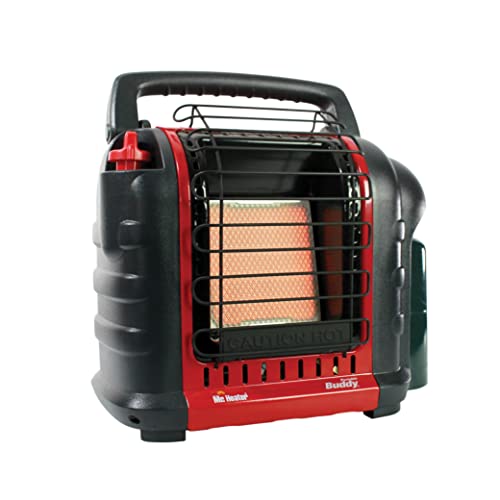
This model is a compact radiant propane heater with an adjustable output of 4,000–9,000 BTU, intended for small- to medium-sized emergency zones up to 225 sq. ft..
Infrared heating warms objects and people directly, producing a sun-like warmth rather than primarily heating air. The unit uses a Piezo igniter for reliable match-free starts.
Safety is emphasized with an improved tip-over switch that audibly engages if the unit is jolted, reducing accidental operation risk. No external batteries are required for ignition.
Consider this heater for portable indoor-safe emergency use where directed radiant heat and easy startup are priorities.
Call 888-896-7031 for Free Local HVAC Quotes – Compare and Save Today!
Mr. Heater 4000 To 18000 BTU Portable LP Gas Heater
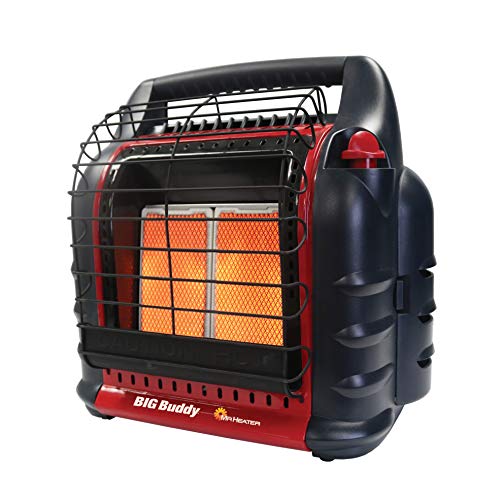
This model features three heat settings—4,000, 9,000, and 18,000 BTU—making it flexible for different emergency scenarios and spaces up to 450 sq. ft..
It supports connection to larger propane tanks (up to 40 lbs) with additional hose and filter, useful for extended runtime during prolonged outages. A single control knob simplifies operation and selection of output level.
Ignition uses a piezo spark mechanism and the unit includes automatic safety shutoff in case of tip-over. Its higher 18,000 BTU setting is suited for larger rooms, garages, or shared shelter spaces.
Choose this heater when you need variable output and the option to connect to larger cylinders for sustained emergency heat.
Mr. Heater F215100 MH4B Little Buddy 3800-BTU
Call 888-896-7031 for Free Local HVAC Quotes – Compare and Save Today!
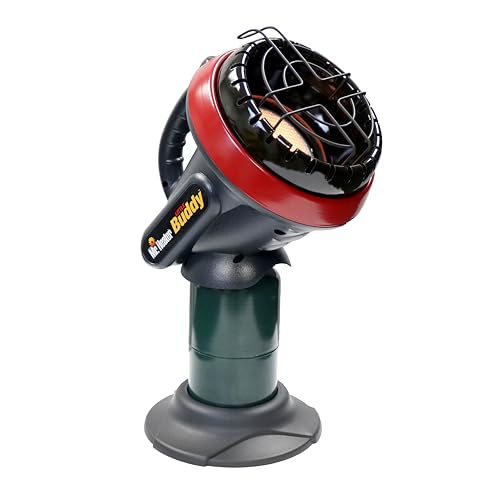
The Little Buddy is a lightweight, indoor-safe cordless propane heater that delivers 3,800 BTU and covers up to 95 sq. ft., making it suitable for tents, small rooms, or bedside emergency use.
Key safety features include an oxygen depletion sensor (ODS) and automatic tip-over shutoff. This unit is designed for enclosed area safety and works at elevations up to 7,000 feet.
Run time at max output on a 1-pound cylinder is approximately 5.6 hours. Controls are simple on/off buttons, which can be helpful during low-light, high-stress emergency conditions.
Consider the Little Buddy when compact size, low output, and built-in ODS protection are needed for confined emergency spaces.
Mr. Heater MHVFBF20LPT 20,000 BTU Blue Flame Vent Free Heater
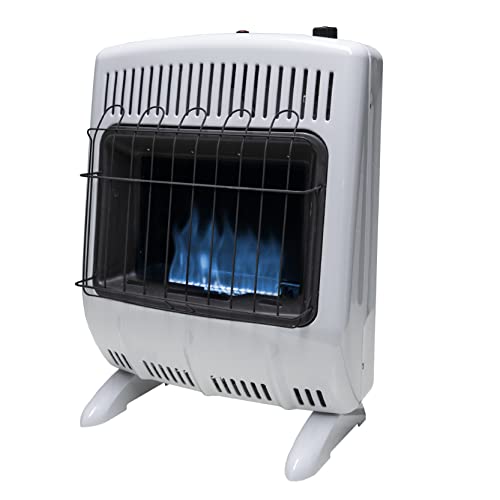
This wall-mounted blue flame vent-free heater produces up to 20,000 BTU and is intended for heating larger rooms, additions, sunrooms, and cabins up to 700 sq. ft..
The unit includes a built-in thermostat for regulated temperature control and a battery-powered electronic ignition for straightforward starts. Fuel consumption is specified for planning run time and supply needs.
Safety is addressed with an oxygen depletion sensor (ODS) and vent-free design considerations. The heater is rated to perform at elevations up to 4,500 ft.
Opt for this model if you need a higher-capacity, fixed solution for larger emergency zones and a thermostat-controlled output for steady indoor temperatures.
Comfort Gear 360 Degree Propane Space Heater

This portable 360° infrared heater offers omnidirectional radiant heat with selectable outputs that span from low to high, including an 18,000 BTU setting for larger areas.
The design emphasizes portability with a built-in handle and compact footprint. Three heat settings let users match output to space size and conserve fuel during extended emergencies.
Its 360° heating pattern is useful for grouping people or equipment around the device, such as in a shelter, workshop, or enclosed porch. The lightweight design aids quick deployment and transport.
Consider this unit when you need versatile radiant coverage and the ability to move a single heater easily between locations during an emergency.
Buying Guide For Emergency Propane Heaters
This buying guide covers the main considerations when selecting a propane heater for emergency or backup use. Evaluate each factor relative to your space, safety requirements, and fuel availability.
Tips for Getting the Best HVAC Prices
- Prioritize Quality Over Cost
The most critical factor in any HVAC project is the quality of the installation. Don’t compromise on contractor expertise just to save money. - Check for Rebates
Always research current rebates and incentives — they can significantly reduce your overall cost. - Compare Multiple Quotes
Request at least three estimates before making your choice. You can click here to get three free quotes from local professionals. These quotes include available rebates and tax credits and automatically exclude unqualified contractors. - Negotiate Smartly
Once you've chosen a contractor, use the proven strategies from our guide — How Homeowners Can Negotiate with HVAC Dealers — to get the best possible final price.
Heat Output And Coverage
- BTU Rating: Select a BTU output that matches the room size. Small rooms often need 3,000–5,000 BTU; larger areas or garages require 10,000–20,000 BTU or more.
- Radiant vs. Blue Flame: Radiant heaters warm people and objects directly, which is efficient for localized warmth. Blue flame (convection) models heat air and distribute warmth through the room, better for whole-room heating.
Portability And Fuel Supply
- Cylinder Type: Many portable units use 1-lb cylinders for convenience; check compatibility with larger tanks for extended use.
- Connection Options: Units that accept dual-tank connections or larger hoses are useful when grid outages are long and resupply is limited.
- Weight And Handle: Consider how easy the unit is to carry and set up, especially if moving between rooms or taking it outdoors.
Safety Features
- Oxygen Depletion Sensor (ODS): Required for many indoor applications; shuts down unit if oxygen levels fall below safe thresholds.
- Tip-Over Switch: Essential for portable units to stop fuel flow if the heater falls.
- Automatic Shutoff: Protection for pilot or flame failure is important in preventing gas accumulation.
- Vent-Free vs. Venting Needs: Vent-free heaters can be used indoors but need proper monitoring and ODS. Venting requirements and local codes should be checked before installation.
Ignition And Controls
- Piezo Ignition: Matchless start method common on portable heaters; no batteries required.
- Electronic Ignition: Battery-powered igniters are common on larger or wall-mounted units; check battery type and accessibility.
- Thermostat: Thermostatic control improves fuel economy and temperature stability for longer emergencies.
Placement And Installation
- Indoor Use: Confirm the model is rated indoor-safe before using inside. Maintain clearances from combustible materials.
- Outdoor/Indoor Transitions: Some models are approved for outdoor-only use; do not use outdoor-only units in enclosed spaces.
- Mounting Requirements: Wall-mounted blue-flame heaters require appropriate installation and may be subject to local building codes.
Runtime And Fuel Planning
- Consumption Rate: Review BTU output to estimate fuel consumption (higher BTU equals faster fuel use).
- Resupply Strategy: For prolonged outages, plan for cylinder swaps or access to refillable tanks.
- Accessory Hoses and Filters: Units that accept larger tanks often need a hose and filter; include those in your emergency kit.
Environmental And Elevation Considerations
- Elevation Limits: Many propane heaters have elevation limits above which they may shut off or operate less efficiently. Confirm rated altitude especially for mountain use.
- Cold Starts: Extremely low temperatures can affect ignition and fuel vaporization; choose designs known to perform in your climate.
Maintenance And Durability
- Corrosion-Resistant Materials: Stainless or coated fittings extend the life of a heater used outdoors or stored in variable conditions.
- Simple Serviceability: Units with easily replaceable igniters, ODS sensors, or regulator components reduce downtime during emergencies.
Comparison Perspectives
- Small Portable vs Fixed Wall Units: Portable radiant heaters excel at quick, localized warmth. Fixed blue-flame units provide steady, whole-room heat but require installation.
- Fuel Efficiency vs Output: Higher BTU delivers more heat but uses more fuel. Balance immediate heating needs against fuel availability.
- Safety vs Convenience: Compact models prioritize portability and convenience; larger units often include thermostats and better whole-room performance but need more careful installation and ventilation planning.