
Portable electric heaters offer targeted warmth, safety features, and energy-efficient options for rooms of various sizes. Below is a quick comparison of five top models selected for indoor use, safety certifications, adjustable thermostats, and portability.
| Product | Brand | Key Feature |
|---|---|---|
 Dreo Space Heater (Digital) |
Dreo | 1500W PTC, Precise 1°F Thermostat |
 GiveBest Portable Electric Heater |
GiveBest | Dual 1500W/750W Modes + Fan |
 Dreo 25″ Fast Electric Heater |
Dreo | Extended Range, Low Noise |
 Dreo 70° Oscillating Heater |
Dreo | 70° Oscillation, 8 Safety Protections |
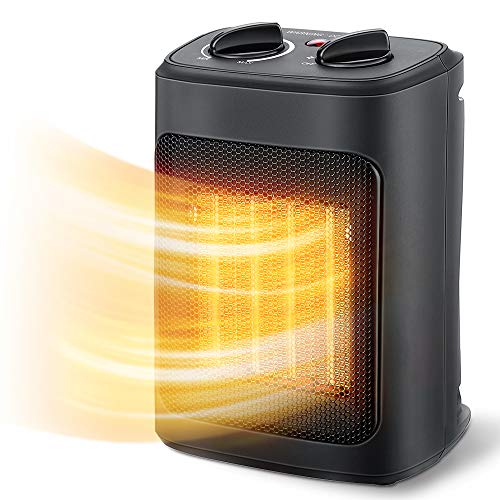 Aikoper PTC Ceramic Heater |
Aikoper | 3 Heat Settings + Fan Mode |
Content Navigation
Dreo Space Heater With Digital Display
This Dreo model combines a 1500W Hyperamics PTC system with a heat funnel design to deliver fast warmth and improved circulation. The manufacturer highlights up to 200% farther reach compared with traditional heaters, making it suited for mid-sized rooms.
Safety features include a tilt-detection sensor, V0 flame retardant materials, overheat protection, and an ETL certification. The unit offers a precision NTC thermostat adjustable from 41°F to 95°F in 1°F increments, and a 12-hour timer plus remote control for convenience. These features support energy-conscious use by maintaining target temperatures rather than running continuously.
Practical considerations: portable design and quick heat-up make it appropriate for bedrooms, offices, or personal areas where targeted warmth and safety certifications matter.
GiveBest Portable Electric Space Heater
Call 888-896-7031 for Free Local HVAC Quotes – Compare and Save Today!
GiveBest offers a 2-in-1 heater and fan with selectable heat levels (1500W or 750W) and a cool fan mode for summer. The thermostat cycles on and off to maintain a preset temperature and supports a wide adjustment range.
Safety is addressed through flame-retardant materials, automatic overheat shutoff, and tip-over protection, which restarts automatically when returned upright. Its compact footprint and built-in carry handle improve portability for localized heating such as desks, small rooms, or dorm spaces.
Operational notes: The unit is positioned as energy-efficient for spot heating, reducing the need to warm an entire home. The combination of fan mode and two heat levels provides seasonal versatility.
Dreo 25″ Fast Electric Heater For Large Rooms
The 25″ Dreo ceramic heater uses an upgraded Hyperamics thermal design and an extended impeller to produce 11.5 ft/s fast air and broadened heat range suitable for larger rooms. The design targets users needing greater coverage than typical compact heaters.
ETL-certified safety includes V0 flame-retardant casing, reinforced plug, 45° tip-over protection, overheat protection, and a child lock. Noise performance is noted at as low as 32 dB, which supports quiet operation in bedrooms or offices.
Call 888-896-7031 for Free Local HVAC Quotes – Compare and Save Today!
Use-case considerations: This unit prioritizes range and quiet performance, making it useful for living rooms or larger office spaces where broader circulation and low noise are desirable.
Dreo 70° Oscillating Portable Heater
This Dreo model emphasizes even heat distribution with 70° oscillation and 8 listed safety protections. The 1500W PTC ceramic element heats quickly and the unit is designed for multi-room uses including bedrooms, basements, and offices.
Safety features include ETL certification, tip-over protection, overheat protection, a 12-hour timer, and a 24-hour automatic power-off function. The product also has a long, flat 6 ft cord and a quiet operation rating near 34 dB.
Practical notes: The combination of oscillation, timer, and multiple safety functions makes this model appropriate for those prioritizing coverage, automated control, and certified safety.
Aikoper PTC Ceramic Space Heater
The Aikoper heater uses PTC ceramic technology for rapid warm-up and even heat distribution. It offers three heat settings plus a fan-only mode, enabling tailored comfort and off-season use.
The device highlights energy-efficient spot heating to reduce reliance on whole-house systems. An adjustable thermostat maintains temperature and supports targeted operation for rooms like bedrooms and offices.
Practical considerations: The Aikoper unit is positioned for users seeking simple controls, fast heat, and lower operating costs for small- to medium-sized rooms.
Buying Guide: How To Choose The Right Portable Electric Heater
Choosing a portable electric heater involves balancing room size, safety, energy use, noise level, and controls. Below are key considerations and comparison perspectives to guide a purchase.
Heating Power And Room Coverage
Power is commonly measured in watts. A 1500W heater is standard for heating rooms up to roughly 200 sq ft, while lower watt settings (e.g., 750W) are useful for small spaces or reduced energy use. Select higher power or extended-range designs for larger rooms.
Heating Technology
- PTC/Ceramic Heaters: Fast warm-up, stable temperatures, and safer surface temperatures. Good for bedrooms and offices.
- Fan-Forced Heaters: Provide quick distribution but may be noisier.
- Oscillating Heaters: Improve even heat coverage across a room.
Thermostat And Controls
Look for precise temperature control if you want to maintain a setpoint and conserve energy. Digital thermostats with small increment adjustments help sustain comfort without continuous full-power operation. Remote controls and timers add convenience.
Safety Features And Certifications
Essential safety features include tip-over protection, overheat shutdown, flame-retardant materials, and ETL/UL certification. If the unit lists child-lock or automatic power-off features, those add safety for households with children or pets.
Noise Level
If the heater will operate in a bedroom or study, check the noise rating. Models citing 32–34 dB are generally quiet enough for sleeping or focused work.
Portability And Placement
Consider weight, size, and handle design for moving between rooms. Vertical tilt or adjustable angles let you direct heat to feet or upper body as needed. Avoid using extension cords unless the manufacturer explicitly permits them.
Energy Efficiency And Cost Considerations
Spot heating a single room can be more efficient than heating an entire home. Use thermostats, timers, and lower watt options to reduce run-time. Compare features like oscillation and airflow design that can improve perceived warmth without raising power consumption.
Multiple Comparison Perspectives
- Coverage vs. Compactness: Larger models (e.g., 25″ units) offer wider reach at the expense of footprint. Compact models excel for desks or small rooms.
- Precision vs. Simplicity: Digital thermostats and 1°F increments are ideal for precise temperature control; dial models are simpler but less exact.
- Safety vs. Features: Prioritize ETL/UL certifications and tip-over protection for household safety, then compare additional conveniences like timers and child locks.
- Noise vs. Output: High airflow often increases noise. If quiet operation is important, look for models that advertise dB levels and oblique airflow or noise-reducing designs.
Use these considerations to match a heater to your room size, safety needs, and preferred control features. Portable electric heaters vary in how they balance power, coverage, noise, and safety, so prioritize the aspects most important to your environment.
Tips for Getting the Best HVAC Prices
- Prioritize Quality Over Cost
The most critical factor in any HVAC project is the quality of the installation. Don’t compromise on contractor expertise just to save money. - Check for Rebates
Always research current rebates and incentives — they can significantly reduce your overall cost. - Compare Multiple Quotes
Request at least three estimates before making your choice. You can click here to get three free quotes from local professionals. These quotes include available rebates and tax credits and automatically exclude unqualified contractors. - Negotiate Smartly
Once you've chosen a contractor, use the proven strategies from our guide — How Homeowners Can Negotiate with HVAC Dealers — to get the best possible final price.