
Choosing the right propane tent heater balances warmth, safety, and portability. Below is a concise comparison of top portable propane heaters suitable for tents and small enclosed shelters, followed by individual product details and a practical buying guide.
| Product | BTU Range | Best For |
|---|---|---|
| Mr. Heater Portable Buddy MH9BX | 4,000–9,000 BTU | Camping, larger tents up to ~225 sq. ft. |
| Mr. Heater F215100 MH4B Little Buddy | 3,800 BTU | Small tents up to ~95 sq. ft.; close-quarters use |
| KOMAN Propane Heater For Tent | Variable (1lb tank / 20–40 lb with adapter) | Flexible fuel options; tent or patio with adapter |
| HEATHIVE Portable Propane Heater | Not specified (compact, quick heat) | Lightweight camping, hunting blinds, ice fishing |
| Hotdevil Portable Heater 6200BTU | 6,200 BTU | Small to medium tents, patios, garages |
Content Navigation
Mr. Heater Portable Buddy Heater MH9BX
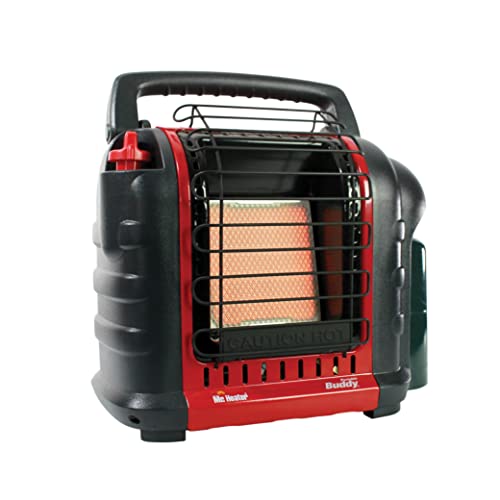
This portable radiant heater uses advanced infrared technology to deliver direct, sun-like warmth. Its adjustable output ranges from 4,000 to 9,000 BTU, rated to heat areas up to about 225 sq. ft. The radiant design focuses heat on people and objects rather than heating all air, which can be effective in tent environments when placed safely and ventilated.
Safety and ignition features include an improved tip-over safety switch that audibly engages if disturbed, and a reliable Piezo igniter for matchless starts. The unit is commonly listed as indoor-safe for controlled environments but always follow manufacturer ventilation and clearance guidelines when using inside enclosed tents.
Mr. Heater F215100 MH4B Little Buddy
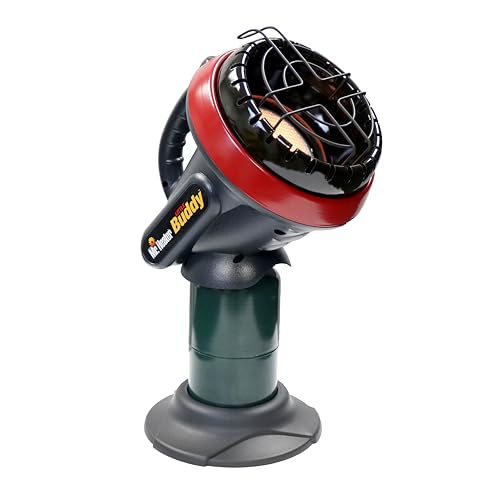
The Little Buddy is designed for smaller spaces and offers 3,800 BTU with a 45° heating angle, suited for tents around 95 sq. ft. It features an automatic low oxygen shut-off system (ODS) and tip-over protection, both critical for safe use in enclosed camping shelters.
Call 888-896-7031 for Free Local HVAC Quotes – Compare and Save Today!
This model emphasizes portable convenience with simple on/off operation and a run time of roughly 5.6 hours at max output on a 1-lb cylinder. Its lower BTU output reduces fuel consumption and is suitable where modest, directed warmth is needed.
KOMAN Propane Heater For Tent, Camping & Patio

The KOMAN unit emphasizes fuel flexibility: it accepts 1-lb propane cylinders for mobility and can connect to larger 20–40 lb tanks using the included POL adapter for extended run times on patios or base camps. It includes a safety shut-off valve and a tip-over switch, plus a handle/hanger for safe movement or suspension within suitable shelters.
Its ceramic elements and low-conductivity materials aim to reduce overheating risk. The dual-fuel capability makes this heater useful for users who want both tent portability and the option to scale up for longer deployments outside the tent.
Portable Propane Heater By HEATHIVE

The HEATHIVE portable heater targets compact outdoor use with a focus on lightweight portability and quick setup. It features a foldable base for stability, one-push ignition, and a durable carrying case for transport to campsites, blinds, or fishing shelters.
Call 888-896-7031 for Free Local HVAC Quotes – Compare and Save Today!
Its design emphasizes easy operation on 1-lb propane cylinders and frequent uses such as hiking, tailgating, or hunting. While specific BTU values are not listed here, the product description highlights consistent, reliable heat for small outdoor structures.
Hotdevil Portable Heater 6200BTU

This Hotdevil heater provides 6,200 BTU and advertises heating coverage up to 200 sq. ft. It features a control valve for adjustable output and is designed as a cordless, portable radiant heater compatible with 1-lb cylinders. The unit highlights quick warm-up times for outdoor activities, tents, and garages.
Safety features include an emphasis on portability and simple setup. The adjustable control knob lets users vary the heat from gentle warmth to higher outputs to match tent size and conditions. Follow ventilation and clearance instructions when using inside enclosed shelters.
Buying Guide: How To Choose A Propane Tent Heater
When selecting a propane tent heater, consider heat output (BTU), safety features, fuel type and run time, portability, and ventilation requirements. Below are detailed factors to evaluate from multiple comparison perspectives.
Heat Output And Tent Size
BTU measures heat output; higher BTU warms larger spaces faster. For tents:
- Up To ~100 Sq. Ft.: 3,000–4,000 BTU units suffice (example: Little Buddy).
- ~100–225 Sq. Ft.: 4,000–9,000 BTU units work well (example: MH9BX).
- Over 225 Sq. Ft.: Consider higher output models or external heating; larger heaters can pose safety and ventilation concerns inside tents.
Safety Systems And Certifications
Key protective features to prioritize:
- ODS (Oxygen Depletion Sensor): Shuts off if oxygen drops, critical for enclosed tents.
- Tip-Over Switch: Auto-shuts if unit falls—important for uneven tent floors.
- Auto Shut-Off For Pilot Failure: Prevents gas leaks if ignition fails.
- Certifications: CSA or other recognized certifications indicate tested safety standards.
Fuel Source, Run Time, And Logistics
Decide between 1-lb cylinders for portability and larger tanks for extended run time. Consider:
- 1-lb Canisters: Lightweight, easy to replace, ideal for short trips.
- 20–40 lb Tanks: Longer run time with adapters; better for base camps or patio use.
- Run Time: Check manufacturer runtime at specific BTU settings—higher BTU reduces runtime per canister.
Ignition Type And Usability
Ignition systems affect ease of use:
- Piezo Igniter: Reliable matchless start without batteries.
- Battery/Electric Ignition: Quick starts but requires power source or batteries.
- Manual Ignition: Simpler but requires a match or lighter—less convenient in cold/windy conditions.
Portability, Weight, And Mounting Options
Assess how you will transport and position the heater:
- Weight And Size: Lighter units are better for backpacking; heavier units offer higher output but reduce mobility.
- Handles And Cases: Built-in handles and carrying cases simplify transport and storage.
- Hangers Or Stands: Some models include hangers for safe suspension in tent centers; others use foldable bases for ground placement.
Ventilation And Placement Considerations
Propane heaters produce combustion byproducts. Even with ODS, maintain ventilation:
- Crack A Vent: Allow fresh air inflow and exhaust outflow to reduce CO and humidity buildup.
- Clearance: Keep flammable materials, sleeping bags, and gear away per manufacturer clearance specs.
- Positioning: Place on stable, level surfaces and avoid direct proximity to tent walls or low-hanging fabrics.
Durability And Environmental Conditions
Consider construction materials and expected weather:
Tips for Getting the Best HVAC Prices
- Prioritize Quality Over Cost
The most critical factor in any HVAC project is the quality of the installation. Don’t compromise on contractor expertise just to save money. - Check for Rebates
Always research current rebates and incentives — they can significantly reduce your overall cost. - Compare Multiple Quotes
Request at least three estimates before making your choice. You can click here to get three free quotes from local professionals. These quotes include available rebates and tax credits and automatically exclude unqualified contractors. - Negotiate Smartly
Once you've chosen a contractor, use the proven strategies from our guide — How Homeowners Can Negotiate with HVAC Dealers — to get the best possible final price.
- Rust-Resistant Fittings: Stainless or plated threads resist corrosion from outdoor use.
- Wind Resistance: Radiant heaters are less affected by wind than convective units; use windbreaks when necessary.
- Cold-Weather Operation: Some heaters reduce output at high altitude or extreme cold—check altitude performance notes.
Comparison Perspectives
- Safety-First Perspective: Prioritize ODS, tip-over shutoffs, and CSA certification. Lower-BTU indoor-safe models often meet stricter safety standards.
- Portability Perspective: Choose small footprint, 1-lb canister compatibility, lightweight materials, and carrying cases for backpack or hike-in setups.
- Run-Time Perspective: If extended heating is needed, prefer adapters for larger tanks or units with efficient low-BTU settings to maximize canister life.
- Performance Perspective: For rapid warmth in open or poorly insulated tents, higher BTU radiant units heat occupants directly; for all-air warming, consider convective alternatives (not covered here).
Checklist Before Use
- Confirm the heater is labeled for indoor or tent use per manufacturer guidance.
- Verify presence and operation of safety features (ODS, tip-over shutoff).
- Plan ventilation: open vents or slightly unzip a door/window.
- Keep a working carbon monoxide detector suitable for tents and enclosed spaces.
- Store spare propane canisters outside sleeping areas and follow local transport regulations.