
Choosing a freestanding wood heater involves balancing heat output, emissions, installation, and aesthetic fit. Below is a concise comparison of five freestanding-style heaters and stoves suited for indoor or patio use, focusing on performance, mobility, and design.
| Product | Type | Coverage | Key Feature |
|---|---|---|---|
| ProCom Ventless 25,000 BTU | Ventless Gas Fireplace | Up To 1,100 Sq. Ft. | Thermostat Control |
| Atlas Authentic Wood Pellet Patio Heater | Pellet Patio Heater (Portable) | Outdoor/Patio Use | Smokeless Flame, Wheels |
| Duraflame Freestanding Electric Stove | Electric Stove Heater | Up To 1,000 Sq. Ft. | 3D Flame Effect, Infrared |
| LGHM 44″ Electric Fireplace With Mantel | Freestanding Electric Stove/Fireplace | Living Room Coverage | Stacked Stone Surround, Remote |
| SheerAIRE 18″ Panoramic Electric Wood Stove | Electric Panoramic Stove | Up To ~300 Sq. Ft. | Curved 3D Flame, Rapid Heat |
Content Navigation
ProCom Ventless 25,000 BTU Fireplace
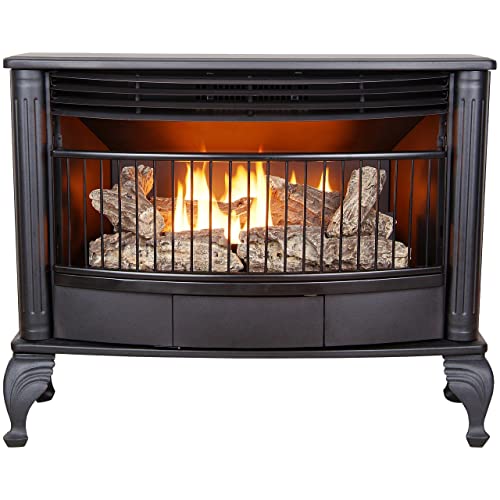
This ventless indoor gas fireplace offers 25,000 BTU output designed to heat up to 1,100 square feet. It uses hand-painted, cast concrete logs with refractory ceramics to simulate a wood look while resisting high temperatures. The unit includes a built-in thermostat with variable heat settings, enabling controlled room temperature without separate controls.
Being ventless, the appliance does not require a chimney but will exchange combustion byproducts in-room, so ventilation and local code compliance are considerations. The thermostat-operated control supports automatic cycling and helps avoid overheating. The visual styling aims to mimic a traditional wood fire while operating on propane or natural gas, depending on installation specifics and fuel supply.
Atlas Authentic Pellet Patio Heater

Designed as a portable outdoor pellet heater, this unit uses smokeless flame technology intended for clean-burning performance on patios, gardens, or campsites. The design emphasizes mobility with built-in wheels and reportedly assembles with minimal tools in 5–10 minutes.
Call 888-896-7031 for Free Local HVAC Quotes – Compare and Save Today!
As a pellet-based freestanding unit, it provides localized radiant heat without requiring permanent installation. The smokeless feature aims to reduce visible smoke and particulate output compared with traditional wood-burning options, which can be an advantage for neighborhood or campsite settings. For outdoor use only, consider surface stability, fuel storage, and local open-flame regulations.
Duraflame Freestanding Electric Stove Heater

This freestanding electric stove offers infrared supplemental heating for rooms up to 1,000 square feet, with realistic 3D flame effects, glowing logs, and side windows for enhanced aesthetics. The unit has a glass door and brick-style back panel to mimic a traditional wood stove.
Electric operation eliminates combustion emissions and venting requirements, simplifying placement and installation. It supports reduced whole-home thermostat setpoints by providing targeted warmth to occupied spaces. The LED flame can be used without heat, providing year-round ambiance. Consider electrical circuit capacity and intended room size when choosing this model.
LGHM 44″ Electric Fireplace With Mantel
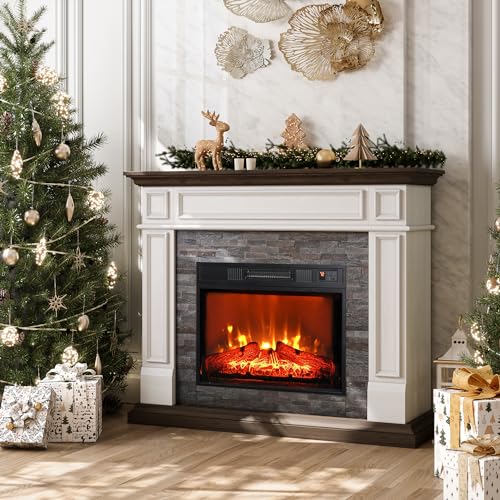
This freestanding electric fireplace and mantel combines a stacked stone surround aesthetic with a realistic 3D dancing flame insert. Dimensions and two-package shipping are noted due to item size. The unit includes remote control, timer features, and a mantel surface suitable for media or décor.
Call 888-896-7031 for Free Local HVAC Quotes – Compare and Save Today!
The insert provides supplemental heating with adjustable temperatures via remote control. The freestanding mantel creates a focal point without a permanent chimney or hearth. For homes prioritizing design integration, this unit blends storage, display surface, and heating functions, but verify delivery logistics and room fit prior to purchase.
SheerAIRE 18″ Panoramic Electric Wood Stove

The SheerAIRE 18″ panoramic stove emphasizes a 270-degree curved viewing angle with a 3D flame effect and selectable flame colors. It offers rapid heat (3S full heat) and multi-speed adjustments to distribute warm air across smaller spaces, with acoustic crackling for ambiance.
Designed for indoor freestanding placement, the unit claims coverage around 300 square feet and includes assembly hardware. The curved glass reduces accidental contact risk compared to flat models. Evaluate room layout and clearance requirements to ensure safe operation and optimal heat distribution.
Buying Guide: How To Choose A Freestanding Wood Heater
Choosing the right freestanding wood heater requires matching your heating needs, installation constraints, and lifestyle preferences. Below are key factors to compare across options.
Heat Source And Fuel Type
- Wood-Burning: Traditional wood stoves provide high heat output and autonomy during outages but need chimney/venting and regular ash removal and maintenance.
- Pellet: Uses compressed pellets and often a hopper feed; more automated combustion and lower visible smoke; usually needs power for feed systems and is suited for both indoor and outdoor pellet units.
- Gas (Ventless or Venting): Offers controllable heat and convenient ignition. Ventless units heat efficiently but release combustion byproducts indoors; confirm local codes and indoor air quality considerations.
- Electric: No combustion, easy installation, and aesthetics-focused (3D flames). Best for supplemental heating and locations lacking chimney access.
Heating Capacity And Room Size
- Match the heater’s stated coverage (square feet) to the intended room. Overpowered units can cycle frequently; undersized units won’t reach comfort setpoints.
- Consider insulation, ceiling height, and open-plan layouts—these affect effective coverage.
Ventilation, Emissions, And Codes
- Ventless Gas units deliver high in-room efficiency but require attention to moisture and combustion byproducts. Check local building codes and carbon monoxide alarm requirements.
- Wood And Pellet stoves typically require chimneys, outdoor vents, or pellet exhaust ports. Verify clearances and flue sizing.
- Electric options avoid these issues and can be used where combustion appliances are restricted.
Installation, Mobility, And Space Needs
- Freestanding electric units often require only a grounded outlet and minimal clearance, while wood and gas units require hearth pads, chimneys, or dedicated gas lines.
- Portable models (e.g., pellet patio heaters) offer mobility but are usually designed for outdoor use with attention to stability and fuel access.
- Large mantel-style units may arrive in multiple packages—plan for delivery and assembly space.
Efficiency And Operating Cost Considerations
- Electric heaters convert nearly all input to heat at the point of use but depend on electricity costs. Infrared models can feel warmer at lower air temperatures.
- Wood can be cost-effective if fuel is available, but labor, maintenance, and chimney servicing add to lifecycle cost.
- Pellet stoves offer steady combustion control and can be cost-effective, but pellet availability and hopper capacity matter.
Maintenance And Durability
- Wood stoves require regular ash removal, creosote cleaning, and chimney inspections.
- Pellet units need hopper and feed auger cleaning and periodic ash removal.
- Electric models require minimal maintenance—dusting vents and occasional bulb or element replacement.
Safety Features And Controls
- Look for thermostats, automatic shutoff, overheat protection, and remote controls for convenience and safety.
- Glass-encased flames reduce direct contact risk; maintain recommended clearances and use floor protection on combustible surfaces.
Design, Ambiance, And Integration
- Decide whether the heater is primarily functional or also a design focal point. Mantels, stacked-stone surrounds, and panoramic glass provide visual impact.
- Electric flame effects are available independently of heat, useful for year-round ambiance.
Comparison Perspectives
- Performance-Focused: Choose higher BTU or multi-speed forced-air models for larger rooms and rapid heat-up.
- Low-Maintenance: Electric units offer the least upkeep and simplest installation.
- Off-Grid Or High Autonomy: Traditional wood stoves provide independence from utilities but require fuel access and chimney infrastructure.
- Outdoor Or Portable Needs: Pellet patio heaters prioritize mobility and lower smoke for outdoor entertaining.
Before purchasing, verify local building codes, required clearances, and whether professional installation or permits are necessary. Match the heater type to your primary priorities—efficiency, ambiance, portability, or autonomy—to select the best freestanding heater for your space.
Tips for Getting the Best HVAC Prices
- Prioritize Quality Over Cost
The most critical factor in any HVAC project is the quality of the installation. Don’t compromise on contractor expertise just to save money. - Check for Rebates
Always research current rebates and incentives — they can significantly reduce your overall cost. - Compare Multiple Quotes
Request at least three estimates before making your choice. You can click here to get three free quotes from local professionals. These quotes include available rebates and tax credits and automatically exclude unqualified contractors. - Negotiate Smartly
Once you've chosen a contractor, use the proven strategies from our guide — How Homeowners Can Negotiate with HVAC Dealers — to get the best possible final price.