
Choosing a compact baseboard heater means balancing footprint, output, and installation. The table below summarizes five compact baseboard heater options selected for small rooms, short wall runs, or retrofit needs. Each entry links to the Amazon listing and highlights primary specs to help comparison at a glance.
| Product | Size / Wattage | Key Feature |
|---|---|---|
| Comfort Zone CZ600 | 1500W (portable / tabletop style) | Adjustable Thermostat, Overheat & Tip-Over Protection |
| Comfort Zone CZ650B | 1500W | Digital Thermostat, Quiet Convection |
| Cadet F Series 36″ | 750W / 36″ | Compact 36″ Length, All-Metal Construction |
| Cadet F Series 48″ | 1000W / 48″ | Pre-Punched Holes, Fast Heating |
| KING 4K1210BW 4′ | 1000W / 4′ | Aluminum Ribbon Element, Hard-Wire |
Content Navigation
Comfort Zone Electric Baseboard Space Heater CZ600

This Comfort Zone model is a convection-style baseboard heater offering 1500 watts of output intended for medium rooms. It includes an adjustable thermostat and two heat settings to tailor heat delivery. The design incorporates dent-proof end panels and a stay-cool body for safer handling.
Key safety features listed include overheat protection and a tip-over switch, which shut power off under fault conditions. The manufacturer highlights whisper-quiet operation, making it suitable for bedrooms or offices where noise is a concern. As a plug-capable convection heater, it’s a straightforward option when a compact heating device is needed without full hard-wiring.
Comfort Zone Baseboard Space Heater CZ650B

The CZ650B is another Comfort Zone convection baseboard that emphasizes digital control. It provides 1500W of heating and two heat settings, with a clear digital thermostat display for precise temperature selection.
Call 888-896-7031 for Free Local HVAC Quotes – Compare and Save Today!
Like other models in the brand line, this heater lists safety features such as tip-over protection, overheat sensing, and a stay-cool body. The model is described as running quietly, making it an option for living spaces where reduced audible operation is preferred. Digital control can improve comfort regulation in smaller rooms compared with simple dial thermostats.
Cadet F Series 36″ Electric Baseboard Heater
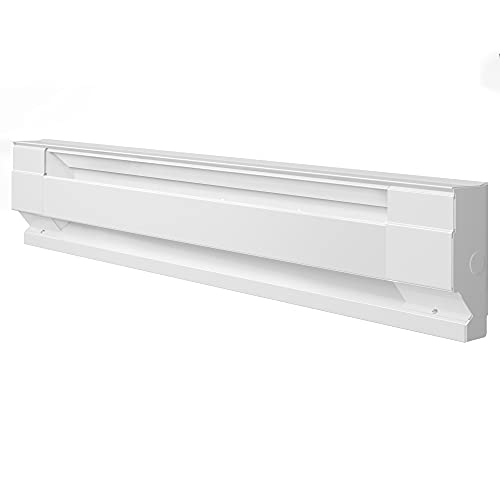
The Cadet F Series 36″ is a true compact baseboard heater offering 750 watts at 120V and a 36-inch length suitable for tight wall spaces. Because of its lower wattage and shorter length, it’s targeted for small rooms, bathrooms, or short runs where larger units won’t fit.
Construction notes list 25 gauge steel20 gauge junction box with ground, and an all-metal powder-coated finish. The unit requires a thermostat (sold separately) for operation, so a compatible wall thermostat or built-in control is necessary for temperature regulation. The compact wattage can reduce circuit load and may fit on existing 120V circuits where higher-wattage units cannot.
Cadet F Series 48″ Electric Baseboard Heater
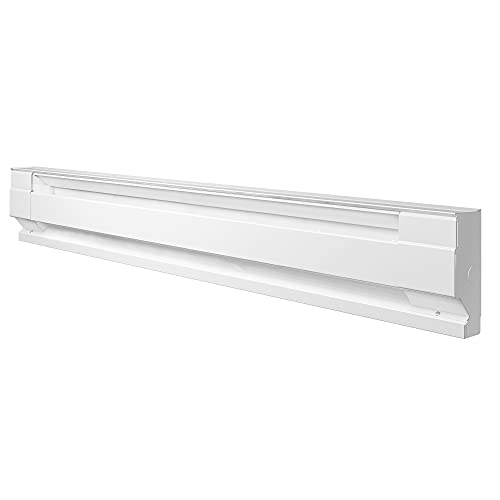
The Cadet 48″ model provides 1000 watts at 120V and is positioned for small to medium rooms. It features pre-punched 1″ casing holes and universal wiring at either end to simplify installation, which is helpful in retrofit scenarios.
Call 888-896-7031 for Free Local HVAC Quotes – Compare and Save Today!
The heater is sheathed in protective steel to optimize heat transfer and long-term durability. A thermostat is not included and is required for operation. The 48″ length offers a middle ground between the very short 36″ unit and longer baseboards, delivering higher output while still fitting in tighter spaces than longer runs.
KING 4K1210BW K Series Baseboard Heater

The KING 4K1210BW is a 4-foot, 1000W hard-wired baseboard heater featuring an aluminum ribbon fin element and a full-length safety cutout. It is not a plug-in model and requires hard-wiring to the electrical circuit, which can support a cleaner fixed installation.
This model’s aluminum ribbon element design is intended to improve heat transfer efficiency while maintaining a compact profile. The full-length safety cutout provides an internal fail-safe to reduce the risk of overheating. As a manufactured 4-foot unit it suits shorter wall runs where a compact hard-wired solution is preferred.
Buying Guide: Choosing The Smallest Baseboard Heater For Your Space
Selecting a compact baseboard heater requires attention to size, electrical capacity, installation type, and safety. Below are key considerations and comparative perspectives to help pick the right unit for a small room or limited wall space.
Physical Size And Room Coverage
- Length vs. Output: Shorter units (36″ or 48″) typically have lower wattage. Consider room square footage and ceiling height. Use roughly 10 watts per square foot as a rough starting estimate for well-insulated rooms.
- Fit In Tight Spaces: For short wall runs or narrow nooks, a 36″ 750W unit may be the only practical choice. Confirm wall clearance requirements in manufacturer specs.
Wattage And Circuit Requirements
- 120V vs 240V: Many compact models operate at 120V; higher wattages or longer runs may require 240V or multiple circuits.
- Circuit Capacity: Check existing circuit ampere capacity before adding a baseboard heater. For example, a 1500W heater at 120V draws ~12.5 amps; a 1000W unit draws ~8.3 amps.
- Hard-Wired vs Plug-In: Plug-in models offer portability and quick installation; hard-wired units provide a cleaner long-term solution but require electrical work.
Thermostat And Control Options
- Built-In vs External Thermostats: Some units require an external wall thermostat—plan for additional components and wiring.
- Digital Precision: Digital thermostats improve temperature control and can reduce energy waste compared to basic mechanical dials.
Safety Features
- Overheat Protection: Essential to automatically shut off heating if internal temperatures rise too high.
- Tip-Over Switches: Important for portable or freestanding baseboard-style units that could be moved or knocked over.
- Stay-Cool Exterior: Reduces burn risk in high-traffic areas or homes with children and pets.
Material, Durability, And Heat Transfer
- Element Type: Aluminum ribbon fins commonly provide efficient heat transfer and lighter weight.
- Casing Material: Steel housings with powder coat finishes increase durability and resist denting over time.
Installation And Maintenance
- Mounting And Wiring: Check whether pre-punched holes and universal wiring were included to ease installation.
- Service Accessibility: Choose units with accessible junction boxes and clear wiring diagrams for future maintenance.
Energy Efficiency And Operating Cost
- Targeted Heating: Small baseboard heaters are best for heating specific rooms rather than whole-home use, which helps lower overall energy use.
- Thermostat Use: Accurate thermostats and proper sizing avoid oversized run times and reduce energy consumption.
Comparison Perspectives
- Shortest Length & Lowest Output: Cadet 36″ (750W) — best where space is extremely limited and lower heat is acceptable.
- Mid-Length, Moderate Output: Cadet 48″ (1000W) and KING 4′ (1000W) — balance between compact size and usable heat for small rooms.
- Portable And Feature-Rich: Comfort Zone 1500W models — higher output in a compact packaged unit with built-in safety and thermostat but check circuit capacity.
- Installation Trade-Offs: Plug-in models offer quick setup; hard-wired units look cleaner and may be required for permanent installations.
When selecting a compact baseboard heater, document wall space available, existing electrical supply, and whether you need a plug-in or hard-wired installation. Prioritize units with appropriate safety features and compatible thermostat arrangements to ensure efficient and reliable performance in tight spaces.
Tips for Getting the Best HVAC Prices
- Prioritize Quality Over Cost
The most critical factor in any HVAC project is the quality of the installation. Don’t compromise on contractor expertise just to save money. - Check for Rebates
Always research current rebates and incentives — they can significantly reduce your overall cost. - Compare Multiple Quotes
Request at least three estimates before making your choice. You can click here to get three free quotes from local professionals. These quotes include available rebates and tax credits and automatically exclude unqualified contractors. - Negotiate Smartly
Once you've chosen a contractor, use the proven strategies from our guide — How Homeowners Can Negotiate with HVAC Dealers — to get the best possible final price.