
Forced air propane heaters can provide rapid, high-output warmth for garages, workshops, and some well-ventilated living spaces. Below is a quick comparison of selected models to help you match capacity, safety, and portability to your space.
| Product | Output | Key Feature |
|---|---|---|
| Mr. Heater MH60QFAV | 30,000–60,000 BTU | Quiet Burner Technology, Variable Output |
| Mr. Heater MH85QFAV | Variable (Up To 85,000 BTU) | Includes Thermostat, Quiet Burner Technology |
| Mr. Heater MH35FA | 35,000 BTU | Compact For Smaller Workspaces, Up To 800 sq ft |
| Flame King 60,000 BTU | 60,000 BTU | Stainless Steel, Safety Shutoffs |
| Dura Heat GFA125A | 70,000–125,000 BTU | Wide Variable Output Range |
Content Navigation
- Mr. Heater MH60QFAV 60,000 BTU Portable Propane Forced Air Heater
- Mr. Heater F271380 MH85QFAV Forced Air Propane Heater
- Mr. Heater 35,000 BTU Propane Forced-Air Heater MH35FA
- Flame King 60,000 BTU Portable Propane Forced Air Heater
- Dura Heat GFA125A 70K–125K BTU Propane Forced Air Heater
- Buying Guide: Choosing A Forced Air Propane Heater For House And Garage
- BTU Output And Room Size
- Indoor Use, Ventilation, And Codes
- Safety Features
- Thermostat And Temperature Control
- Noise Levels
- Fuel Consumption And Run Time
- Installation And Portability
- Construction And Durability
- Certifications And Manufacturer Support
- Noise, Location, And Neighbors
- Maintenance And Serviceability
- Comparison Perspectives
Mr. Heater MH60QFAV 60,000 BTU Portable Propane Forced Air Heater

This model Offers Variable 30,000–60,000 BTU Output, which is useful when you need adjustable heat in spaces like garages or workshops. The unit uses QBT (Quiet Burner Technology) to reduce operational noise by roughly 50% compared to older forced-air designs. Reported runtime on a 20 lb. tank at low setting is up to 14 hours, which is relevant when estimating fuel needs for overnight or extended use.
Features include durable construction, an adjustable output dial, and compatibility with common propane tanks. As with all forced-air propane heaters, ensure adequate ventilation and follow local building or fire codes if used near living areas.
Mr. Heater F271380 MH85QFAV Forced Air Propane Heater

The MH85QFAV Expands output capability for larger garages or workshop areas where more BTUs are required. It includes a thermostat for better temperature control and Quiet Burner Technology for reduced noise. The package typically includes a 10 ft hose and regulator for remote tank placement.
Call 888-896-7031 for Free Local HVAC Quotes – Compare and Save Today!
Additional safety is provided via a high-temperature limit switch. This makes it suitable for temporary heating of larger enclosed work spaces, though continuous indoor use should consider carbon monoxide monitoring and ventilation requirements.
Mr. Heater 35,000 BTU Propane Forced-Air Heater MH35FA

The MH35FA Is the smaller-capacity option in this lineup, producing 35,000 BTU and marketed for compact industrial or commercial areas. It’s rated to heat spaces up to around 800 square feet depending on insulation and climate. Runtime can reach approximately 12 hours on a typical tank at moderate settings.
Its lower output makes it easier to match to smaller garages or sections of a house that have good ventilation. The simpler control layout can be beneficial for users only needing straightforward forced-air heating.
Flame King 60,000 BTU Portable Propane Forced Air Heater

The Flame King Unit Provides 60,000 BTU output and claims coverage up to 1,500 square feet under ideal conditions. Its stainless steel construction emphasizes durability and it includes several safety systems such as built-in fuel shutoff, fire detection, and tilt shutoff.
Call 888-896-7031 for Free Local HVAC Quotes – Compare and Save Today!
It also features auto piezo ignition and a gas control button for modulating flame intensity. These safety and control elements are important for installations near residential spaces where accidental tipping or fuel interruptions must be mitigated.
Dura Heat GFA125A 70K–125K BTU Propane Forced Air Heater
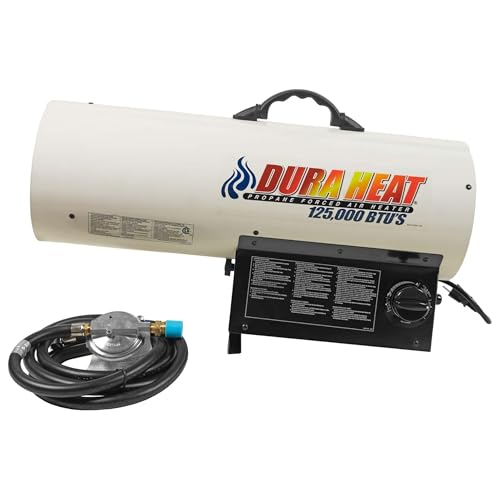
The Dura Heat GFA125A Offers a wide variable output range (70,000–125,000 BTU), making it a flexible option for larger garages, shop buildings, or commercial spaces. Simplicity of operation and long run times when paired with larger propane cylinders are noted features.
Because of its higher output range, this unit suits large-volume spaces but will require careful placement and robust ventilation planning if used in or adjacent to residential areas. Check local codes and ensure appropriate clearances and exhaust plans before indoor use.
Buying Guide: Choosing A Forced Air Propane Heater For House And Garage
Selecting the right forced air propane heater involves matching the unit’s capabilities to space, safety requirements, and usage patterns. Below are the most important factors to consider when comparing models.
BTU Output And Room Size
Estimate heat requirement by square footage, insulation, and climate. A common rough estimate is 20–60 BTU per square foot depending on insulation and desired temperature rise. Choose a model that provides variable output when possible to avoid oversizing.
Indoor Use, Ventilation, And Codes
Forced air propane heaters often produce combustion byproducts and require adequate ventilation. Confirm whether local building codes permit use inside living areas. Always use carbon monoxide (CO) detectors in areas where propane heaters operate and maintain intake/exhaust clearances.
Safety Features
Prefer heaters with automatic fuel shutoff, tip-over protection, and high-temperature limit switches. Thermocouples and thermoelectric safety valves reduce the risk of gas leaks. If planning indoor or semi-enclosed use, these features are critical.
Thermostat And Temperature Control
Built-in thermostats allow more precise temperature maintenance and can save fuel. If a model lacks a builtin thermostat, consider adding a compatible external controller where safe and approved.
Noise Levels
Forced air units produce blower and burner noise. Quiet Burner Technology reduces noise by roughly 50% on some models, which matters for garages attached to homes or for workspaces where prolonged presence occurs.
Fuel Consumption And Run Time
Runtime depends on BTU setting and tank size. Low output settings yield significantly longer runtime. For overnight or extended use, calculate BTU/hr at expected setting and match to tank capacity or plan for larger cylinders.
Installation And Portability
Consider whether you need a portable unit for temporary jobs or a semi-permanent installation. Portables come with handles and short hoses to allow remote tank placement. For permanent setups, check clearance, mounting, and ventilation plans.
Construction And Durability
Look for rugged housings and corrosion-resistant materials such as stainless steel if the heater will be used in damp or outdoor-adjacent areas. Heavy-duty handles and stable bases reduce the risk of tip-over incidents.
Certifications And Manufacturer Support
Verify that the heater has relevant safety certifications and access to replacement parts and support. Reliable manufacturer documentation will include clear operating instructions and maintenance recommendations.
Noise, Location, And Neighbors
Consider placement relative to living spaces. Even quieter forced-air models emit blower noise that can transfer through shared walls. Position units where exhaust and noise impact are minimized.
Maintenance And Serviceability
Routine tasks include cleaning air intakes, checking hoses and regulators, and inspecting tip-over and high-temperature switches. Verify how easy it is to access these components before purchase.
Comparison Perspectives
- Small Spaces: Lower output units (30k–35k BTU) suit insulated garages or single rooms with good ventilation.
- Medium Garages/Workshops: 60k BTU range balances heat and runtime while maintaining more manageable ventilation requirements.
- Large Buildings/Job Sites: 70k–170k BTU units are intended for large-volume spaces and will demand robust ventilation and safety planning.
- Portability Vs. Permanence: Portable blower units are flexible for seasonal or intermittent use; fixed installations require permits and professional assessment.
When assessing models, always cross-check manufacturer installation instructions and local code requirements before indoor use. Use CO detection and follow safety clearances for any forced air propane heater placed in or near a house or occupied space.
Tips for Getting the Best HVAC Prices
- Prioritize Quality Over Cost
The most critical factor in any HVAC project is the quality of the installation. Don’t compromise on contractor expertise just to save money. - Check for Rebates
Always research current rebates and incentives — they can significantly reduce your overall cost. - Compare Multiple Quotes
Request at least three estimates before making your choice. You can click here to get three free quotes from local professionals. These quotes include available rebates and tax credits and automatically exclude unqualified contractors. - Negotiate Smartly
Once you've chosen a contractor, use the proven strategies from our guide — How Homeowners Can Negotiate with HVAC Dealers — to get the best possible final price.