
Choosing the right heating solution for a large room with high ceilings requires systems that deliver strong output, good air circulation, and targeted distribution. Below is a concise comparison of five options suited to high-ceiling spaces, followed by focused product reviews and a buying guide to help match features to room needs.
| Product | Type | Best For |
|---|---|---|
| Comfort Zone Garage Heater | Ceiling-Mount Electric | Warehouses, Garages, High Ceilings |
| Dreo Space Heater 30″ | Ceramic Oscillating Tower | Large Rooms Up To ~300 ft², Air Circulation |
| Dr Infrared Heater Portable | Infrared + PTC Portable | Large Living Areas Needing Rapid Heat |
| Heat Storm HS-1500-PHX-WIFI | Wall-Mount Infrared | Targeted Wall-Mount Heating, Remote Access |
| ZMISHIBO 72″ Ceiling Fan | Large Ceiling Fan With Remote | Heat Redistribution For High Ceilings |
Content Navigation
- Comfort Zone Garage Heater, 5,000-Watt, Ceiling Heater
- Dreo Space Heater Large Room, 30″ Electric Heater
- Dr Infrared Heater Portable Space Heater, Original, 1500-Watt
- Heat Storm HS-1500-PHX-WIFI Infrared Heater, Wifi Wall Mounted
- ZMISHIBO 72 Inch Large Ceiling Fan With Lights And Remote
- Buying Guide: How To Choose A Heater For Large Rooms With High Ceilings
Comfort Zone Garage Heater, 5,000-Watt, Ceiling Heater

Type: Ceiling-mounted, hard-wired electric heater designed for large, open spaces. Construction: Heavy-gauge steel housing intended for durability in poorly insulated areas. Heat Delivery: Fan-forced output with louvers and adjustable mounting angle to direct airflow where needed.
This unit’s ceiling-mount design preserves floor space and positions the heater high where warm air can be directed into occupied zones. The adjustable louvers and mounting angle support more precise heating than a fixed overhead unit. Overheat protection and ETL listing address basic safety and code compliance for indoor commercial or shop environments.
Consider this model if your room has limited wall space, needs durable construction, and benefits from overhead heating that keeps floor areas clear of equipment or furniture. Keep in mind the 240V hard-wired installation requirement when planning placement and electrical work.
Dreo Space Heater Large Room, 30″ Electric Heater

Call 888-896-7031 for Free Local HVAC Quotes – Compare and Save Today!
Type: 30-inch ceramic tower with large PTC element and customizable oscillation. Coverage: Designed for rooms up to roughly 300 ft². Controls: Remote, multiple heat and fan levels, timer, and adjustable oscillation angles.
The Dreo 30″ unit emphasizes widespread heat distribution via a large PTC element and selectable oscillation (30°–120°). Oscillation combined with a high-output ceramic element helps push warm air across a larger floor area, which is important in rooms with heat stratification due to high ceilings.
Safety features include cool-touch housing, tip-over protection, and ETL certification. For high-ceiling rooms, pair this heater with ceiling fans or a dedicated circulation strategy to reduce warm-air buildup overhead and improve overall comfort at occupant level.
Dr Infrared Heater Portable Space Heater, Original, 1500-Watt
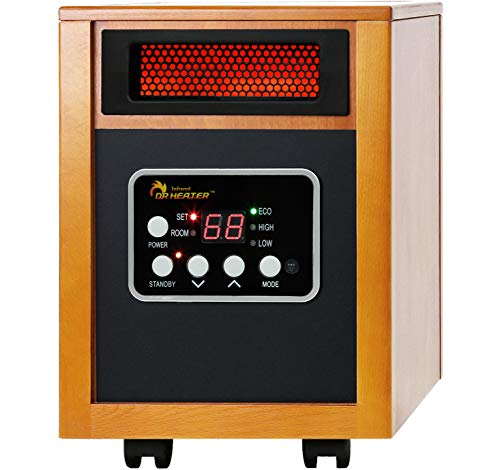
Type: Portable dual heating system combining infrared quartz tubes and PTC. Output: 1500W with blower and remote control. Noise: Low-noise blower (~39 dB) for quiet operation.
The dual heating approach pairs infrared radiation—which heats objects and people directly—with a PTC convective element to warm air. This combination helps reduce perceived chill quickly in large rooms where air temperature alone lags. The integrated blower assists with distribution; however, in very tall rooms, strategic placement and auxiliary circulation will still be needed.
Call 888-896-7031 for Free Local HVAC Quotes – Compare and Save Today!
Safety features include tip-over and overheat protection and a 12-hour timer for unattended operation. This model suits occupants seeking rapid, comfortable warmth in a large living area where portability and quiet operation are priorities.
Heat Storm HS-1500-PHX-WIFI Infrared Heater, Wifi Wall Mounted

Type: Wall-mounted infrared panel with Wi-Fi connectivity and digital thermostat. Design: Space-saving wall installation that keeps floor clear. Controls: Smartphone control, touchscreen, and remote.
Wall-mounted infrared panels heat surfaces directly rather than only warming air. For high-ceiling rooms, wall mounting at occupant height can improve comfort where overhead heaters may leave occupants cold. Wi-Fi control enables scheduling and remote temperature adjustments so you can preheat after periods of vacancy.
Tip-over safety is less relevant for wall units, but the product includes overheat protection and a digital thermostat for stable output. Use this heater in conjunction with ceiling fans or overhead units to manage stratification in tall rooms effectively.
ZMISHIBO 72 Inch Large Ceiling Fan With Lights And Remote
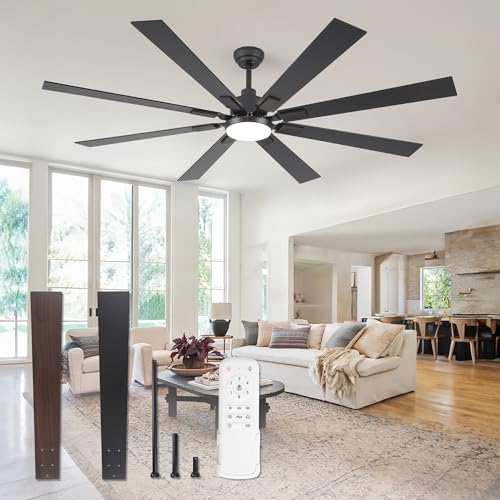
Type: 72-inch ceiling fan with reversible DC motor, multiple speeds, and remote control. Mounting: Includes multiple down rods for high ceilings. Lighting: Integrated LED with adjustable CCT settings.
Large ceiling fans are not heaters but are critical for redistributing warm air in rooms with high ceilings. Running the fan clockwise at low speed during heating season pushes warm air down from the ceiling toward the living zone without creating a cooling breeze. The included long down rods and multiple speed settings support effective installation in rooms with tall ceilings.
When paired with ceiling-mounted or wall-mounted heaters, a large fan is a cost-effective way to reduce stratification, improve comfort, and increase perceived warmth at occupant level.
Buying Guide: How To Choose A Heater For Large Rooms With High Ceilings
Assess Room Volume And Heat Loss
Measure square footage and ceiling height to estimate cubic feet. Calculate approximate heat requirement in BTU or watts; higher ceilings multiply required output due to increased air volume and heat stratification. Consider insulation, window area, and door traffic as heat-loss factors.
Choose Appropriate Heater Type
- Ceiling-Mounted Heaters: Good for saving floor space and delivering overhead forced air heat; use adjustable louvers to aim heat down to occupied zones.
- Wall-Mounted Infrared Panels: Heat surfaces and occupants directly; effective when mounted at occupant height to compensate for warm air rising.
- Portable Infrared/PTC Units: Provide direct radiant heat plus convective warming; useful for supplementing central systems and targeting occupancy zones.
- Ceramic Tower Heaters With Oscillation: Spread warm air across a horizontal plane; oscillation helps cover larger floor area but needs circulation assistance for very tall rooms.
- Ceiling Fans: Essential accessory to redistribute warm air downward; reversible direction during heating season is crucial.
Key Features To Prioritize
- Heating Output: Match watts or BTU to room volume; more cubic footage requires higher output or multiple units.
- Airflow And Distribution: Oscillation, adjustable louvers, and built-in fans improve distribution versus static radiant panels.
- Mounting And Placement: Ceiling or wall installation helps when floor space is limited; ensure electrical compatibility (120V vs 240V, hard-wired requirements).
- Controls And Scheduling: Thermostats, timers, and Wi‑Fi/remote control allow preheating and energy management for intermittent occupancy.
- Safety Features: Look for overheat protection, tip-over switches (portables), ETL/UL listings, cool-touch housings, and certified fire-resistant materials.
- Noise Level: Consider blower noise for living areas; radiators and oil-filled units are quieter than fan-forced units.
Circulation Strategies For High Ceilings
- Install large, reversible ceiling fans to move warm air downward and avoid stratification.
- Use directional louvers on ceiling heaters to point output toward occupied zones rather than the ceiling.
- Combine heating sources: a ceiling or wall heater for base heat and a portable heater for spot warming where occupants gather.
- Schedule intermittent higher output to quickly raise surface temperature, then maintain with lower sustained heat.
Energy Efficiency And Operating Cost Considerations
Higher wattage units provide faster warm-up but increase energy consumption. Look for eco modes, programmable thermostats, and zone heating strategies to limit run-time. Infrared heat can feel warmer at lower air temperatures since it directly warms people and surfaces, potentially saving energy in intermittently occupied spaces.
Tips for Getting the Best HVAC Prices
- Prioritize Quality Over Cost
The most critical factor in any HVAC project is the quality of the installation. Don’t compromise on contractor expertise just to save money. - Check for Rebates
Always research current rebates and incentives — they can significantly reduce your overall cost. - Compare Multiple Quotes
Request at least three estimates before making your choice. You can click here to get three free quotes from local professionals. These quotes include available rebates and tax credits and automatically exclude unqualified contractors. - Negotiate Smartly
Once you've chosen a contractor, use the proven strategies from our guide — How Homeowners Can Negotiate with HVAC Dealers — to get the best possible final price.
Installation, Maintenance, And Safety
- Verify whether the unit requires hard-wiring, a dedicated circuit, or simple plug-in installation and plan electrical work accordingly.
- Keep clearances around heaters as specified by the manufacturer and install at recommended heights for optimal performance.
- Perform routine checks for dust buildup on fan blades, louvers, and heating elements to preserve efficiency and safety.
Comparison Perspectives
- Coverage vs. Placement: Ceiling and wall units serve wide areas without occupying floor space; portable units deliver spot heat where needed.
- Distribution vs. Direct Warmth: Fan-forced and oscillating units distribute warmed air broadly; infrared panels and radiators provide more direct thermal comfort to occupants.
- Noise vs. Quiet Operation: Oil-filled and radiant heaters offer low noise; fan-forced units and blowers produce more sound but improve circulation.
- Installation Complexity: Plug-in portables are simplest; hard-wired ceiling or wall units may require professional installation and electrical capacity planning.