
Staying warm on truck camping trips requires reliable, efficient heating solutions that fit vehicle constraints and safety needs. Below is a compact comparison of five top heater options suited to truck camping, followed by individual product overviews and a detailed buying guide to help you choose the right system for your setup.
| Product | Type | Key Benefit |
|---|---|---|
| Mr. Heater Portable Buddy Heater MH9BX | Propane Radiant Heater | Portable infrared heat for small enclosed spaces |
| VEVOR Diesel Heater All In One 8KW | Diesel Air Heater (All-in-One) | High-output, continuous heating with LCD/remote control |
| Buyplus Portable Propane Heater 6200 BTU | Propane Radiant Heater | Compact, lightweight propane heat for quick warmth |
| Stalwart 12-Volt Heated Blanket (Black Plaid) | 12V Electric Blanket | Low-draw personal warmth via vehicle 12V outlet |
| outequip 12V 10000 BTU Rooftop AC (With Heater) | Rooftop AC With Supplemental Heater | Dual climate control for trucks/vans with HVAC integration |
Content Navigation
Mr. Heater Portable Buddy Heater MH9BX
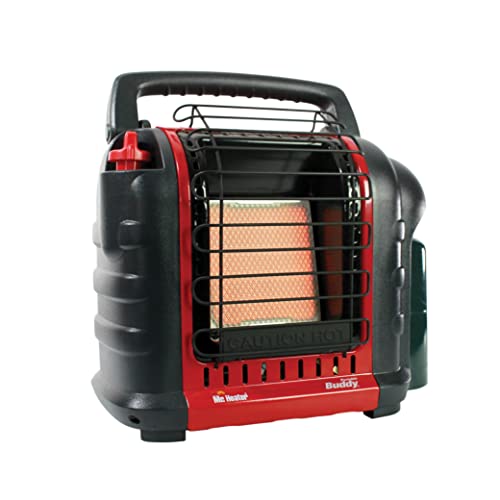
Type: Propane radiant heater. Heat Output: 4,000–9,000 BTU. Designed for small enclosed spaces such as campers, truck sleepers, or tents with proper ventilation protocols.
This unit uses infrared radiant heat to warm people and objects directly rather than heating large volumes of air, which can feel efficient in small camping cabins or truck sleepers. It features an improved tip-over safety switch and an integrated Piezo igniter for match-free starts. The heater is intended to cover up to 225 sq. ft. under manufacturer guidance, and its adjustable BTU range lets users modulate heat output for comfort and fuel economy.
Key considerations include the need for safe propane storage, ensuring adequate ventilation to manage CO and combustion byproducts, and following the heater’s indoor-safe guidelines. This model is portable and widely used for short-term heating during truck camping when propane is acceptable and ventilation is managed.
VEVOR Diesel Heater All In One 8KW

Call 888-896-7031 for Free Local HVAC Quotes – Compare and Save Today!
Type: All-in-one diesel air heater. Power: 8 kW. Controls: LCD panel and remote. Designed to heat cabins up to approximately 215–269 ft² depending on insulation.
This unit is a self-contained diesel air heater marketed as an installation-free solution, though vehicle mounting and secure placement should be planned for safe operation. It highlights rapid heat transfer via a sandblasted aluminum heat exchanger and a wide temperature range with precise control from 46 °F to 96.8 °F.
VEVOR emphasizes low fuel consumption—an important factor for extended truck camping—and offers up to about eight hours of operation on the built-in fuel tank under certain conditions. The LCD and long-range remote enable preheating the vehicle before entry, which is useful for overnight comfort and for preventing window frost. Diesel heaters generally require consideration of exhaust routing, mounting stability, and fuel feed security for safe use in or around sleeping areas.
Buyplus Portable Propane Heater 6200 BTU

Type: Small portable propane heater. Heat Output: 6,200 BTU. Intended for outdoor or ventilated spaces up to around 200 sq. ft.
The Buyplus heater is lightweight and compact, designed for direct, quick radiant warmth. It has an adjustable control knob to regulate output. This unit is useful where portability and simple ignition are priorities—examples include open-bed truck camping setups, well-ventilated awnings, or short-term external warming near a truck campsite.
Call 888-896-7031 for Free Local HVAC Quotes – Compare and Save Today!
Safety and ventilation are primary considerations. Propane heaters produce combustion byproducts; therefore, use in enclosed sleeping compartments without adequate ventilation is not advised. Its portability and quick heat delivery make it a practical supplemental option when used in compliant, ventilated configurations.
Stalwart 12-Volt Heated Blanket (Black Plaid)

Type: 12-volt electric heated blanket that plugs into a vehicle cigarette lighter. Features: Long 96-inch cord, thin lightweight fleece, folds for storage.
For truck campers prioritizing low-risk, low-power personal warmth, a 12V heated blanket provides heat directly to the occupant without the combustion risks associated with gas heaters. The Stalwart blanket is car-adaptable, warms quickly, and keeps users cozy as long as the vehicle’s 12V outlet can supply power. The extra-long cord allows rear-seat or sleeper access while keeping the vehicle in a safe configuration.
Limitations include the blanket’s heating capacity relative to ambient conditions—12V blankets are best for supplemental personal warmth rather than heating a full sleeping area in extreme cold. They also depend on the vehicle battery/alternator capacity for prolonged use, so monitoring battery health is advised.
outequip 12V 10000 BTU Rooftop Air Conditioner (With Heater)

Type: Low-profile rooftop AC unit with supplementary PTC electric heater. Cooling: 10,000 BTU. Supplementary Heat: 4,500 BTU PTC heater for mild conditions.
This rooftop unit is suited for truck campers or converted vans where permanent HVAC integration is desired. It cools rapidly and provides a supplemental electric heating option for mild cold; however, the PTC heater is not intended as a primary heat source in extreme cold or for large, poorly insulated spaces.
Advantages include integrated climate control and weather-resistant construction for rooftop exposure. Consider power source needs, installation complexity, and that electric supplemental heaters can impose significant electrical loads, often necessitating shore power, generator, or upgraded battery/inverter systems for extended off-grid operation.
Buying Guide For Truck Camping Heaters
This guide outlines key considerations when choosing a truck camping heater to match vehicle type, safety requirements, and camping style.
1. Heat Source Types And Use Cases
- Propane Radiant Heaters: Offer quick, high-intensity radiant heat. Best for short-term warming or well-ventilated camper compartments. Require safe propane storage and in-use ventilation.
- Diesel Air Heaters: Provide continuous, efficient heat with low fuel consumption and integrated exhaust routing. Ideal for longer trips and truck camper installations where diesel fuel is accessible.
- 12V Electric Blankets / PTC Heaters: Low-combustion risk and simple to use from vehicle power. Best for personal warmth or mild conditions; limited for whole-space heating unless supported by robust battery/inverter systems.
- Rooftop AC With Heater: Offers integrated climate control. Useful when permanent mounting and shore/generator power are planned; electric heat is typically supplemental.
2. Safety Considerations
- Ventilation: Combustion heaters (propane/diesel) require adequate ventilation and CO monitoring. Install CO and propane detectors in sleeping areas.
- Tip-Over & Shutoff Features: Choose models with tip-over protection and automatic shutoffs to reduce fire and carbon monoxide risk.
- Exhaust Routing and Mounting: Ensure proper exhaust routing for combustion heaters and secure mounting to prevent fuel or exhaust leaks.
- Electrical Load Management: For electric heaters and blankets, verify the truck’s 12V outlet, alternator, or inverter/battery capacity to avoid draining the battery.
3. Power Source And Fuel Logistics
- Propane: Easy refueling and lightweight cylinders; consider storage and legal transport rules in your area.
- Diesel: Efficient for long-duration heating and uses existing vehicle fuel for some systems; check heater tank capacity and consumption rates.
- Electric: Requires 12V outlets, auxiliary batteries, or shore/generator power. Best for supplemental warmth unless supported by large battery banks or generators.
4. Heating Capacity And Insulation
- Match BTU or kW ratings to your cabin volume and insulation level. Well-insulated sleeper cabs need less output than open or uninsulated spaces.
- Consider supplemental measures—insulated window covers, heated blankets, and thermal sleeping gear—to reduce required heater output and fuel use.
5. Portability Vs. Permanent Installation
- Portable Units: Provide flexibility, easy storage, and fewer installation steps. Ideal for short trips or temporary setups.
- Permanent/All-In-One Units: Offer greater efficiency and integration for long-term truck conversions but require installation planning and potential professional fitting.
6. Noise, Maintenance, And Reliability
- Check noise specifications for devices used in sleeping areas. Diesel fans and blowers can produce steady mechanical noise.
- Review required maintenance: filter cleaning, fuel pump checks, and periodic combustion system inspection for safety and longevity.
7. Controls And Convenience
- Remote or timed controls enable preheating before entry. LCD panels and thermostatic control improve comfort and fuel efficiency.
- Look for simple ignition systems (Piezo, electric) for reliable starts without external tools.
8. Regulatory And Warranty Considerations
- Confirm compliance with local safety regulations and recognized testing standards for indoor use. Retain manufacturer documentation and follow warranty installation guidance.
Comparing options across these perspectives—fuel type, ventilation needs, power availability, and installation scope—will help you select the best truck camping heating solution aligned with safety and comfort priorities.
Tips for Getting the Best HVAC Prices
- Prioritize Quality Over Cost
The most critical factor in any HVAC project is the quality of the installation. Don’t compromise on contractor expertise just to save money. - Check for Rebates
Always research current rebates and incentives — they can significantly reduce your overall cost. - Compare Multiple Quotes
Request at least three estimates before making your choice. You can click here to get three free quotes from local professionals. These quotes include available rebates and tax credits and automatically exclude unqualified contractors. - Negotiate Smartly
Once you've chosen a contractor, use the proven strategies from our guide — How Homeowners Can Negotiate with HVAC Dealers — to get the best possible final price.