
Choosing the right heater for indoor use depends on room size, safety features, and control options. Below is a concise comparison of five relevant indoor space heaters selected from popular Amazon listings, followed by individual product overviews and a detailed buying guide.
| Product | Type | Power | Key Safety/Control Features |
|---|---|---|---|
| Dreo Space Heater (Digital, 1500W) | Portable PTC Ceramic | 1500W | Remote, Precise Thermostat, Tip-Over & Overheat Protection |
| Dreo 25″ Fast Electric Heater | Tower Ceramic Heater | 1500W | Extended Heat Range, Child Lock, Tip-Over & Overheat Protection |
| GiveBest Portable Electric Space Heater | Compact Ceramic Heater | 1500W / 750W | Thermostat, Tip-Over & Overheat Protection, Carry Handle |
| Dreo Space Heater (Oscillating, 1500W) | Oscillating PTC Ceramic | 1500W | 70° Oscillation, 8 Safety Protections, Remote, Timer |
| Aikoper PTC Ceramic Space Heater | Compact Ceramic Heater | 1500W | 3 Heat Settings, Fan Mode, Adjustable Thermostat |
Content Navigation
- Dreo Space Heater, Portable Electric Heaters For Indoor Use
- Dreo Space Heater For Indoor Use, 25″ Fast Electric Heater
- GiveBest Portable Electric Space Heater With Thermostat
- Dreo Space Heater, 1500W Electric Heaters For Indoor Use
- Space Heater, PTC Fast Heating Ceramic Room Small Heater
- Buying Guide: How To Choose The Best Indoor Heater
Dreo Space Heater, Portable Electric Heaters For Indoor Use

This Dreo model combines a 1500W PTC heating element with an updated heat funnel that aims to accelerate warm-air delivery and improve circulation compared to conventional designs. The product listing highlights a wide thermostat range from 41-95°F with 1°F increments, enabling precise temperature control for energy management.
Safety features include a tilt-detection sensor for tip-over protection, V0 flame-retardant materials, overheat protection, and an ETL certification. The unit offers multiple modes, a digital display, a remote, and a 12-hour timer. The combination of fast heating and fine thermostat increments targets users who need controlled, targeted warmth in bedrooms or offices.
Dreo Space Heater For Indoor Use, 25″ Fast Electric Heater

This 25″ Dreo tower-style heater emphasizes extended coverage through an extended impeller and Hyperamics thermal design that claims faster airflow and a longer reach. The listing indicates an 11.5 ft/s output and specifically positions the unit for larger rooms.
Call 888-896-7031 for Free Local HVAC Quotes – Compare and Save Today!
Included safety and convenience features are ETL certification, 45° tip-over protection, overheat protection, a child lock setting, and low operational noise down to roughly 32 dB. Controls include a remote and thermostat options across modes. The tower form factor is intended for distributed airflow across greater floor area.
GiveBest Portable Electric Space Heater With Thermostat

GiveBest offers a compact 2-in-1 heater and fan with selectable power at 1500W or 750W plus a cool-air fan mode for summer. The thermostat cycles based on a preset temperature range up to 158°F, providing simple automated control for localized heating.
Safety is addressed with flame-retardant materials, automatic shutoff on overheating, and tip-over protection that can restart when uprighted. A built-in carry handle is noted for portability. The design suits smaller rooms, desks, or personal zones where directional heat and portability are priorities.
Dreo Space Heater, 1500W Electric Heaters For Indoor Use

This Dreo unit focuses on oscillating heat distribution with a 70° oscillation option in some models and claims a heating coverage around 200 sq. ft. The PTC ceramic element heats rapidly and is coupled with an airflow design that aims to minimize noise levels to roughly 34 dB.
Call 888-896-7031 for Free Local HVAC Quotes – Compare and Save Today!
Safety specifications list ETL certification, multiple protections including tip-over and overheat detection, a 12-hour timer, and a long flat power cord. Controls include a remote, multiple modes, and an adjustable thermostat. The product is marketed as versatile for bedrooms, living rooms, home offices, and similar indoor spaces.
Space Heater, PTC Fast Heating Ceramic Room Small Heater
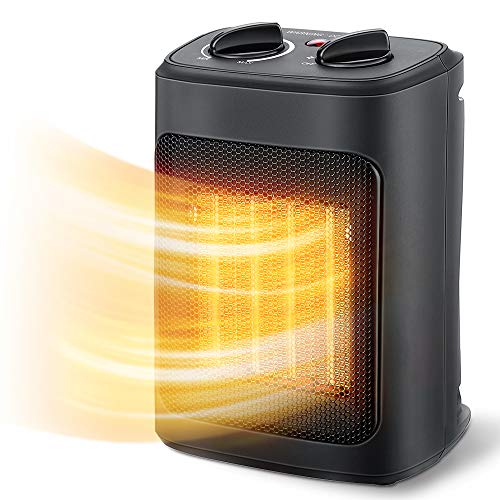
The Aikoper compact space heater advertises PTC ceramic heating technology for rapid warm-up and even distribution. It offers three heat settings plus a fan-only option so the unit can be used year-round for supplemental cooling or heating.
The adjustable thermostat maintains temperature based on the environment, and the listing highlights energy-efficiency by focusing heat on occupied spaces rather than whole-home heating. The design is oriented toward small-to-medium rooms and users who prefer a simple mechanical or digital thermostat interface.
Buying Guide: How To Choose The Best Indoor Heater
Selecting the right indoor heater requires matching device capabilities to room characteristics, safety needs, and intended usage. Below are key considerations grouped for clear decision-making.
Heating Type And Technology
- PTC Ceramic Heaters: Provide rapid warm-up and self-regulating behavior. Useful for quick, targeted heating in bedrooms and offices.
- Fan-Forced Heaters: Distribute warm air quickly; look for low-noise airflow designs if used in bedrooms or offices.
- Tower vs. Compact: Tower heaters often provide wider airflow and are better for larger rooms; compact heaters are portable and suitable for personal spaces.
Power And Coverage
- Wattage: 1500W is common for portable electric heaters and generally effective for single rooms. Adjustable power levels (e.g., 750W/1500W) help manage energy consumption.
- Room Size: Confirm manufacturer coverage estimates (e.g., 200–250 sq. ft.). Consider insulation quality and ceiling height when estimating performance.
Control And Convenience Features
- Thermostat Precision: Digital controls with fine increments improve comfort and energy efficiency.
- Timers And Remote Control: Timers add scheduling convenience; remotes are useful when the heater is not easily reachable.
- Oscillation: Oscillating units distribute heat across a wider area, reducing hot spots.
Safety Features
- Tip-Over Protection: Essential for portable units; look for automatic shutoff when the heater is knocked over.
- Overheat Protection: Shuts the unit down if internal temperatures exceed safe limits.
- Certifications & Build Materials: ETL or similar listings, V0 flame-retardant materials, and reinforced plugs improve reliability and safety.
Noise And Comfort
- Decibel Ratings: If the heater will be used in bedrooms or quiet workspaces, target models with noise levels in the low 30 dB range.
- Airflow Design: Oblique or optimized airflow can reduce wind noise while maintaining heat output.
Energy Use And Efficiency
- Targeted Heating: Use space heaters to warm occupied areas instead of whole-home heating to save energy.
- Power Modes: Multi-level power settings and ECO modes help reduce consumption over time.
Installation And Portability
- Portable Units: Look for integrated handles and lightweight construction for room-to-room use.
- Wall-Mounted Options: Wall heaters provide permanent placement and can free up floor space; evaluate mounting requirements and clearance.
Use Case Perspectives
- Bedroom Use: Prioritize quiet operation, precise thermostat control, and safety features. Oscillating or low-noise ceramic units are appropriate.
- Large Rooms or Open Areas: Tower heaters with extended impellers or higher airflow claims may distribute heat more broadly.
- Home Office: Opt for a model with remote control, timer, and moderate noise levels to avoid distraction.
- Portable/Personal Use: Compact 750–1500W units with handles and adjustable settings suit desktop or small-room needs.
Maintenance And Longevity
- Cleaning: Select models with accessible air inlets and follow manufacturer instructions to avoid dust build-up.
- Cord And Plug Care: Use the unit plugged directly into wall outlets unless the manufacturer specifies suitable extension cords or power strips.
- Warranty & Support: Check the listing for warranty duration and customer support channels for potential repairs or replacement parts.
Using the considerations above, match the heater’s specs—power, coverage, safety, noise, and controls—to the intended room and habits. When safety listings such as ETL and explicit tip-over and overheat protections are present, they add an objective layer of assurance for indoor operation.
Tips for Getting the Best HVAC Prices
- Prioritize Quality Over Cost
The most critical factor in any HVAC project is the quality of the installation. Don’t compromise on contractor expertise just to save money. - Check for Rebates
Always research current rebates and incentives — they can significantly reduce your overall cost. - Compare Multiple Quotes
Request at least three estimates before making your choice. You can click here to get three free quotes from local professionals. These quotes include available rebates and tax credits and automatically exclude unqualified contractors. - Negotiate Smartly
Once you've chosen a contractor, use the proven strategies from our guide — How Homeowners Can Negotiate with HVAC Dealers — to get the best possible final price.