
Wall-mounted ceramic heaters save floor space while delivering targeted warmth. Below is a quick comparison of five relevant models selected for their wall-mount design, ceramic or PTC heating elements, smart features, and safety systems.
| Model | Type | Key Feature | Ideal For |
|---|---|---|---|
| Dreo Smart Wall Heater WH719S | PTC Ceramic | 120° Oscillation, Smart App | Bedrooms, Living Areas |
| Dreo IP24 Wall Heater | PTC Ceramic | IP24 Water Resistant, 30° Oscillation | Bathrooms, Offices, Bedrooms |
| Brightown Wall Space Heater | PTC Ceramic | Fast Heat, Precise Thermostat | Small Rooms, Dorms, Offices |
| Heat Storm HS-1500-PHX-WIFI | Infrared Panel | Wi‑Fi Control, Touch Screen | Open Rooms, Kitchens, Offices |
| ENVI Plug-In Electric Panel Heater | Convection Panel (Fan-less) | Low Wattage, Silent | Continuous Background Heat, Allergy-Sensitive Users |
Content Navigation
- Dreo Smart Wall Heater WH719S
- Dreo IP24 Wall-Mounted Heater
- Brightown Wall Space Heater
- Heat Storm HS-1500-PHX-WIFI
- ENVI Plug-In Electric Panel Heater
- Buying Guide: How To Choose A Wall-Mounted Ceramic Heater
- 1. Heating Technology: Ceramic/PTC vs Infrared vs Convection
- 2. Room Size And Coverage
- 3. Controls And Connectivity
- 4. Safety Features
- 5. Noise And Air Quality
- 6. Installation And Electrical Requirements
- 7. Energy Use And Operating Costs
- 8. Durability, Warranty, And Brand Support
- 9. Safety And Regulatory Certifications
- 10. Matching Heater Type To Use Case (Comparison Perspective)
Dreo Smart Wall Heater WH719S

This Dreo model uses a PTC ceramic heating element with 120° vertical oscillation to distribute warm air from top to bottom. The unit supports smart control through the Dreo app and voice assistants, and it offers a precise thermostat range (41–95°F) with 1°F accuracy. Built-in scheduling and a 24-hour timer enable automation for consistent comfort. The wide oscillation helps reduce cold spots in mid-size rooms.
Safety and install: Designed for indoor wall mounting with quick mount hardware. Remote control is included for local operation. Use cases include bedrooms and living rooms where targeted, app-controlled heat is useful.
Dreo IP24 Wall-Mounted Heater

This Dreo wall heater combines a PTC heating core with a compact design and IP24 splash-resistant rating, making it suitable for bathrooms or locations where moisture may be present. It offers manual 30° oscillation to direct airflow, a low noise profile (around 28 dB), and multiple control options including remote, app, and voice assistants.
Call 888-896-7031 for Free Local HVAC Quotes – Compare and Save Today!
Performance and reliability: Overheat protection and flame-retardant materials add safety margins. The unit is intended for indoor use in spaces that require a balance of quiet operation and dependable targeted warmth.
Brightown Wall Space Heater

The Brightown wall heater uses a ceramic PTC plate that heats quickly (claimed rapid heat-up) and supports a precise thermostat with 1°F increments. The LED display and programmable timer (1–12 hours) provide control for night and day schedules. Built-in safety features include overheat protection and ETL certification.
Design and use: Best suited for small to medium rooms, dorms, or offices where fast, localized heat and precise temperature control are priorities. The unit mounts to the wall and aims to provide quiet operation for continuous or scheduled use.
Heat Storm HS-1500-PHX-WIFI

The Heat Storm HS-1500-PHX is an infrared wall-mounted panel with Wi‑Fi connectivity and an integrated digital touchscreen thermostat. Infrared panels heat objects and people directly rather than relying solely on convection, which can feel faster in open spaces. The wall-mount design saves floor space and includes a remote for convenience.
Call 888-896-7031 for Free Local HVAC Quotes – Compare and Save Today!
Considerations: This unit is an infrared panel rather than a ceramic PTC heater. Infrared heating performance differs from ceramic convection units: it can be more effective in open areas and for direct spot heating, but distribution characteristics vary by room layout.
ENVI Plug-In Electric Panel Heater
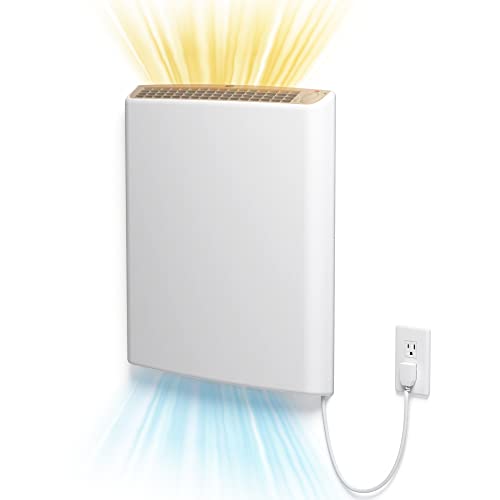
The ENVI panel is a fan-less, low-wattage convection heater designed for continuous background heating. It operates quietly and runs at a modest surface temperature (~90°F) with a patented “stack convection” approach to move warm air naturally. Safety features include a wall-sense sensor that cuts power if removed and auto-dimming lights to reduce disturbance.
Use cases: Ideal for allergy-sensitive environments due to lack of a fan (no dust circulation), for continuous 24/7 use, or to supplement central heat in specific zones like nurseries, hallways, or offices.
Buying Guide: How To Choose A Wall-Mounted Ceramic Heater
Selecting the right wall-mounted heater requires balancing heating method, room size, safety, controls, and installation constraints. Below are key considerations and comparison perspectives to guide your purchase.
Tips for Getting the Best HVAC Prices
- Prioritize Quality Over Cost
The most critical factor in any HVAC project is the quality of the installation. Don’t compromise on contractor expertise just to save money. - Check for Rebates
Always research current rebates and incentives — they can significantly reduce your overall cost. - Compare Multiple Quotes
Request at least three estimates before making your choice. You can click here to get three free quotes from local professionals. These quotes include available rebates and tax credits and automatically exclude unqualified contractors. - Negotiate Smartly
Once you've chosen a contractor, use the proven strategies from our guide — How Homeowners Can Negotiate with HVAC Dealers — to get the best possible final price.
1. Heating Technology: Ceramic/PTC vs Infrared vs Convection
- Ceramic/PTC Heaters: Use ceramic elements that heat quickly and rely on convection or forced-air oscillation to distribute warmth. Strengths: fast room warm-up, precise thermostats, good for enclosed rooms.
- Infrared Panels: Heat objects and occupants directly. Strengths: immediate radiant warmth, effective in open or drafty spaces, quiet operation. Drawbacks: less uniform air temperature distribution.
- Fan-less Convection Panels: Provide gentle, silent heat via natural convection. Strengths: low noise, minimal dust movement, ideal for continuous background heat. Drawbacks: slower to change room temperature.
2. Room Size And Coverage
- Match wattage and output to room volume. Typical 1500W wall units serve small-to-medium rooms effectively. For larger spaces, consider multiple units or a higher-capacity solution.
- Oscillation and louvers affect distribution. Wider oscillation angles (e.g., 120°) can reduce cold pockets; directional or adjustable vents help target specific zones.
3. Controls And Connectivity
- Manual Controls: Simple dials and remotes are reliable and easy to use.
- Smart Controls: Wi‑Fi and app integration lets you schedule, remote-control, and use voice assistants. Useful for timed energy savings and remote management.
- Thermostat Precision: Units with 1°F increments offer tighter comfort control and can reduce energy waste compared to coarse low/med/high settings.
4. Safety Features
- Look for overheat protection, tip-over sensors (if portable or partially mounted), and flame-retardant materials.
- For bathrooms or damp areas, choose models with an IP rating (e.g., IP24) for splash resistance.
- Wall-sense or removal-cutoff sensors prevent powered elements from running if the unit is detached.
5. Noise And Air Quality
- Fan-assisted ceramic heaters can produce low fan noise; check decibel ratings if you need quiet operation for bedrooms.
- Fan-less designs minimize dust circulation and are better for allergy sufferers or sleep-sensitive spaces.
6. Installation And Electrical Requirements
- Confirm mounting hardware compatibility with wall type (drywall, stud, tile). Some units require professional hardwiring, while others plug in or use a recessed box.
- Verify voltage options (120V vs 240V) for units that support multiple supply configurations. When in doubt, consult an electrician.
7. Energy Use And Operating Costs
- Ceramic PTC heaters are often efficient at converting electricity to heat but run-time, thermostat control, and insulation quality determine actual energy consumption.
- Smart scheduling and precise thermostats reduce run time and can cut operating costs compared to manual high-power operation.
8. Durability, Warranty, And Brand Support
- Check manufacturer warranty terms and available replacements or support. Wall-mounted units typically see long service life when installed correctly.
- Look for known brands or verified customer service paths if post-purchase support matters for installation or troubleshooting.
9. Safety And Regulatory Certifications
- Seek ETL, UL, or CSA listings to confirm independent safety testing. Certifications also indicate adherence to regional electrical standards.
10. Matching Heater Type To Use Case (Comparison Perspective)
- Bedroom: Prioritize quiet operation, precise thermostat, and timer functions (Dreo models, ENVI panel).
- Bathroom: Choose IP-rated units designed for moisture exposure (Dreo IP24).
- Open Living Areas: Consider infrared panels for direct radiant warmth (Heat Storm).
- Allergy-Sensitive Spaces: Fan-less convection panels minimize dust circulation (ENVI).
- Small Offices/Dorms: Fast-heating ceramic units with precise thermostats and timers (Brightown, Dreo WH719S).