
Choosing a reliable 110V (120V) space heater means balancing safety, heating power, installation type, and room coverage. Below is a concise comparison table of the five selected heaters reviewed in this guide to help you quickly see features and intended use.
| Product | Type | Power / Voltage | Key Feature |
|---|---|---|---|
| Dura Heat EUH1465 Electric Forced Air Heater | Portable Forced-Air | 1500W / 120V | Rugged steel construction, pivoting base |
| Cadet Com-Pak Electric Wall Heater (CSC151TW) | Wall-Mounted | 1500W / 120V | Integrated thermostat, complete wall unit |
| Dreo Space Heater 25″ (Fast Electric Heater) | Tower Portable | 1500W / 120V | High airflow speed, ETL safety features |
| Dreo Space Heater Portable (Digital Display) | Portable Ceramic | 1500W / 120V | Precise thermostat, digital controls |
| WINHL 17″ Electric Heater | Portable Ceramic | 1500W / 120V | Multiple power levels, smart thermostat |
Content Navigation
- Dura Heat EUH1465 Electric Forced Air Heater
- Cadet Com-Pak Electric Wall Heater With Thermostat
- Dreo Space Heater 25″ Fast Electric Heater With Remote
- Dreo Space Heater Portable With Digital Display And Thermostat
- WINHL 17″ Electric Heater With Thermostat And Remote
- Buying Guide: How To Choose A 110V Space Heater
Dura Heat EUH1465 Electric Forced Air Heater
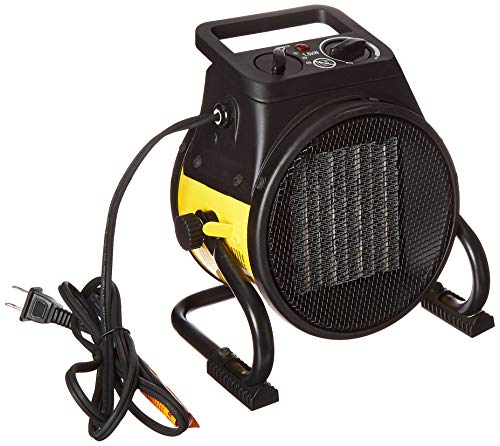
The Dura Heat EUH1465 is a compact forced-air unit rated at 1500W (120V), designed to deliver quick warmth to small workspaces, garages, or rooms. Its PTC ceramic heating element provides steady heat output and is paired with a strong fan to distribute warm air rapidly.
Key listed features include powerful forced air heating, rugged steel construction, and heat and fan-only settings. The pivoting base allows directional airflow, which helps target localized areas. The durable steel body is suited to heavier-duty environments where a portable hard-bodied heater is preferred.
Operationally, the combination of ceramic PTC heating and fan mode allows faster warm-up than convection-only models. As a portable forced-air model on 120V circuits, it offers a balance of mobility and localized heating without requiring hardwiring.
Cadet Com-Pak Electric Wall Heater With Thermostat

Call 888-896-7031 for Free Local HVAC Quotes – Compare and Save Today!
The Cadet Com-Pak (CSC151TW) is a 120V wall-mounted heater intended for permanent installation where a discreet, out-of-the-way heat source is desired. It integrates a thermostat into a complete unit, delivering about 5120 BTU (1500W) of heat.
Its core feature is a built-in thermostat and a complete wall heater design that replaces an existing wall space. Wall heaters eliminate floor footprint and are suited for bedrooms, offices, or hallways that require continuous background warmth without a portable unit.
For homeowners seeking fixed solutions, the Cadet offers consistent convection heat and the convenience of in-wall mounting. Installation should follow local electrical codes and may require professional wiring depending on the setup.
Dreo Space Heater 25″ Fast Electric Heater With Remote

The Dreo 25″ Space Heater emphasizes rapid air delivery and coverage. Featuring a hyperamics thermal design and extended impeller, it claims faster airspeed and broader heat reach while operating quietly.
Listed features include 11.5 ft/s fast heat airflow, ETL-certified safety including tip-over and overheat protection, child lock, and low noise operation down to 32 dB. The unit includes remote control and a thermostat to manage settings from a distance.
Call 888-896-7031 for Free Local HVAC Quotes – Compare and Save Today!
As a tower-style 120V, 1500W heater, it targets larger rooms among portable 110V options by optimizing airflow. Safety certifications and low noise make it suitable for bedrooms and offices where quiet background heat and safety are priorities.
Dreo Space Heater Portable With Digital Display And Thermostat

This Dreo portable model focuses on precise temperature control and responsive PTC heating. The 1500W PTC system and a refined heat funnel design aim to accelerate warm-air delivery and extend effective coverage compared with conventional ceramic heaters.
Highlighted features: Hyperamics 1500W PTC, NTC chipset for 1°F thermostat increments, ETL-certified safety with tilt detection and overheat protection, digital display, timer, and remote control. The precise thermostat range supports energy-saving operation while maintaining consistent room temperature.
For users prioritizing temperature accuracy and programmable control on a standard 120V outlet, this device offers granular settings and convenience. The digital interface and safety features support use in bedrooms and shared living spaces.
WINHL 17″ Electric Heater With Thermostat And Remote

The WINHL 17″ portable heater uses PTC ceramic elements and offers three power levels (700W, 1000W, 1500W), allowing more flexible power draw on 120V circuits and varied heat output for different room sizes.
Featured attributes include fast heating via PTC ceramic, three adjustable power settings, built-in smart thermostat control, remote, and oscillation. The lower power settings can be useful for energy management or when multiple devices share the same circuit.
This model suits users who want variable wattage options to match room needs or limit current draw. The smart thermostat and remote add convenience while the oscillation helps spread warmth across a wider area.
Buying Guide: How To Choose A 110V Space Heater
This buying guide covers the essential considerations when selecting a 110V (120V) space heater for home, office, or small workshop use. Consider safety, heat delivery, controls, installation, and energy management.
Heating Type And Performance
- Forced-Air / Fan Heaters: Provide quick, directional heat and faster warm-up. Ideal for targeted areas like workbenches or small rooms. Expect active airflow noise and the need to avoid dust intake in dirty environments.
- PTC Ceramic / Convection Heaters: Offer steady, efficient heat with self-regulating elements. Better for background heating and quieter operation; good for bedrooms and living areas.
- Wall-Mounted / Baseboard Units: Provide out-of-the-way, continuous convection heat. Best for permanent solutions and rooms where floor space is limited.
Power, Circuit Considerations, And Coverage
- 120V / 1500W Standard: Most portable space heaters use 120V outlets and deliver up to 1500W. This output is suitable for small to medium rooms; expect diminishing returns in large open spaces.
- Multiple Power Levels: Models with 700W/1000W/1500W settings allow reduced draw to avoid tripping breakers or to run alongside other devices on the same circuit.
- Coverage Estimates: Manufacturers may state square-foot estimates; use them as a guideline. Insulation, ceiling height, and room layout significantly affect actual performance.
Safety Features
- Tip-Over Protection: Automatic shutdown if the unit falls over. Essential for portable heaters used near foot traffic or pets.
- Overheat Protection: Internal sensors that cut power if temperatures exceed safe limits.
- Certifications: Look for ETL, UL, or equivalent third-party safety listings. Certified products meet standard safety testing.
- Stay-Cool Housing / Grill Design: Reduces burn risk and makes placement near fabrics or furniture safer.
Controls And Convenience
- Thermostats: Digital or analog thermostats maintain target temperatures and improve energy efficiency compared to fixed-output heaters.
- Timers And Remote Controls: Allow scheduling and remote adjustments without moving the unit.
- Oscillation: Useful for distributing heat across wider spaces, common in tower units.
Installation And Placement
- Portable Units: Plug into grounded 120V outlets; avoid extension cords unless rated for high current and recommended by the manufacturer.
- Wall-Mounted Or Baseboard: May require hardwiring or professional installation; appropriate for permanent background heating.
- Clearances: Follow manufacturer clearance recommendations from walls, curtains, and combustible materials.
Noise And Environment
- Fan Noise: Forced-air heaters produce noticeable sound; look for dB ratings if quiet operation is important.
- Air Quality: Fan units circulate dust; ceramic convection models tend to minimize airborne dust movement.
Durability And Build
- Materials: Steel-bodied units offer durability for garages or workshops; plastic-bodied heaters can be lighter and more portable for indoor living spaces.
- Maintenance: Accessible grills for dusting and a sturdy base or mounting hardware can extend longevity and safety.
Comparison Perspectives To Consider
- Performance vs. Noise: Faster heat delivery often comes at higher sound levels. Choose tower or PTC convection models for quieter bedrooms.
- Portability vs. Permanent Installation: Portable heaters are flexible but consume outlet space. Wall-mounted units free floor space and provide continuous background heat.
- Power Flexibility: Multi-level wattage options help when operating multiple appliances on one circuit.
- Safety vs. Output: Higher output models require stricter placement and clearances; ensure certifications and protective features align with intended use.
Use the above guide to match heater type and features to your specific room size, electrical setup, and safety needs. When in doubt, prioritize certified safety features and appropriate power settings for your space.
Tips for Getting the Best HVAC Prices
- Prioritize Quality Over Cost
The most critical factor in any HVAC project is the quality of the installation. Don’t compromise on contractor expertise just to save money. - Check for Rebates
Always research current rebates and incentives — they can significantly reduce your overall cost. - Compare Multiple Quotes
Request at least three estimates before making your choice. You can click here to get three free quotes from local professionals. These quotes include available rebates and tax credits and automatically exclude unqualified contractors. - Negotiate Smartly
Once you've chosen a contractor, use the proven strategies from our guide — How Homeowners Can Negotiate with HVAC Dealers — to get the best possible final price.