
Quick Overview: This guide compares five propane heating options suited for American homes, garages, workshops, and outdoor spaces where improved air circulation or compatibility with fans is important. Below is a summary table of the selected models for fast comparison.
| Product | Type | BTU Range | Fan / Compatibility |
|---|---|---|---|
| Mr. Heater MHVFBF20LPT 20,000 BTU Blue Flame | Vent-Free Wall Heater | 20,000 BTU | Built-In Blower Compatible / Thermostat Control |
| Dyna-Glo IR30PMDG-1 30,000 BTU Infrared | Vent-Free Wall Heater | 6,000–30,000 BTU | Radiant Style; Pair With Circulation Fan |
| Mr. Heater 4000–18000 BTU Portable LP Unit | Portable Tank Heater | 4,000–18,000 BTU | Portable Use; Works With Stove/Heater Fans |
| Mr. Heater 18,000 BTU Big Buddy Pro Series | Portable Radiant Heater | 4,000–18,000 BTU | Radiant Output; Often Used With Thermoelectric Fans |
| JossaColar Wood Stove Fan For Big Buddy | Heat-Powered Fan Accessory | N/A (Fan) | Thermoelectric Fan For Propane Heaters |
Content Navigation
- Mr. Heater MHVFBF20LPT 20,000 BTU Blue Flame Vent Free Propane Heater
- Dyna-Glo IR30PMDG-1 30,000 BTU Liquid Propane Infrared Vent Free Wall Heater
- Mr. Heater 4000 To 18000 BTU Portable LP Gas Heater Unit With Dual Tank Connection
- Mr. Heater 18,000 BTU Big Buddy Pro Series Portable Propane Heater
- JossaColar Wood Stove Fan For Big Buddy Heater, Heat Powered Thermoelectric Fan
- Buying Guide: How To Choose A Propane Heater With Fan Or Fan Compatibility
- Comparison Perspectives
Mr. Heater MHVFBF20LPT 20,000 BTU Blue Flame Vent Free Propane Heater
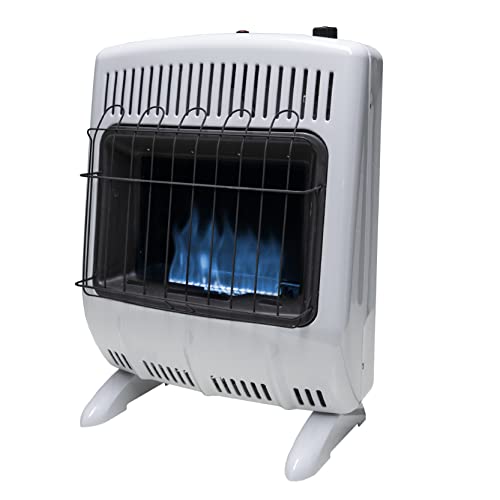
This vent-free blue flame wall heater delivers up to 20,000 BTUs, designed to warm spaces up to about 700 sq. ft. The unit includes a thermostat for temperature control and a battery-powered electronic ignition for easy startup.
Key features listed by the manufacturer include reliable operation up to 4,500 ft elevation, a fuel consumption rate near .926 lbs/hr, and an Oxygen Depletion Sensor (ODS) for automatic shutoff when oxygen is low. These safety systems are standard for indoor propane appliances.
Regarding air movement, this class of wall heaters often pairs well with a small circulation fan or may include compatibility with a blower kit on some installations. Use of a fan enhances heat distribution from the combustion zone into the living area.
Dyna-Glo IR30PMDG-1 30,000 BTU Liquid Propane Infrared Vent Free Wall Heater

Call 888-896-7031 for Free Local HVAC Quotes – Compare and Save Today!
The Dyna-Glo infrared vent-free wall heater uses radiant technology to warm objects and occupants directly, similar to sunlight. It offers variable output from 6,000 to 30,000 BTUs for coverage up to about 1,000 sq. ft.
The product description notes that it is designed for liquid propane and that conversion of fuel type is not permitted. Because infrared units heat surfaces, pairing with a small circulation fan speeds even temperature distribution across a room rather than relying solely on radiant transfer.
Infrared heaters typically require less air movement to provide comfort to occupants seated or standing near the heated surfaces, but adding a fan improves overall comfort across larger spaces.
Mr. Heater 4000 To 18000 BTU Portable LP Gas Heater Unit With Dual Tank Connection
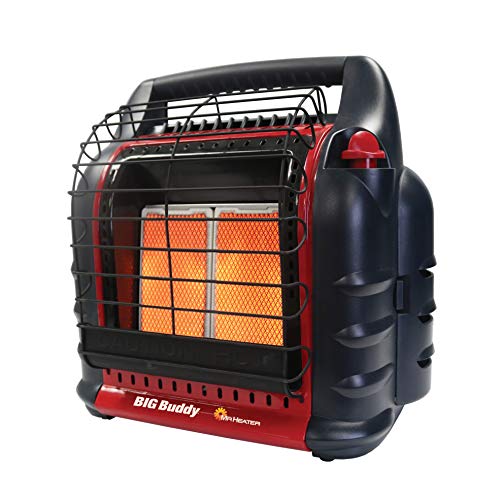
This portable propane heater provides three heat settings (4,000 / 9,000 / 18,000 BTU) and supports indoor and outdoor use. It can be connected to larger tanks with an extra hose and filter, extending runtime for non-stop operation in remote or worksite settings.
The unit includes simple single-control ignition and an automatic safety shutoff if tipped. Its radiant-style output warms people and objects, and users commonly pair these portable units with a thermoelectric or electric fan accessory to move heated air across a tent, garage, or job site.
Call 888-896-7031 for Free Local HVAC Quotes – Compare and Save Today!
Because the heater is portable, it offers flexibility in positioning relative to where a fan or airflow source is placed, helping create a more uniform temperature in irregular spaces.
Mr. Heater 18,000 BTU Big Buddy Pro Series Portable Propane Heater
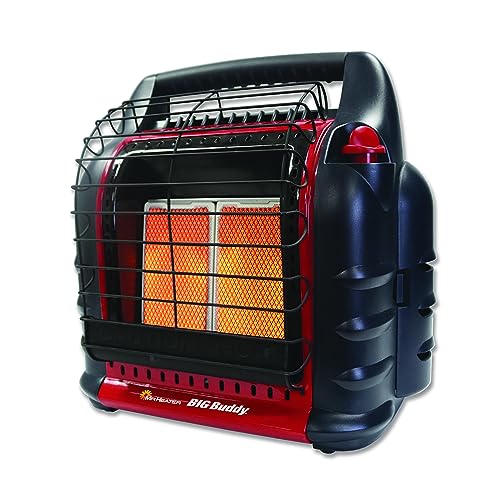
The Big Buddy Pro is a widely used portable radiant heater offering 4,000–18,000 BTUs, suitable for spaces up to approximately 450 sq. ft. It’s approved for both indoor and outdoor use and features automatic shutoff for tip-over, pilot failure, or low oxygen detection.
Its radiant warmth is effective for spot heating. For broader circulation, owners often attach a thermoelectric fan accessory or place a small electrically powered fan downstream of the heater to distribute the warmed air more evenly within a room or workspace.
This model is noted for nearly 100-percent combustion efficiency in radiant mode, making it a common choice where fuel efficiency and portability are priorities.
JossaColar Wood Stove Fan For Big Buddy Heater, Heat Powered Thermoelectric Fan

This thermoelectric heat-powered fan is designed for use on wood stoves and many propane heaters, including the Big Buddy. It requires no batteries or electricity; the fan generates power from the temperature difference between its base and top.
Features include a magnetic stove thermometer, a bracket for secure mounting on heaters, and a sturdy design intended to remain fixed while operating. The fan is useful for tents, workshops, garages, and indoor propane heater applications where improved circulation is desired.
When paired with a propane radiant or portable heater, the JossaColar fan increases convective airflow, spreading warm air into occupied zones and reducing localized hot spots near the heater surface.
Buying Guide: How To Choose A Propane Heater With Fan Or Fan Compatibility
Selecting the right propane heater with fan functionality depends on several factors. Below are key considerations to compare products effectively.
Heat Output And Room Size
Match the heater’s BTU output to your space. Small rooms or tents may only need 4,000–9,000 BTU; garages, additions, and larger rooms often require 18,000–30,000 BTU. Overpowering is wasteful; underpowered units won’t maintain comfort.
Fan Type And Power Source
- Built-In Blowers: Some wall-mounted or vent-free units have integrated blowers or optional blower kits for forced-air distribution.
- Thermoelectric Fans: Heat-powered, no electricity required; best paired with radiant or portable heaters for passive circulation.
- Electric Fans: Small 12V or AC fans offer adjustable speed and targeted airflow but need a power source.
Safety Features
Look for ODS (Oxygen Depletion Sensor), automatic shutoff for tip-over or pilot failure, and CSA or ANSI certifications. These features reduce risks when using propane indoors.
Installation And Venting
Decide between vent-free wall heaters and portable radiant units. Vent-free models must meet local codes and can require permanent installation, while portable units offer flexibility but need careful placement and clearance from combustibles.
Fuel Connection And Runtime
Consider whether you need compatibility with disposable cylinders or larger tanks. Dual-regulator models allow connection to remote tanks via hoses, extending runtime for continuous use.
Heat Distribution Strategy
Radiant heaters warm objects and people directly; adding a fan converts some radiant output into convective flow for wider area comfort. Vent-free blue flame heaters heat room air directly and often benefit from blower kits or circulating fans to reduce stratification.
Portability And Intended Use
- For workshops, garages, and temporary job sites, prioritize portability, ease of ignition, and robust safety shutoffs.
- For home additions or sunrooms, wall-mounted vent-free units with thermostats deliver stable temperature control and can be paired with in-room fans.
- For camping and tents, portable radiant heaters plus a thermoelectric fan give warmth without needing electrical hookups.
Durability And Materials
Look for metal construction, durable igniters (piezo or electronic), and corrosion-resistant finishes when units will be used outdoors or in humid conditions.
Noise And Comfort
Fans introduce noise. Thermoelectric fans are typically quiet, while electric blowers can range from whisper-quiet to audible. Consider the acceptable noise level for bedrooms or living areas.
Compatibility And Accessories
Check if a heater supports aftermarket blower kits, fan brackets, or thermoelectric fans. An accessory like the JossaColar fan can convert radiant heat into wider circulation without electrical wiring.
Code And Permit Considerations
Local building codes may restrict vent-free appliances in certain rooms or jurisdictions. Verify allowed appliance types for your state, municipality, or housing community before purchase or installation.
Tips for Getting the Best HVAC Prices
- Prioritize Quality Over Cost
The most critical factor in any HVAC project is the quality of the installation. Don’t compromise on contractor expertise just to save money. - Check for Rebates
Always research current rebates and incentives — they can significantly reduce your overall cost. - Compare Multiple Quotes
Request at least three estimates before making your choice. You can click here to get three free quotes from local professionals. These quotes include available rebates and tax credits and automatically exclude unqualified contractors. - Negotiate Smartly
Once you've chosen a contractor, use the proven strategies from our guide — How Homeowners Can Negotiate with HVAC Dealers — to get the best possible final price.
Comparison Perspectives
- Best For Permanent Indoor Use: Vent-free wall heaters with built-in thermostats offer steady conditioned warmth and are commonly paired with blower kits.
- Best For Portability: Big Buddy and portable LP units give mobile heat and pair easily with thermoelectric fans for circulation.
- Best For Even Heat Distribution: Combining a radiant or blue-flame unit with a thermoelectric or electric fan increases comfort across larger spaces.
- Best For Off-Grid Use: Thermoelectric fans and portable radiant heaters avoid electrical needs while improving airflow.