
Efficient On-Demand Hot Water Solutions: This guide compares five top electric tankless heaters for different home uses — from whole-house high-flow units to compact under-sink models. Below is a quick summary to help you scan options before the detailed product sections and buying guide.
| Product | Brand | Key Capacity |
|---|---|---|
| Rheem 18kW 240V Tankless Electric Water Heater | Rheem | Up To 4.4 GPM |
| EcoSmart ECO 11 Electric Tankless Water Heater | EcoSmart | Point-Of-Use / Small Demand |
| Orbek 14kW 240V On Demand Instant Hot Water Heater | Orbek | Up To 3.38 GPM |
| Rheem RTEX-24 24kW 240V Electric Tankless Water Heater | Rheem | Up To 5.9 GPM |
| ECOTINYMACH 110V Tankless Water Heater (Compact) | ECOTINYMACH | Under-Sink / Low Flow |
Content Navigation
- Rheem 18kW 240V Tankless Electric Water Heater, Gray
- EcoSmart ECO 11 Electric Tankless Water Heater, 13KW
- 14kW Tankless Water Heater Electric, ORBEK 240 Volt Instant Hot
- Rheem RTEX-24 24kW 240V Electric Tankless Water Heater, Gray
- ECOTINYMACH 110V Tankless Water Heater Electric, Compact
- Buying Guide: How To Choose An Electric Tankless Heater
- 1. Determine Required Flow Rate (GPM)
- 2. Consider Temperature Rise
- 3. Check Electrical Service And Wiring
- 4. Installation Location And Space
- 5. Control And Temperature Accuracy
- 6. Materials, Maintenance, And Longevity
- 7. Certification And Safety
- 8. Energy Efficiency And Operating Cost Considerations
- 9. Use Case Comparisons
- 10. Installation And Serviceability
- Comparison Perspective: Single Unit Vs Multiple Point Units
- Comparison Perspective: Electric Tankless Vs Other Technologies
- Pre-Purchase Checklist
Rheem 18kW 240V Tankless Electric Water Heater, Gray
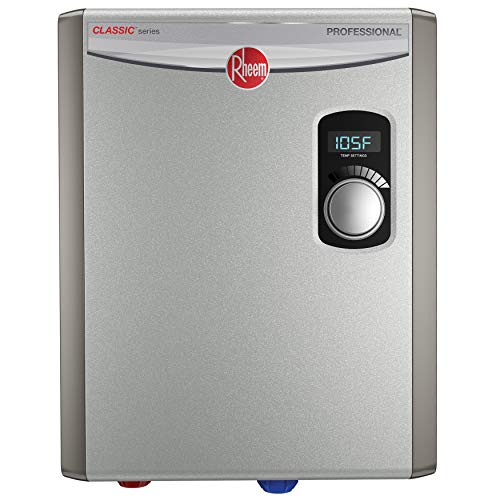
This Rheem model is designed for moderate whole-house or multi-point use. It features an external digital thermostatic control with LED display offering +/-1 degree accuracy, and self-modulating power adjustment to match hot water demand. The unit uses durable copper immersion heating elements that are field serviceable, improving maintainability. Listed flow rate up to 4.4 GPM makes it suitable for several fixtures running concurrently in many climates, depending on inlet temperature. The combination of digital temperature control and self-modulation aims to balance performance with energy efficiency.
EcoSmart ECO 11 Electric Tankless Water Heater, 13KW

The EcoSmart ECO 11 is a compact 13 kW tankless unit intended for point-of-use or small-demand applications. It uses patented self-modulating technology to continuously monitor water temperature and adjust power, maintaining performance within one degree of the set temperature. The manufacturer highlights very high thermal efficiency and a significantly smaller footprint than traditional tanks. Listed amperage draw is 54 A at 240V; installation planning should account for electrical capacity. The ECO 11 is commonly chosen for bathroom sinks, small kitchens, or single-shower setups where continuous hot water is desired without a storage tank.
14kW Tankless Water Heater Electric, ORBEK 240 Volt Instant Hot

Call 888-896-7031 for Free Local HVAC Quotes – Compare and Save Today!
The ORBEK 14kW unit is aimed at point-of-use and small multi-point scenarios. It provides up to 3.38 GPM, suitable for 2–3 fixtures in mild inlet-temperature conditions. The product notes require a 240V/60A two-pole breaker and 6 AWG wiring; confirming electrical compatibility is essential prior to purchase. ORBEK emphasizes water-electricity separation to reduce scale and corrosion, and claims rapid activation with hot water in about three seconds. This model targets users looking to replace or supplement limited hot water capacity while aiming for energy efficiency and compact installation.
Rheem RTEX-24 24kW 240V Electric Tankless Water Heater, Gray
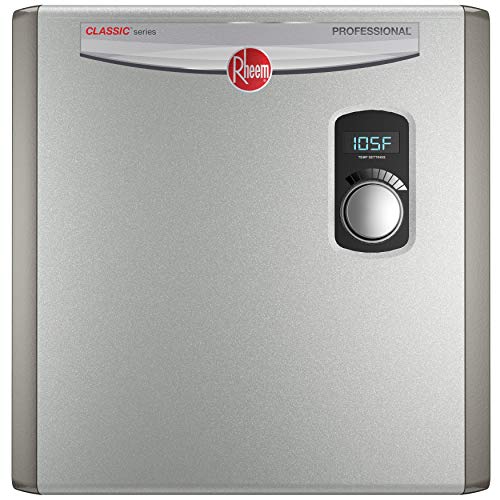
The RTEX-24 is Rheem’s higher-capacity electric tankless with 24 kW and a rated flow up to 5.9 GPM, which is suitable for larger homes or higher simultaneous demand in many regions. It includes an ON/OFF dial control with an adjustable digital temperature display and self-modulating power control to match demand. This model is positioned for users wanting near whole-house capability from electric tankless technology where incoming water temperatures and household demands align with the rated flow. Proper electrical service and professional installation are recommended for safe and reliable operation.
ECOTINYMACH 110V Tankless Water Heater Electric, Compact

The ECOTINYMACH 110V model focuses on compact convenience for under-sink or low-flow applications where only limited hot water is required. Its compact design simplifies installation in tight spaces. It supports conversion between Fahrenheit and Celsius for easy monitoring and is marketed for quick installation. As a 110V device, it’s intended for localized use rather than whole-house service; expect lower flow rates appropriate for a single sink or appliance. This option suits consumers wanting a simple, space-saving electric point-of-use heater with straightforward controls.
Buying Guide: How To Choose An Electric Tankless Heater
Selecting the right electric tankless heater requires balancing flow rate, electrical capacity, inlet water temperature, installation complexity, and lifecycle considerations. Below are the key factors and comparison perspectives to evaluate before purchasing.
Call 888-896-7031 for Free Local HVAC Quotes – Compare and Save Today!
1. Determine Required Flow Rate (GPM)
Estimate peak simultaneous fixture usage (e.g., shower + faucet + dishwasher). Typical needs:
- Point-Of-Use: 0.5–2.5 GPM (sinks, single shower)
- Small Multi-Point: 2–4 GPM (1–2 fixtures simultaneously)
- Whole-House: 4–8+ GPM depending on climate and fixtures
Compare these needs to manufacturer-listed flow rates. Remember that rated GPM depends on inlet temperature — colder climates reduce effective flow at a given temperature rise.
2. Consider Temperature Rise
Calculate required temperature rise: desired outlet temperature minus incoming groundwater temperature. Higher required rises reduce achievable flow. Use local groundwater temps or a baseline (e.g., 40°F in cold regions) to test compatibility with advertised flow rates.
3. Check Electrical Service And Wiring
Electric tankless units draw significant amperage. Match the unit’s kW and amperage requirements to your home’s panel capacity:
- Smaller units (110–150V): lower amperage, suitable for single sink
- Larger units (240V, 14–24 kW+): require 40–90A circuits and proper gauge wire
Plan for professional electrician assessment when in doubt.
4. Installation Location And Space
Wall-mounted units save space versus storage tanks. Factor in clearance, proximity to hot water fixtures (to reduce lag), and whether the unit will be indoor or protected from freezing.
5. Control And Temperature Accuracy
Digital thermostats and thermostatic controls maintain consistent outlet temperatures and can improve user comfort. Self-modulating units adjust power to demand, which can cut energy use and reduce large startup loads.
6. Materials, Maintenance, And Longevity
Look for field-serviceable heating elements or durable materials (copper, stainless components). Consider local water hardness; hard water increases scale buildup and may require a water softener or regular descaling to preserve performance.
7. Certification And Safety
Check for ETL/UL listings and manufacturer-recommended installation practices. Proper grounding, breakers, and adherence to codes protect both equipment and household safety.
8. Energy Efficiency And Operating Cost Considerations
Electric tankless units avoid standby heat loss of tanks, offering high thermal efficiency. However, faster flow and higher temperature rises increase energy draw. Compare units by how they modulate power and maintain set temperatures to project realistic operating costs.
9. Use Case Comparisons
- Single Bathroom Or Kitchen Point-Of-Use: Compact 110–14 kW models or small ECO 11-type units are appropriate.
- Multi-Bath / Small Family Home: 14–18 kW models often meet 2–3 fixture demands in moderate climates.
- Large Home / Multiple Simultaneous Uses: 24 kW+ models (or multiple units staged) may be required to reach whole-house performance.
10. Installation And Serviceability
Consider units with accessible heating elements or serviceable parts to lower repair complexity. Confirm local service support for brand-specific components.
Comparison Perspective: Single Unit Vs Multiple Point Units
One high-capacity unit can serve an entire house but requires major electrical upgrades and increases single-point failure risk. Installing multiple smaller point-of-use units reduces electrical load per location and localizes failure impact, but can increase upfront hardware and installation complexity.
Comparison Perspective: Electric Tankless Vs Other Technologies
Electric tankless units are simpler to install where high-voltage lines exist and avoid combustion venting needed for gas units. Gas models may offer higher flow for lower operating cost where gas is economical. Heat-pump or hybrid tank systems provide high efficiency for storage applications but still involve standby heat loss.
Tips for Getting the Best HVAC Prices
- Prioritize Quality Over Cost
The most critical factor in any HVAC project is the quality of the installation. Don’t compromise on contractor expertise just to save money. - Check for Rebates
Always research current rebates and incentives — they can significantly reduce your overall cost. - Compare Multiple Quotes
Request at least three estimates before making your choice. You can click here to get three free quotes from local professionals. These quotes include available rebates and tax credits and automatically exclude unqualified contractors. - Negotiate Smartly
Once you've chosen a contractor, use the proven strategies from our guide — How Homeowners Can Negotiate with HVAC Dealers — to get the best possible final price.
Pre-Purchase Checklist
- Estimate peak GPM and temperature rise
- Verify electrical panel capacity and breaker/wire requirements
- Assess water hardness and plan for maintenance
- Choose unit size and quantity based on distribution of fixtures
- Confirm certifications and local code compliance
- Arrange professional installation if required by code