
Electric “banger” heaters often refer to compact, high‑output electric space or garage heaters used for targeted, fast warming. This guide compares five relevant electric heaters that suit workshops, garages, small rooms, and mounted installations. Below is a quick comparison, followed by detailed product sections and a practical buying guide to help match a model to your needs.
| Product | Primary Use | Key Feature |
|---|---|---|
| Heat Storm HS-1500-PHX-WIFI Infrared Heater | Wall-mounted room heater | Wi‑Fi control, touch thermostat |
| Dura Heat EUH1465 Electric Forced Air Heater | Portable forced-air for garages/workshops | 1500W PTC ceramic, pivoting base |
| Dr Infrared Heater Portable Space Heater | Large-room portable infrared/PTC | Dual heating system, quiet blower |
| Dura Heat EWH5510 Electric Forced Air Heater | Hardwired garage heater | 5,000W / 17,060 BTU, remote |
| BEYOND HEAT Milkhouse Space Heater | Compact shop or small garage heater | 3 heat settings, thermostat, ETL |
Content Navigation
- Heat Storm HS-1500-PHX-WIFI Infrared Heater, Wifi Wall Mounted
- Dura Heat EUH1465 Electric Forced Air Heater With Pivoting Base 5,120 BTU
- Dr Infrared Heater Portable Space Heater, Original, 1500-Watt, Cherry
- Dura Heat EWH5510 Electric Forced Air Heater With Remote Control 17,060 Btu
- BEYOND HEAT Milkhouse Space Heater, 1300W/1500W With Thermostat
- Buying Guide: How To Choose An Electric Banger Heater
- 1. Determine The Intended Space And Output
- 2. Power And Electrical Requirements
- 3. Heating Method: Infrared vs Forced Air vs Convection
- 4. Safety Features
- 5. Control And Convenience
- 6. Build Quality And Intended Environment
- 7. Noise And Comfort
- 8. Installation And Maintenance
- Comparison Perspectives To Consider
Heat Storm HS-1500-PHX-WIFI Infrared Heater, Wifi Wall Mounted

The Heat Storm HS-1500 is a wall-mounted infrared heater designed to save floor space while delivering targeted warmth. Its Wi‑Fi capability enables remote control via smartphone apps or compatible smart home systems. The unit includes a touch screen, digital thermostat, and a remote for local control.
Safety and installation features include a tip‑over safety shutoff and a space‑saving mounting bracket. Recommended placement is on a wall where infrared radiant heat can reach occupants directly; it’s well suited to bedrooms, offices, and kitchens where a fixed installation is preferred.
Consider the HS-1500 if you need a discreet, mounted heating solution with remote control features and a digital thermostat for room-level temperature management.
Dura Heat EUH1465 Electric Forced Air Heater With Pivoting Base 5,120 BTU
Call 888-896-7031 for Free Local HVAC Quotes – Compare and Save Today!
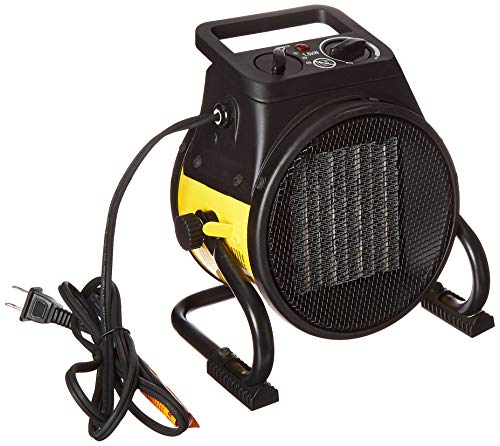
The Dura Heat EUH1465 is a portable forced‑air heater delivering 1500W of PTC ceramic heat through a pivoting base that aims warm air where needed. Constructed with a steel body, it targets rugged spaces such as garages, workshops, and utility rooms.
Control options include heat and fan‑only modes, providing versatility as either a heater or an air circulator. The PTC ceramic element offers fast heat-up times and stable operation. The pivoting base supports directional heating for spot warmth.
This model is practical for users who need a durable, portable heater to warm localized areas quickly while allowing directional adjustment and basic mode selection.
Dr Infrared Heater Portable Space Heater, Original, 1500-Watt, Cherry
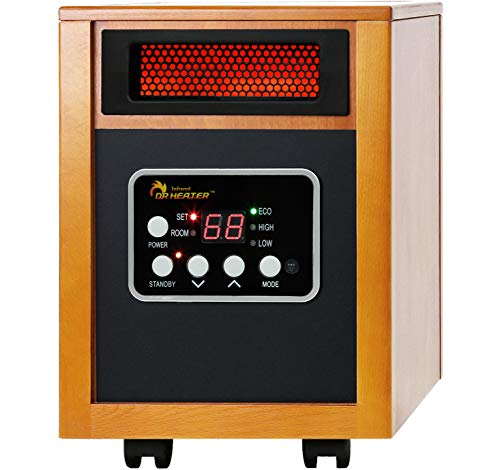
The Dr Infrared 1500W unit combines an infrared quartz tube and PTC ceramic element into a dual heating system that increases heat output and distribution. It’s rated to cover larger rooms and includes an energy‑saving auto mode plus high/low settings.
Safety features include tip‑over and overheat protection. The unit has a low‑noise blower (around 39 dB), an IR remote, and a 12‑hour timer for scheduled operation. Manufacturer BTU rating is cited for capacity comparisons; the dual system improves perceived warmth in open living spaces.
Call 888-896-7031 for Free Local HVAC Quotes – Compare and Save Today!
Choose this heater if you need a portable unit intended for larger rooms with quieter operation and a combination of radiant and convected heat for improved comfort distribution.
Dura Heat EWH5510 Electric Forced Air Heater With Remote Control 17,060 Btu

The Dura Heat EWH5510 is a heavy‑duty hard‑wired garage heater rated at 5,000W / 17,060 BTU intended to heat large garages or workshop spaces up to several hundred square feet. It requires a 240V connection and professional installation.
The unit features a remote control, an LED thermostat display (adjustable from 45–99°F), and a power indicator to confirm proper installation. Designed for fixed mounting, it disperses warm forced air and is suitable where permanent, high‑output heating is required.
This model is appropriate when a permanent, high‑capacity electric heater is needed and when electrical infrastructure supports 240V installations. Professional installation and circuit capacity must be confirmed before purchase.
BEYOND HEAT Milkhouse Space Heater, 1300W/1500W With Thermostat

The BEYOND HEAT Milkhouse is a compact electric heater offering selectable power levels (fan‑only, 1300W, 1500W) along with an adjustable thermostat and ETL certification. It includes an anti‑freeze setting that activates when temperatures fall below 40°F.
Safety devices include a tip‑over switch and automatic overheat protection. The unit’s construction is marketed as heavy‑duty for extended service life, making it suitable for small garages, shops, or indoor workspaces that need straightforward, reliable heating with basic thermostat control.
Consider this heater for situations that require a compact, durable unit with a simple thermostat and safety features suitable for light industrial or residential shop use.
Buying Guide: How To Choose An Electric Banger Heater
Choosing the right electric heater depends on space size, mounting preference, power availability, safety requirements, and intended use. Below are key considerations and comparison perspectives.
Tips for Getting the Best HVAC Prices
- Prioritize Quality Over Cost
The most critical factor in any HVAC project is the quality of the installation. Don’t compromise on contractor expertise just to save money. - Check for Rebates
Always research current rebates and incentives — they can significantly reduce your overall cost. - Compare Multiple Quotes
Request at least three estimates before making your choice. You can click here to get three free quotes from local professionals. These quotes include available rebates and tax credits and automatically exclude unqualified contractors. - Negotiate Smartly
Once you've chosen a contractor, use the proven strategies from our guide — How Homeowners Can Negotiate with HVAC Dealers — to get the best possible final price.
1. Determine The Intended Space And Output
- Small Rooms / Desks: Low‑watt compact ceramic or PTC heaters provide spot warmth without high electrical demand.
- Large Rooms / Garages: Look for high‑output models (1500W portable with blower or hard‑wired 240V units) rated for larger square footage.
- Localized vs Whole‑Room: Infrared models provide direct radiant heat for occupants; forced‑air units circulate warm air to fill a space.
2. Power And Electrical Requirements
- 120V Plug-In (1500W): Most portable units—easy to move, require no hardwiring, limited to about 1500W per standard circuit.
- 240V Hardwired: Higher capacity heaters (several kilowatts) need professional installation and appropriate breakers—suitable for garages and workshops.
- Energy Use: Compare wattage and control features (timers, thermostats) to minimize runtime and energy waste.
3. Heating Method: Infrared vs Forced Air vs Convection
- Infrared: Radiant warmth that heats people and objects directly—efficient for spot heating and quick comfort.
- Forced Air / PTC: Faster air heating and circulation—useful for distributing heat in larger or drafty spaces.
- Convection / Baseboard: Quiet, continuous warmth for sustained background heating in living spaces.
4. Safety Features
- Tip‑Over Protection: Essential for portable units in workshops or high‑traffic areas.
- Overheat Cutoff: Prevents internal temperatures from reaching dangerous levels.
- Certifications: ETL or UL listings indicate that the product meets electrical safety standards.
5. Control And Convenience
- Thermostat & Timer: Helps regulate temperature and reduce energy use compared to on/off operation.
- Remote / Wi‑Fi: Useful for preheating or adjusting without being at the unit; Wi‑Fi provides smart home integration.
- Portability: Wheels, handles, or pivot bases increase flexibility and targeted heating.
6. Build Quality And Intended Environment
- Durable Metal Housing: Preferable for workshop and garage environments where impact resistance matters.
- Weather Exposure: Most indoor electric heaters are not rated for outdoor wet use; choose units marked for enclosed garages or well‑ventilated workspaces.
7. Noise And Comfort
- Blower Noise: Forced‑air units will produce fan noise; check dB ratings if quiet operation is needed.
- Air Movement vs Radiant Heat: Radiant models feel warmer quickly without strong airflow, while forced air improves whole‑room circulation.
8. Installation And Maintenance
- Plug‑In Units: Minimal setup; ensure the outlet and circuit can handle the load.
- Hard‑Wired Units: Require professional installation and appropriate breakers—factor installation complexity and cost.
- Filters & Cleaning: Some forced‑air heaters may require occasional cleaning to maintain airflow and efficiency.
Comparison Perspectives To Consider
- Cost To Run: Higher wattage heats faster but uses more electricity; thermostats and timers reduce runtime.
- Mobility vs Permanence: Portable heaters offer flexibility; wall/ceiling mounted or hardwired systems are better for consistent, whole‑area heating.
- Safety vs Output: High‑output fixed units provide capacity but demand correct wiring and safety measures; portable units prioritize plug‑and‑play convenience and built‑in safety cutoffs.