
If you need reliable heat for a garage, workshop, or attached workspace, choosing a vented propane heater involves matching BTU output, venting type, and safety features to your space. The table below summarizes five relevant heater options from the selected products, showing fuel compatibility, venting style, and approximate coverage to help you compare at a glance.
| Product | Venting Style | Fuel | Approx. Coverage |
|---|---|---|---|
| Comfort Glow 11,000 BTU Direct Vent Wall Heater | Direct Vent | Liquid Propane | Up To 375 Sq. Ft. |
| Comfort Glow 17,000 BTU Direct Vent Wall Heater | Direct Vent | Liquid Propane | Up To 570 Sq. Ft. |
| Mr. Heater Big Maxx MHU80NG Unit Heater | Vented (Category 1/3 Venting) | Natural Gas With LP Conversion Kit | Up To 2,000 Sq. Ft. |
| Dyna-Glo IR30PMDG-1 30,000 BTU Infrared | Vent-Free (Infrared) | Liquid Propane | Up To 1,000 Sq. Ft. |
| Dyna-Glo 30,000 BTU Blue Flame Vent Free Wall Heater | Vent-Free (Blue Flame) | Liquid Propane | Up To 1,000 Sq. Ft. |
Content Navigation
- Comfort Glow 11,000 BTU Direct Vent Liquid Propane Wall Heater
- Comfort Glow 17,000 BTU Direct Vent Liquid Propane Wall Heater
- Mr. Heater F260560 Big Maxx MHU80NG 80,000 BTU Unit Heater
- Dyna-Glo IR30PMDG-1 30,000 BTU Infrared Vent Free Wall Heater
- Dyna-Glo 30,000 BTU Liquid Propane Blue Flame Vent Free Wall Heater
- Buying Guide: How To Choose A Vented Propane Heater For A Garage
Comfort Glow 11,000 BTU Direct Vent Liquid Propane Wall Heater
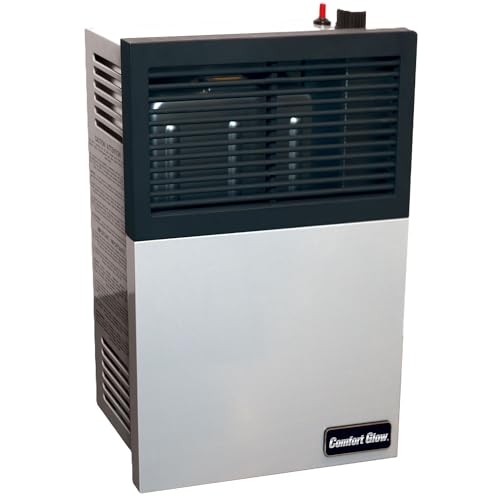
This direct vent propane wall heater offers 11,000 BTU output and is designed to heat up to roughly 375 sq. ft. The sealed burn system prevents room air from mixing with combustion gases, which is important when installing in attached garages or workspaces that require a safe combustion air path. The unit includes Matchless Piezo Ignition and a safety pilot with a built-in pressure regulator that stops gas flow if the pilot extinguishes.
Key suitability points: the space-saving wall mount and sealed combustion make it a strong choice for garages that allow a direct vent termination through an exterior wall. Confirm vent routing, clearance requirements, and local code compliance before installation.
Comfort Glow 17,000 BTU Direct Vent Liquid Propane Wall Heater

The larger model increases output to 17,000 BTU, suitable for spaces up to about 570 sq. ft. Like the smaller Comfort Glow, it uses a sealed combustion chamber and includes safety features such as Matchless Piezo Ignition and a pressure-regulated safety pilot. Its dimensions are wider to accommodate the higher output while still offering a wall-mounted, space-saving design.
Call 888-896-7031 for Free Local HVAC Quotes – Compare and Save Today!
This heater is relevant when a garage requires more heating capacity but still benefits from a direct vent design that exhausts combustion products outdoors. Check vent termination location and clearances, and ensure appropriate LP supply and regulator sizing for steady performance.
Mr. Heater F260560 Big Maxx MHU80NG 80,000 BTU Unit Heater
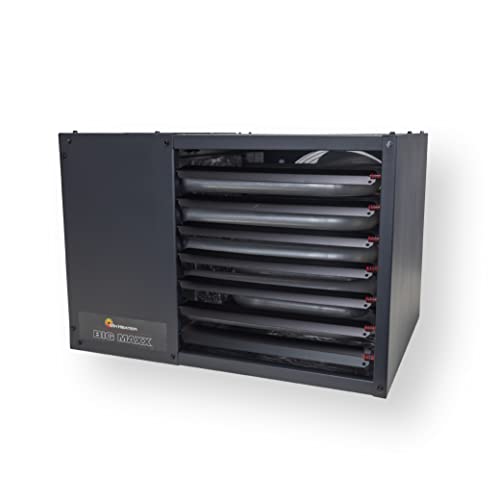
Designed as a heavy-duty unit heater, the Big Maxx delivers 80,000 BTU and covers up to 2,000 sq. ft. It ships as a natural gas unit but includes a liquid propane conversion kit, expanding compatibility. The product supports Category 1 vertical and Category 3 horizontal venting, making it suitable where professional vent runs are feasible.
Features include a durable housing and mounting brackets for overhead or wall installation. This unit requires adherence to clearance specs (minimum 8 ft. from floor to base) and proper gas line and venting design. For larger garages or multi-bay workshops needing significant heat, the Big Maxx provides a vented solution with strong output—installation by a qualified technician or HVAC contractor is recommended.
Dyna-Glo IR30PMDG-1 30,000 BTU Infrared Vent Free Wall Heater

This Dyna-Glo model is a vent-free infrared heater that radiates heat to warm objects and people directly, with output ranging 6,000–30,000 BTU and coverage up to 1,000 sq. ft. Being vent-free means no exhaust venting to outdoors is required, but combustion products remain in the room, which can be a consideration for attached garages and code restrictions.
Call 888-896-7031 for Free Local HVAC Quotes – Compare and Save Today!
Infrared heat can be efficient when you want spot heating for work areas; however, confirm local codes and garage usage (fuel storage, vehicle exhaust) before selecting a vent-free solution. This model is not fuel-convertible; it is designed for liquid propane and lists that fuel conversion is not permitted.
Dyna-Glo 30,000 BTU Liquid Propane Blue Flame Vent Free Wall Heater

This vent-free blue flame model provides convective heat, moving warm air around the space similarly to central heating. It offers variable output up to 30,000 BTU and claims coverage up to 1,000 sq. ft. It is liquid propane ready and, as a vent-free product, does not require vent piping.
Blue flame vent-free heaters can be effective for quick whole-space warming, but because combustion air and exhaust are shared with the room, they may not be ideal in garages where vehicle fumes, solvents, or stored fuels are present. Always evaluate ventilation, carbon monoxide safety, and local building codes when considering vent-free options for garage use.
Buying Guide: How To Choose A Vented Propane Heater For A Garage
Venting Type And Safety
Direct Vent Vs. Chimney/Flue: Direct vent (sealed combustion) draws combustion air from outside and exhausts outdoors through a dedicated coaxial or separate vent pipe. This is often the safest choice for garages attached to living spaces because it isolates combustion products. Unit heaters with category venting require proper flue design and clearance.
Compliance And Codes: Local building and fire codes determine whether vent-free appliances are permitted in garages. Many jurisdictions restrict vent-free heaters in garages due to carbon monoxide and combustion byproduct concerns. Always check codes and permits.
Fuel Compatibility And Conversion
Propane (LP) vs. Natural Gas: Confirm the heater’s default fuel. Some units are LP-ready, some are NG-only, and some include conversion kits. Conversion requires proper orifices and regulator adjustments; follow manufacturer instructions and use licensed technicians when required.
Supply And Regulator Sizing: Ensure your LP supply (cylinder or tank) and regulator match the heater’s BTU demand and expected runtime. For larger unit heaters, a permanent LP tank with correct piping is typically necessary.
BTU Output And Garage Size
Calculate required BTUs by evaluating garage volume, insulation level, and desired temperature rise. Rough guides:
- Lightly insulated garage: 40–50 BTU per sq. ft.
- Moderately insulated garage: 30–40 BTU per sq. ft.
- Well-insulated garage: 20–30 BTU per sq. ft.
Match heater capacity to these estimates and account for door openings and ventilation losses.
Installation Considerations
Clearances: Follow manufacturer clearance specifications from floors, ceilings, and combustibles. Unit heaters often require more clearance than wall-mounted sealed units.
Venting Path: Plan the shortest, most direct vent run with appropriate materials (stainless or listed vent pipe). Horizontal venting through an exterior wall requires careful termination location to avoid re-entry into openings.
Safety Features To Look For
- Oxygen Depletion Sensor (ODS): Shuts unit off if oxygen levels drop—important for indoor safety.
- Flame Failure/Safety Pilot: Stops gas flow if the pilot goes out.
- Carbon Monoxide Awareness: Regardless of vent type, install a CO detector in attached garages and adjacent living spaces.
Heat Distribution And Technology
Infrared (Radiant) vs. Blue Flame (Convective): Infrared heaters warm objects and people directly—useful for spot heating. Blue flame convects warm air to raise overall room temperature. For garages with high ceilings, infrared or directed unit heaters may feel warmer at workbench level, while convection units are better at raising ambient temperature.
Controls, Thermostat, And Zoning
Thermostatic control improves efficiency and comfort; consider programmable or remote thermostats for convenience. If heating only one zone of a larger shop, choose a heater with accurate controls or pair with local thermostatic switching to avoid overheating unused areas.
Maintenance And Longevity
Vented systems require periodic vent inspection, burner cleaning, and verification of sealed combustion integrity. Unit heaters in dusty garages may need more frequent maintenance. Use manufacturer-recommended service intervals.
Installation Costs And Professional Services
Vented propane solutions typically incur higher installation costs due to venting, gas line work, and possible structural modifications. Factor in professional HVAC or licensed gas fitter services. For high-output heaters, professional sizing and vent design are recommended to meet safety and code requirements.
Comparison Perspectives
Small Detached Garage (Limited Modifications): A small direct vent wall heater (11k–17k BTU) offers efficient, sealed combustion heat if the vent can be run through an exterior wall.
Large Garage Or Workshop: Consider higher-output unit heaters (converted unit or purpose-built vented unit like the Big Maxx) with proper venting and distribution, especially for multi-bay spaces.
Spot Heating At Workbench: Infrared vent-free models provide immediate radiant warmth but assess code and indoor air quality implications before choosing for a garage.
Use this guide and the product summaries to narrow choices by venting requirements, garage size, and allowable installations under local code. For any vented heater, prioritize sealed combustion options and professional installation when in doubt.
Tips for Getting the Best HVAC Prices
- Prioritize Quality Over Cost
The most critical factor in any HVAC project is the quality of the installation. Don’t compromise on contractor expertise just to save money. - Check for Rebates
Always research current rebates and incentives — they can significantly reduce your overall cost. - Compare Multiple Quotes
Request at least three estimates before making your choice. You can click here to get three free quotes from local professionals. These quotes include available rebates and tax credits and automatically exclude unqualified contractors. - Negotiate Smartly
Once you've chosen a contractor, use the proven strategies from our guide — How Homeowners Can Negotiate with HVAC Dealers — to get the best possible final price.