
Looking For A Reliable Gas Fireplace Heater? This Guide Compares Ventless Inserts, Dual-Fuel Systems, And Log Sets To Help You Choose The Right Unit For Your Space. Below Is A Quick Summary Table Of The Selected Products For Fast Comparison.
| Product | Type | BTU / Coverage | Key Feature |
|---|---|---|---|
| ProCom Ventless 25,000 BTU | Free-Standing Ventless | 25,000 BTU / Up To 1,100 Sq. Ft. | Built-In Thermostat, Realistic Logs |
| Duluth Forge Dual Fuel With Mantle | Ventless System With Mantle | 32,000 BTU / Up To 1,500 Sq. Ft. | Dual-Fuel, Remote Control |
| Duluth Forge Ventless Insert (Black) | Ventless Insert | 32,000 BTU / Up To 1,500 Sq. Ft. | Remote, Manual/Thermostat Modes |
| ProCom Dual Fuel 10,000 BTU | Ventless Mantle System | 10,000 BTU / Up To 500 Sq. Ft. | Thermostat Control, Compact |
| Comfort Glow Vent Free Log Insert | Dual Fuel Log Set / Insert | 24″ Logs / Heats Up To 1,400 Sq. Ft. | Remote Thermostat Control, 8-Piece Logs |
Content Navigation
ProCom Ventless 25,000 BTU Fireplace
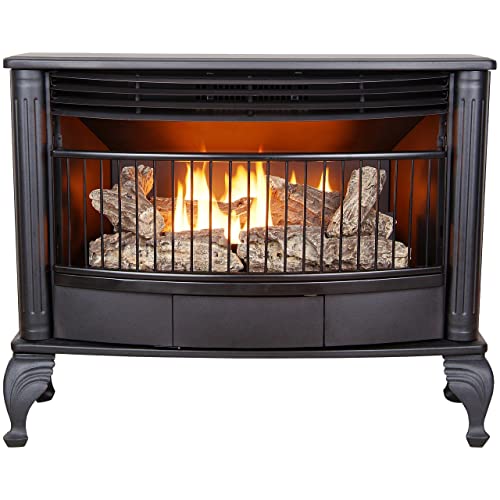
The ProCom Ventless 25,000 BTU is a freestanding indoor gas fireplace designed to heat medium-sized rooms. It delivers 25,000 BTUs and is rated to heat up to 1,100 square feet, using ventless technology so no chimney or flue is required.
Key listed features include hand-painted concrete logs cast with refractory ceramics for durability and realistic appearance. The unit includes a thermostat-operated control with variable heat settings to maintain a set temperature. Ventless operation provides near-total heat delivery to the room.
Consider installation clearance and local codes when evaluating ventless units. This model emphasizes décor with detailed logs and aims to combine visual realism with effective supplemental heating in a portable free-standing form.
Duluth Forge Dual Fuel Fireplace With Mantle

Call 888-896-7031 for Free Local HVAC Quotes – Compare and Save Today!
The Duluth Forge Dual Fuel Ventless Fireplace System is a complete fireplace package with a furniture-grade mantle and decorative finishes. It uses patented dual-fuel technology compatible with natural gas or liquid propane and delivers 32,000 BTUs, rated for up to 1,500 square feet.
Notable features include six hand-painted ceramic fiber logs, a remote control with LCD, and the ability to toggle between manual and thermostat-controlled operation. The system is vent-free and advertised as 99.9% efficient for room heating.
Because it includes a mantel and trim, this product targets users who want a built-in look without masonry. Review installation guidance, clearances, and room ventilation practices for ventless systems in your locale before selection.
Duluth Forge Ventless Fireplace Insert

The Duluth Forge Ventless Fireplace Insert is an insert-style heater for existing openings. It delivers 32,000 BTUs and is rated to heat up to 1,500 square feet using ventless dual-fuel operation. The insert is offered in a black finish with mesh double doors and a sprayed brick liner.
Features include a remote control with LCD, a standing pilot to enable remote ignition, and manual flame adjustment. The unit ships with six realistic ceramic fiber logs. Users can choose between thermostat mode or manual operation.
Call 888-896-7031 for Free Local HVAC Quotes – Compare and Save Today!
This insert form factor is designed to retrofit into an existing fireplace shell or opening, providing high heat output without external venting. Evaluate compatibility with your fireplace dimensions and local regulations for ventless inserts.
ProCom Dual Fuel 10,000 BTU Mantle System

The ProCom Dual Fuel 10,000 BTU ventless fireplace system is a compact option for smaller rooms or as a supplemental zone heater. It delivers 10,000 BTUs and is rated to heat up to 500 square feet, operating on natural gas or liquid propane.
Key attributes listed include thermostat control for automatic cycling to maintain temperature and four hand-painted ceramic fiber logs for a realistic look. The furniture-grade mantle includes distressing and finishing details for an integrated aesthetic.
This lower-output unit is suitable where a subtle heat source and visual fireplace appearance are desired. Confirm room size match, clearance, and suitability of a ventless solution for your installation environment.
Comfort Glow Vent Free Log Insert With Remote

The Comfort Glow Vent Free Log Insert is a dual-fuel log set intended as an insert or replacement log assembly. It features an 8-piece 24″ highland ember log set and claims coverage up to 1,400 square feet depending on setup and home conditions.
Included features are remote thermostat control for adjusting heat from a distance and dual-fuel compatibility with natural gas or propane. The product emphasizes realistic logs, glowing ember bed, and an adjustable thermostat receiver design for extended battery life.
As an insert-style log assembly, this option is useful for those who want log aesthetics combined with a vent-free heat source. Consider compatibility with your firebox, gas line, and local regulations before installation.
Buying Guide: Choosing A Gas Fireplace Heater
This Buying Guide Covers Key Considerations Across Performance, Safety, Installation, Fuel Type, And Long-Term Operation To Help Compare Options Objectively.
Tips for Getting the Best HVAC Prices
- Prioritize Quality Over Cost
The most critical factor in any HVAC project is the quality of the installation. Don’t compromise on contractor expertise just to save money. - Check for Rebates
Always research current rebates and incentives — they can significantly reduce your overall cost. - Compare Multiple Quotes
Request at least three estimates before making your choice. You can click here to get three free quotes from local professionals. These quotes include available rebates and tax credits and automatically exclude unqualified contractors. - Negotiate Smartly
Once you've chosen a contractor, use the proven strategies from our guide — How Homeowners Can Negotiate with HVAC Dealers — to get the best possible final price.
Heat Output And Room Coverage
- BTU Rating: Choose a unit with BTUs matched to your space. Higher BTUs cover larger areas but require proper clearances and gas supply.
- Room Size: Estimate square footage and insulation levels. A well-insulated room needs fewer BTUs than a drafty space.
- Supplemental Vs. Primary Heat: Use lower-BTU units for zone heating and higher-BTU ventless systems for primary supplemental heat.
Ventless Vs. Vented Systems
- Ventless (Vent-Free): Delivers most heat into the room and typically has higher efficiency ratings. Check local building codes; some regions restrict or regulate ventless use.
- Vented: Requires a chimney or flue and vents combustion products outdoors. May provide less immediate room heat but is accepted more universally by codes and may improve indoor air quality concerns.
Fuel Type And Flexibility
- Natural Gas Vs. Propane: Confirm your home fuel supply and whether conversion kits are available. Dual-fuel units provide flexibility if fuel availability changes.
- Supply Infrastructure: Ensure gas line capacity and pressure meet the BTU demands. Larger BTU units may need professional gas line upgrades.
Controls And Convenience
- Thermostat Control: Automatic cycling maintains set temperatures and can improve comfort and efficiency.
- Remote Operation: Remote controls with LCD screens add convenience for ignition and mode switching; check for standing pilot requirements.
- Manual Adjustment: Manual flame controls allow fine tuning of visible flame and heat output.
Installation Format And Aesthetics
- Free-Standing Units: Portable and easier to place; may still require safety clearances.
- Inserts And Mantles: Designed to integrate into an opening and can include decorative mantles or trims for a built-in look.
- Log Sets: Available vented or vent-free; check compatibility with existing burners and fireboxes.
Safety, Ventilation, And Regulations
- Clearances And Combustible Materials: Follow manufacturer clearance specifications to walls, ceilings, and furnishings.
- Carbon Monoxide And Combustion Byproducts: Vent-free units release some combustion products into the room. Install CO detectors and ensure adequate ventilation, especially in tightly sealed homes.
- Local Codes: Verify local building codes and HOA rules regarding ventless appliances before purchase.
Durability And Materials
- Logs And Liners: Look for hand-painted ceramic fiber or refractory ceramic materials that retain detail and resist thermal degradation.
- Control Electronics: Remote receivers, thermostats, and ignition components vary in robustness. Check warranty and serviceability.
Maintenance And Operating Costs
- Routine Inspection: Annual inspection by a qualified technician is recommended to verify gas connections, burners, and pilot assemblies.
- Fuel Efficiency: Vent-free units often advertise high efficiency, but actual cost depends on local gas rates and run time.
- Replacement Parts: Confirm availability of logs, burner parts, and replacement controls for the selected model.
Comparison Perspectives
- Performance-Focused: Compare BTU output, thermostat control, and dual-fuel flexibility for heating effectiveness.
- Aesthetic-Focused: Evaluate log realism, mantle finish, and visual options like liners or doors to match décor.
- Regulatory-Focused: Prioritize vented options or compliant ventless units based on local restrictions and indoor air quality concerns.
- Installation-Focused: Consider whether you need a freestanding unit, insert, or complete mantel system and the complexity of professional installation.