
Choosing the right hanging unit heater depends on fuel type, installation, and coverage. Below is a quick comparison of the five selected models covered in this guide. This table highlights type, approximate output, and best-use scenarios to help you scan options quickly.
| Product | Type | Output / Feature | Best For |
|---|---|---|---|
| ALECOIL 100,000 BTU Hydronic Hot Water Hanging Unit Heater | Hydronic (Hot Water) | 100,000 BTU, temp control switch, centrifugal blower | Garages/warehouses tied to wood boilers |
| ALORAIR HydroX H100A 100,000 BTU Hydronic Hanging Heater | Hydronic (Hot Water) | 100,000 BTU, galvanized steel, auto temp control | Commercial workshops, heavy-duty garage use |
| Mr. Heater Big Maxx MHU80NG Natural Gas Unit Heater | Natural Gas Unit Heater | 80,000 BTU, vertical/horizontal venting, 2000 sq. ft. coverage | Large garages or shop spaces with gas supply |
| American Royal 50,000 BTU Hot Water Hanging Heater | Hydronic (Hot Water) | 50,000 BTU, 2-speed, remote thermostat | Smaller garages or shop zones with hydronic systems |
| Danluke 1500W Ceiling-Mounted Electric Infrared Hanging Heater | Electric Infrared | 1500W, IP34 waterproof, fast instant heat | Patios, covered porches, small garages, outdoor areas |
Content Navigation
- ALECOIL 100,000 BTU Hydronic Hot Water Hanging Unit Heater
- ALORAIR 100,000 BTU Hydronic Hanging Heater With Control Panel
- Mr. Heater Big Maxx MHU80NG Natural Gas Unit Heater 80,000 BTU
- 50,000 BTU Hot Water Hanging Heater With Remote Thermostat
- Danluke 1500W Ceiling-Mounted Electric Infrared Hanging Heater
- Buying Guide: How To Choose A Hanging Unit Heater
- 1. Fuel Type And Energy Source
- 2. Heat Output And Coverage
- 3. Installation And Venting
- 4. Control Options And Automation
- 5. Noise, Air Distribution, And Comfort
- 6. Durability, Materials, And Maintenance
- 7. Safety Features And Codes
- 8. Comparative Use Cases
- 9. Cost Considerations And Operating Expense
- 10. Professional Installation And Local Codes
ALECOIL 100,000 BTU Hydronic Hot Water Hanging Unit Heater
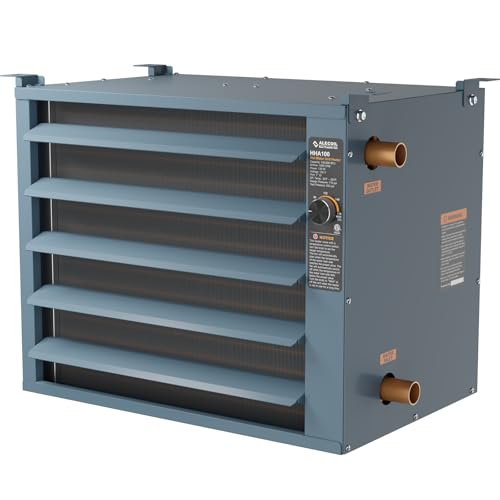
The ALECOIL hydronic hanging heater uses a building’s hot water source, commonly from outdoor wood boilers, to deliver warm air via a centrifugal blower. Its design emphasizes energy efficiency and quiet operation. The included temperature control switch senses inlet water temperature to automatically start or stop the fan, allowing simple thermostat-style control without complex wiring.
Key listed features: automatic fan control tied to water temperature, whisper-quiet centrifugal blower, and adjustable louvers for directed airflow. This unit is suitable for spaces where a hot-water loop exists and noise control is desired. Installation typically requires connection to the hydronic system and secure ceiling mounting.
ALORAIR 100,000 BTU Hydronic Hanging Heater With Control Panel

The ALORAIR HydroX H100A is presented as an industrial-grade hydronic hanging heater aimed at garages and warehouses. Construction details include heavy-duty galvanized steel housing and corrosion-resistant copper piping for longevity in demanding environments.
Call 888-896-7031 for Free Local HVAC Quotes – Compare and Save Today!
Listed features include a smart auto-temperature control that activates the fan at preset water temps, a reusable air filter, and a centrifugal blower rated to move high airflow quietly (noted at 60 dBA). The manufacturer provides a 3-year commercial warranty, positioning this model toward commercial and heavy residential use where durability and continuous operation are priorities.
Mr. Heater Big Maxx MHU80NG Natural Gas Unit Heater 80,000 BTU
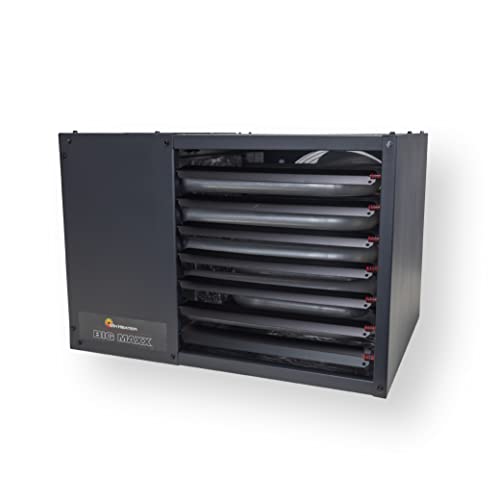
The Mr. Heater Big Maxx is a gas-fired hanging unit heater delivering large-volume heat for spaces up to around 2000 sq. ft. It is designed for use with natural gas and includes brackets for angled mounting. Venting can be configured in category 1 vertical or category 3 horizontal orientations, which affects installation planning.
Manufacturer details highlight an output of 80,000 BTU, 120 V blower power, and space-saving ceiling or wall mounting. This model is suited for locations where a gas supply and proper venting are available, and where robust, continuous output is required for larger garages or shops.
50,000 BTU Hot Water Hanging Heater With Remote Thermostat

This American Royal 50,000 BTU hydronic hanging heater is a compact option for smaller garages or workshops tied into hydronic systems. It includes a 2-speed blower, a remote thermostat, and an on-off-on switch for basic multi-speed control from a distance.
Call 888-896-7031 for Free Local HVAC Quotes – Compare and Save Today!
Listed features emphasize compatibility with hydronic heat sources like wood boilers and the convenience of the included remote thermostat. The lower output compared to 100k models makes it appropriate for zoned heating or smaller enclosed spaces where a full-sized industrial unit would be oversized.
Danluke 1500W Ceiling-Mounted Electric Infrared Hanging Heater

The Danluke electric infrared hanging heater offers instant radiant heat from a ceiling- or bracket-mounted unit. With IP34 weather resistance and built-in overheat protection, this model is intended for covered outdoor spaces such as patios, porches, and small garages where a full hydronic or gas system is unavailable.
Key features include a 1500W power level for fast heat-up, waterproof rating for outdoor use, and safety features like tip-over and overheat protection. Being electric, it requires only a powered circuit and provides targeted radiant warmth rather than heating air volume—beneficial for outdoor seating areas and localized spot heating.
Buying Guide: How To Choose A Hanging Unit Heater
When selecting a hanging unit heater, evaluate fuel type, heating capacity, installation requirements, and intended use area. Below are key considerations and comparative perspectives to guide a purchase that matches your space and operational constraints.
1. Fuel Type And Energy Source
- Hydronic (Hot Water): Uses building hot-water loops, often from boilers or outdoor wood furnaces. Offers quiet operation and even heat distribution. Best if you already have a hydronic system or plan to integrate one.
- Natural Gas/Propane: Provides high BTU output and cost-effective long-term operation where gas is available. Requires proper venting and professional gas hookup.
- Electric Infrared: Simplest installation (only electrical power), ideal for spot heating and outdoor covered spaces. Heat is radiant, not forced-air, so it’s best for occupied zones rather than whole-building warming.
2. Heat Output And Coverage
Select a unit with appropriate capacity for the space. Higher BTU ratings (50k–100k) suit garages, workshops, and warehouses. Electric units are rated in watts and are effective for smaller or outdoor-covered areas. Consider ceiling height and insulation—taller, open spaces usually need higher output.
3. Installation And Venting
- Hydronic units need plumbing connections to the hot water supply and secure ceiling mounting.
- Gas heaters require fuel supply and venting per local code; plan for clearances and professional installation.
- Electric heaters need an adequate electrical circuit and secure mounting; waterproofing matters for outdoor installs.
4. Control Options And Automation
Consider whether the unit has temperature-controlled fan activation, remote thermostats, or Wi‑Fi/remote control. Auto-temperature control can improve efficiency by cycling the fan only when water reaches set temperature. Remote thermostats and timers improve convenience and zoning.
5. Noise, Air Distribution, And Comfort
Centrifugal blowers are often quieter than axial fans and provide higher static pressure for ducting or directional louvers. Hydronic units tend to be quieter and provide gentle, steady warmth. Infrared units provide immediate radiant warmth without moving air.
6. Durability, Materials, And Maintenance
Look for corrosion-resistant materials (galvanized steel, copper piping) in humid or industrial environments. Reusable filters and accessible service panels reduce maintenance time. Warranty terms (commercial vs. residential) indicate expected duty cycle and durability.
7. Safety Features And Codes
- Gas units must meet local venting and clearance codes; check category venting requirements and certified listings.
- Electric and outdoor units should include overheat protection and appropriate IP ratings for weather resistance.
- Hydronic installations should include proper backflow prevention, valves, and adherence to plumbing codes.
8. Comparative Use Cases
- Large, Open Garage Or Warehouse: Consider 80k–100k BTU gas or hydronic units for whole-space heating.
- Small Workshop Or Zoned Garage: A 50k hydronic hanging heater or electric infrared unit provides targeted heat without oversizing.
- Outdoor Covered Patio/Porch: Electric infrared hanging heaters with appropriate IP rating deliver instant radiant warmth and simpler installation.
- Where Noise Is A Concern: Hydronic units with centrifugal blowers or low-dBA ratings offer quieter operation than some gas blowers.
9. Cost Considerations And Operating Expense
While upfront equipment cost varies by type and capacity, account for installation (venting or plumbing), fuel availability, and ongoing fuel/energy costs. Hydronic systems may have higher initial setup if you don’t already have a boiler, but can be efficient when paired with biomass or efficient boilers.
10. Professional Installation And Local Codes
Consult local codes and consider professional installation for gas and hydronic units. Proper mounting, venting, and connections ensure safe operation and preserve warranties.
Tips for Getting the Best HVAC Prices
- Prioritize Quality Over Cost
The most critical factor in any HVAC project is the quality of the installation. Don’t compromise on contractor expertise just to save money. - Check for Rebates
Always research current rebates and incentives — they can significantly reduce your overall cost. - Compare Multiple Quotes
Request at least three estimates before making your choice. You can click here to get three free quotes from local professionals. These quotes include available rebates and tax credits and automatically exclude unqualified contractors. - Negotiate Smartly
Once you've chosen a contractor, use the proven strategies from our guide — How Homeowners Can Negotiate with HVAC Dealers — to get the best possible final price.