
Looking For Reliable Heat Without Power? This guide compares propane heaters and tankless propane water heaters that operate with little or no electrical input. Below is a quick comparison table of the five selected units followed by objective product summaries and a detailed buying guide to help match a no-electricity propane solution to your needs.
| Product | Type | Primary Benefit | Coverage / Flow |
|---|---|---|---|
| Mr. Heater Portable Buddy MH9BX | Portable Radiant Space Heater | Piezo ignition, tip-over safety | Up To 225 Sq. Ft. (4,000–9,000 BTU) |
| Mr. Heater MHVFBF20LPT 20,000 BTU | Vent-Free Blue Flame Wall Heater | Thermostat control, ODS safety | Up To 700 Sq. Ft. (20,000 BTU) |
| Dyna-Glo IR30PMDG-1 30,000 BTU | Infrared Vent-Free Wall Heater | Infrared radiant heat for objects/people | Up To 1,000 Sq. Ft. (6,000–30,000 BTU) |
| Outdoor Propane Tankless Water Heater (Amzgachfktch) | Outdoor Tankless Water Heater | Compact, instant hot water without electric pump | 1.58 GPM, 40,000 BTU |
| FOGATTI Propane Tankless Water Heater | Outdoor Tankless Water Heater | High flow, precision temp control | Up To 5.1 GPM, 120,000 BTU |
Content Navigation
Mr. Heater Portable Buddy Heater MH9BX
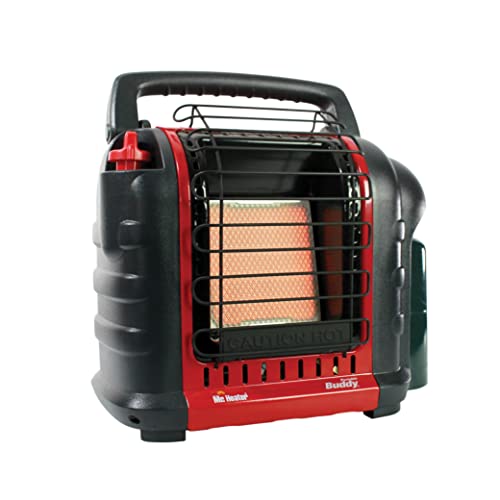
This portable propane radiant heater produces 4,000–9,000 BTUs and is designed for direct radiant heat rather than forcing air. That makes it effective for small enclosed spaces where electricity may not be available.
- Powerful Radiant Heat: Infrared technology warms objects and people directly, rated for up to 225 sq. ft.
- Safety Features: Tip-over safety switch with audible engagement to help prevent operation if knocked or moved.
- Reliable Ignition: Piezo igniter starts without matches, lighters, or batteries—no external electricity required.
As a portable solution, this unit is suited to campers, workshops, job sites, and patios where direct radiant warmth is preferred. It is not vented; follow local codes for indoor use and ensure adequate ventilation when used in enclosed areas.
Mr. Heater MHVFBF20LPT 20,000 BTU Blue Flame
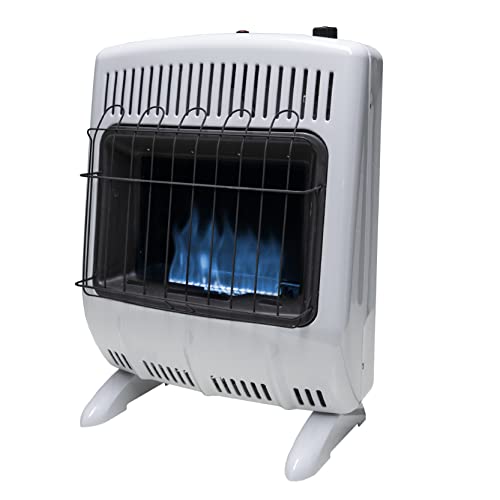
This vent-free blue flame wall heater is intended for whole-room heating with a built-in thermostat and safety systems. It provides up to 20,000 BTU and is engineered to warm medium-sized spaces without relying on house power for combustion.
Call 888-896-7031 for Free Local HVAC Quotes – Compare and Save Today!
- High Output: Effective coverage up to approximately 700 sq. ft., suitable for cold rooms, additions, sunrooms, cabins, or garages.
- Controls & Ignition: Thermostat control for temperature regulation; battery-powered electronic ignition is included (battery required for ignition).
- Safety Systems: Factory-installed Oxygen Depletion Sensor (ODS) automatically shuts off the unit when oxygen levels are low.
As a vent-free wall heater, it uses indoor air for combustion and releases heat directly. Installation must follow local codes and manufacturer instructions; placement and vent-free operation considerations are critical for safe indoor use.
Dyna-Glo IR30PMDG-1 30,000 BTU Infrared

This liquid propane infrared vent-free wall heater provides variable output from 6,000 to 30,000 BTU. The infrared approach warms surfaces and occupants, creating a perception of sun-like warmth in the room.
- Infrared Technology: Radiates heat to objects first, which can feel more comfortable than forced air in certain settings.
- Variable Output: Adjustable heat levels allow scaling from smaller to larger areas; manufacturer rates coverage up to 1,000 sq. ft. at max output.
- Fuel Type: Designed for liquid propane; installation must adhere to local codes for vent-free appliances.
As a higher-output vent-free infrared unit, this model suits larger spaces or situations where rapid, radiant warmth is desired. Vent-free appliances require attention to combustion byproducts and room ventilation standards.
Outdoor Propane Tankless Water Heater – 6L 1.58 GPM

This compact outdoor tankless water heater offers instant hot water without electrical requirements for the burner; it relies on mechanical gas regulation and water flow to operate. The unit is intended for outdoor installation for RVs, cabins, camping, boats, and barns.
Call 888-896-7031 for Free Local HVAC Quotes – Compare and Save Today!
- Compact Design: Slim form factor with foldable handle for portability; includes shower head, gas regulator, and hose adapter.
- Instant Hot Water: Maximum 40,000 BTU output, producing hot water on demand at up to 1.58 GPM with low water pressure start at 2.5 PSI.
- Safety Protections: CSA-approved regulator and multi-protection features including overheating, low water flow, dry combustion, anti-freezing, high water pressure, and flame failure device.
Because this unit is designed for outdoor use, it avoids electrical dependencies common to indoor-mounted tankless units. It is suited to users who need hot water in remote locations or while off-grid.
FOGATTI Propane Tankless Water Heater 120,000 BTU
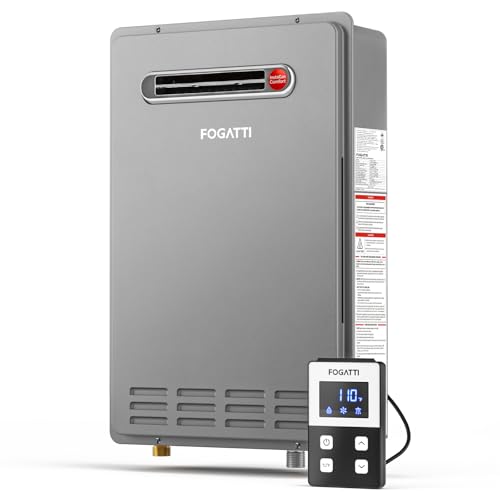
This high-capacity tankless propane water heater delivers 120,000 BTU and up to 5.1 GPM, intended for larger demand scenarios and multi-outlet use. It emphasizes compact size and precision temperature control without relying on household electricity for combustion.
- High Flow & Output: Supports 2–4 outlets simultaneously at a rated 5.1 GPM flow.
- Precision Control: Water servo technology and sensors maintain temperature within ±1°F, with four-stage combustion for consistent performance.
- Efficiency: Designed to reduce energy costs relative to traditional tanks and provide continuous hot water for whole-house or larger applications.
As a higher-powered outdoor unit, this model suits larger cabins, small homes, or sites where high hot-water demand exists and minimal electrical infrastructure is available.
Buying Guide: Choosing A Propane Heater That Needs No Electricity
When evaluating propane heating solutions for situations without reliable electricity, consider the appliance type, installation needs, safety systems, and intended use-case. The sections below cover key considerations and comparison angles.
1. Heater Type & Intended Use
- Portable Radiant Heaters: Best for spot heating in small spaces like tents, workshops, or near-person use. They often use piezo ignition that requires no batteries or electric ignition.
- Vent-Free Wall Heaters: Provide whole-room heat without venting but use indoor air for combustion. Suitable for living areas if codes permit; some models require only batteries for electronic ignition.
- Infrared vs. Blue Flame: Infrared warms objects directly and can feel warmer at lower air temperatures. Blue flame heats the air and can distribute warmth more evenly in a closed room.
- Tankless Water Heaters: Provide hot water without electric burners if designed for outdoor or mechanical operation; ideal for off-grid showers, cabins, and RVs.
2. Ignition & Power Needs
- No-Electric Ignition: Piezo igniters or manual match-lit burners require no electricity. Confirm manufacturer notes about battery needs for thermostats or electronic controls.
- Battery Ignition: Some wall heaters use battery-powered igniters—this still qualifies as minimal electrical dependency but requires battery replacement.
- Controls: Mechanical thermostats vs. electronic thermostats change dependency; mechanical controls are preferable when electricity is absent.
3. Safety Features & Indoor Use
- Oxygen Depletion Sensors (ODS): Recommended for indoor units; automatically shut down combustion when oxygen is low.
- Tip-Over Switches: Important for portable units used in informal setups like campsites or workshops.
- Vent-Free Considerations: Vent-free heaters produce combustion byproducts in the room; ensure adequate fresh air, monitor humidity, and follow local codes.
4. Heat Output & Coverage
- BTU Ratings: Match the BTU output to room size. Lower BTU portable units suit small spaces; higher BTU wall units or infrared models cover larger rooms.
- Heat Type: Radiant heat is effective for targeted warmth. Blue-flame or convective units distribute heat more uniformly for entire rooms.
5. Installation & Local Codes
- Professional Installation: Wall and vent-free heaters often require secure mounting and gas line connections—follow manufacturer instructions and local codes.
- Outdoor vs. Indoor Ratings: Tankless water heaters labeled for outdoor use should be installed outdoors to avoid combustion risks and moisture concerns.
6. Fuel Supply & Efficiency
- Propane Cylinder Sizing: Confirm connection type and expected burn rate (BTU/hr to lbs/hr) to estimate run time on tanks you plan to use.
- Efficiency & Heat Delivery: Infrared/radiant units may feel more efficient for occupants despite similar BTU ratings, because perceived warmth differs from air temperature.
7. Hot Water Needs Off-Grid
- Flow Rate (GPM): Match tankless unit GPM to number of simultaneous outlets—showers and sinks used together require higher GPM.
- Minimum Water Pressure: Some units require low starting pressure; verify your water supply meets the required PSI to start ignition.
- Safety Protections: Look for overheat, dry-combustion, flame-failure, and anti-freeze protections for reliable off-grid operation.
8. Maintenance & Durability
- Corrosion Resistance: For outdoor units, stainless components and robust regulators improve longevity in wet or humid conditions.
- Regular Checks: Inspect hoses, regulators, and fittings for leaks; perform manufacturer-recommended maintenance on burners and sensors.
9. Comparison Perspectives
- Safety vs. Output: Higher BTU units heat larger spaces but may require stricter ventilation and installation standards.
- Portability vs. Coverage: Portable piezo units offer mobility and immediate heat, while wall-mounted vent-free or tankless options provide sustained, whole-room or multi-outlet performance.
- Cost of Operation: Compare fuel consumption rates (BTU to lbs/hr) and expected runtime on standard propane cylinders to estimate operational cost without referencing retail prices.
Use the above considerations to match a heater or tankless water system to your off-grid heating and hot water needs. For indoor installations, always consult local regulations and installation professionals to ensure safe, code-compliant operation.
Tips for Getting the Best HVAC Prices
- Prioritize Quality Over Cost
The most critical factor in any HVAC project is the quality of the installation. Don’t compromise on contractor expertise just to save money. - Check for Rebates
Always research current rebates and incentives — they can significantly reduce your overall cost. - Compare Multiple Quotes
Request at least three estimates before making your choice. You can click here to get three free quotes from local professionals. These quotes include available rebates and tax credits and automatically exclude unqualified contractors. - Negotiate Smartly
Once you've chosen a contractor, use the proven strategies from our guide — How Homeowners Can Negotiate with HVAC Dealers — to get the best possible final price.