
Choosing a gas heater for a shop or garage requires balancing BTU output, fuel type, installation style, and safety features. The table below summarizes five well-suited models for shop heating, highlighting fuel type, BTU, and ideal coverage.
| Product | Fuel | BTU | Coverage |
|---|---|---|---|
| Mr. Heater Big Maxx MHU80NG | Natural Gas | 80,000 | Up To 2,000 Sq. Ft. |
| Reznor UDXC-60 (Natural) | Natural Gas | 60,000 (two stages) | Medium To Large Shops |
| Mr. Heater MH40NG 40,000 | Natural Gas | 40,000 | Shops With 12–15 Ft Ceilings |
| Reznor UDXC-60 (Propane) | Propane | 60,000 (two stages) | Medium To Large Shops |
| Dyna-Glo IR30NMDG-1 30,000 | Natural Gas | 30,000 | Up To 1,000 Sq. Ft. |
Content Navigation
Mr. Heater Big Maxx MHU80NG
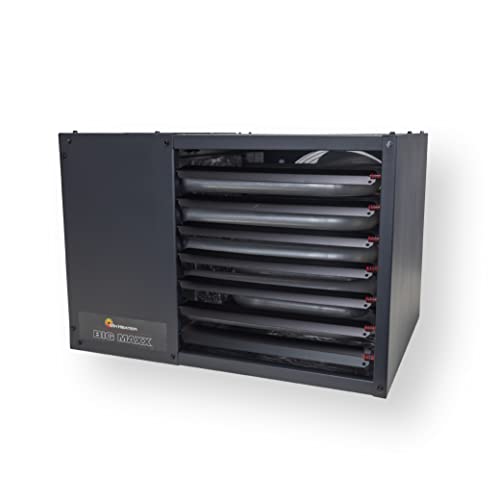
This 80,000 BTU natural gas unit heater is designed to heat large shop areas up to an estimated 2,000 sq. ft. The package includes two angle brackets and a liquid propane conversion kit, although thermostat, hose, and regulator are not included. Unit dimensions measure 29.33” L x 15.50” W x 26.37” H and operate on 120 V drawing 2.3 amps.
Clearance and venting specifics are important: a minimum 8 ft. clearance from floor to the base of the unit is required, and the heater supports Category 1 vertical and Category 3 horizontal venting. This model suits shops with existing natural gas lines and spaces that can accommodate the clearance and venting requirements.
Reznor UDXC-60 Natural Gas

The Reznor UDXC-60 is an indoor forced-air unit heater rated around 60,000 BTU, featuring two output levels: roughly 34,860 BTU for low fire and 49,800 BTU for high fire operation. It reports an 83% thermal efficiency, making it an efficient option for workshops, garages, and small warehouses.
Call 888-896-7031 for Free Local HVAC Quotes – Compare and Save Today!
The unit is configured for ceiling or wall mounting with threaded-nut retainers at four suspension points, and its low static propeller fan is intended to minimize noise while circulating warm air. Mounting hardware is sold separately, so plan for installation accessories and gas connection requirements.
Mr. Heater MH40NG 40,000

This model delivers 40,000 BTU via infrared heat, which warms objects and people directly rather than just heating air. It is specified for buildings with 12 to 15 ft ceilings and lists clearances: top 36 inches, sides and back 30 inches, and below 68 inches.
Infrared heating is often preferred in shops where localized, direct warmth is desirable or where loss through ventilation is expected. The MH40NG is positioned as a cost-effective infrared option for smaller or medium-height shop spaces.
Reznor UDXC-60 Propane
The propane variant of the UDXC-60 offers the same two-stage output and 83% efficiency while using LP fuel. Rated outputs align with natural gas versions, providing flexibility when natural gas service is not available.
Call 888-896-7031 for Free Local HVAC Quotes – Compare and Save Today!
It includes the same mounting points for ceiling installation and the quiet forced-air low static fan. Propane models require appropriate gas supply lines or LP tank arrangements and adherence to ventilation and indoor gas heater codes.
Dyna-Glo IR30NMDG-1 30,000

The Dyna-Glo IR30NMDG-1 uses infrared technology to radiate heat directly to objects and people, similar to sunlight. It provides up to 30,000 BTU/hr and is rated to heat areas up to about 1,000 sq. ft.
This model is gas-specific and does not allow fuel conversion. Infrared units like this are useful when targeted heating and quick warm-up of work areas are priorities rather than whole-space convection heating.
Buying Guide For Shop Gas Heaters
Selecting the right gas heater for a shop involves matching heater characteristics to your space, fuel availability, installation capacity, and safety requirements. Below are key considerations organized to support a thorough decision.
Heat Output And Coverage
- BTU Rating: Higher BTU numbers correspond to greater heating capacity. Estimate required BTUs based on shop square footage, ceiling height, insulation, and climate.
- Infrared vs Forced-Air: Infrared heats objects directly and is efficient for localized heating. Forced-air or unit heaters circulate warm air to heat larger volumes.
Fuel Type And Availability
- Natural Gas: Economical if a supply line exists. Requires proper venting and sometimes electrical power for controls.
- Propane (LP): Good where natural gas is not available. Requires tank storage and periodic refills; check indoor usage codes.
- Conversion Kits: Some models include conversion kits, but verify manufacturer allowances and professional installation requirements.
Installation And Mounting
- Ceiling Mount vs Wall Mount: Ceiling-mounted forced-air units are common in shops for even distribution. Wall-mounted or floor-standing units may be better for localized heating.
- Clearances And Venting: Follow specified clearances from ceilings, walls, and floors. Venting classification (Category 1, 3, etc.) dictates acceptable vent runs.
- Electrical Needs: Many gas heaters require 120 V for controls or fans; vent-free blue flame units may be non-electrical.
Efficiency And Operating Costs
- Thermal Efficiency: Higher efficiency reduces fuel consumption for equivalent heat output. Compare manufacturer efficiency ratings.
- Operational Profile: Two-stage models let you run at lower output for mild days, improving comfort and reducing runtime.
Safety Features And Regulations
- Oxygen Depletion Sensors (ODS): Required on ventless units to shut down if oxygen levels drop.
- High-Temperature Limits And Shutoffs: Important for preventing overheating in enclosed installations.
- Code Compliance: Check local building and fire codes for indoor gas heater use, venting, and fuel storage rules.
Performance Considerations
- Noise Level: Forced-air units with low static fans are quieter; quieter operation matters in workshops where communication is needed.
- Air Movement: Forced-air models distribute heat but may stir dust; infrared units minimize air movement but offer localized warmth.
- Ceiling Height Impact: Higher ceilings require more BTUs or a system designed for tall spaces; infrared can reduce heat loss to high ceilings.
Installation And Maintenance Perspectives
- Professional Installation: Gas connections, venting, and combustion safety typically require licensed technicians.
- Servicing: Regular inspections, burner cleaning, and pilot/ignition checks prolong performance and safety.
- Replacement Parts And Support: Consider brand reputation for parts availability and technical support.
Comparison Perspectives
- Large Shop Whole-Space Heating: Higher-BTU unit heaters (60k–125k) with ceiling mounting tend to be most effective for even distribution.
- Targeted Workstation Heat: Infrared or lower-BTU wall units work well for localized comfort without heating the entire building.
- Fuel And Installation Constraints: Choose propane units when natural gas is unavailable, but account for tank logistics and refill schedules.
Use the above checklist to match a heater’s output, fuel, and installation profile with your shop’s size, layout, and usage patterns. Prioritize safety features and code compliance, and plan for professional installation and periodic servicing to maintain reliable operation.
Tips for Getting the Best HVAC Prices
- Prioritize Quality Over Cost
The most critical factor in any HVAC project is the quality of the installation. Don’t compromise on contractor expertise just to save money. - Check for Rebates
Always research current rebates and incentives — they can significantly reduce your overall cost. - Compare Multiple Quotes
Request at least three estimates before making your choice. You can click here to get three free quotes from local professionals. These quotes include available rebates and tax credits and automatically exclude unqualified contractors. - Negotiate Smartly
Once you've chosen a contractor, use the proven strategies from our guide — How Homeowners Can Negotiate with HVAC Dealers — to get the best possible final price.