
Choosing the right RV gas heater affects comfort, fuel use, and installation complexity. Below is a concise comparison of five top Amazon options reviewed for performance, fuel type, installation fit, and safety features.
| Product | Type | BTU / Capacity | Notable Feature |
|---|---|---|---|
| KINGRVER 65,000 BTU Tankless | Tankless | 65,000 BTU | Low-pressure activation, high altitude |
| RUNSAIL 65,000 BTU Tankless | Tankless | 65,000 BTU | Built-in pressure relief valve |
| OEVANT 55,000 BTU Tankless | Tankless | 55,000 BTU | Remote controller, quick startup |
| Furrion 60,000 BTU Tankless | Tankless | 60,000 BTU | Vortex temperature stability |
| KINGRVER Hybrid 10 Gallon Tank | Tank (Gas/Electric) | 10 Gallon | Built-in anode rod, dual-fuel |
Content Navigation
KINGRVER 65,000 BTU Tankless Water Heater

This tankless propane unit delivers 65,000 BTU and activates at a low 0.5 GPM, making it suitable for low-pressure water sources common in some campsites. The model lists compatibility with all RVs using a 12.7″ x 12.7″ opening and offers optional door sizes (15″x15″, 15″x18″, 18″x18″) for refitment.
Designed for high-altitude operation above 9,800 feet, it includes automatic freeze protection below 42.8°F. This makes it a consideration for travelers to colder or mountainous regions. Installation requires matching venting and propane supply appropriate for tankless BTU ratings.
RUNSAIL 65,000 BTU Tankless RV Water Heater
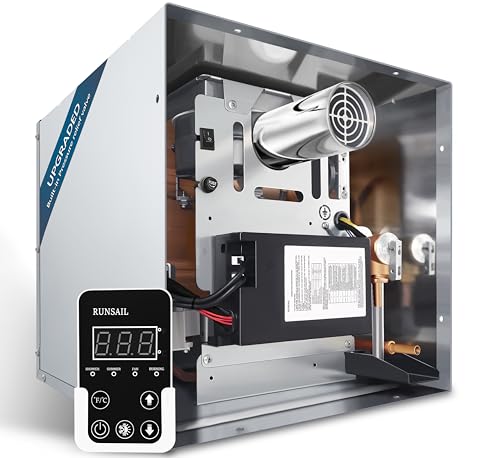
RUNSAIL’s tankless unit provides 65,000 BTU and up to 3.96 GPM, intended for continuous hot water use without tank storage. It highlights a built-in pressure relief valve that complies with ANSI & CSA standards, eliminating the need for a separately purchased relief valve.
Call 888-896-7031 for Free Local HVAC Quotes – Compare and Save Today!
The product emphasizes safety and improved pressure-bearing capacity in the waterway system, aiming to reduce valve dripping and extend component life. Like most high-BTU tankless heaters, it requires sufficient propane flow and correct venting for optimal performance.
OEVANT 55,000 BTU Instant Water Heater

The OEVANT model offers 55,000 BTU and claims rapid warm-up—reaching higher temperatures in under 25 seconds—and is controlled via a built-in microcomputer and optional remote. Temperature adjustment ranges between 95°F and 123°F, and error codes assist troubleshooting.
Staged combustion technology is intended to stabilize water temperatures and prevent overheating. Powered by propane and DC 12V, the unit is positioned for users prioritizing quick startup and electronic control over a pure mechanical system.
Furrion 60,000 BTU Tankless Gas Water Heater
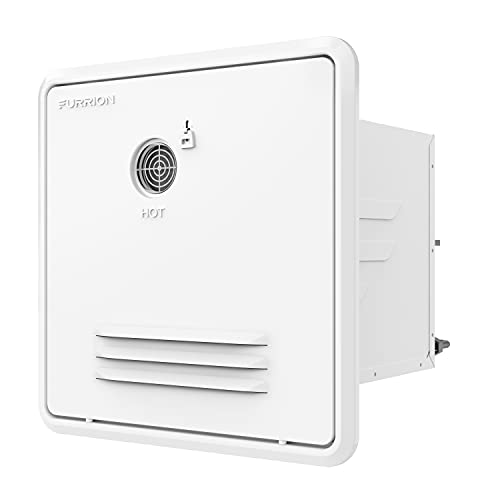
Furrion’s tankless water heater is rated at 60,000 BTU with a 2.4 GPM flow capacity and features Vortex technology to maintain steady outlet temperatures. Dual sensors are stated to shut the unit off if temperatures exceed safe limits.
Call 888-896-7031 for Free Local HVAC Quotes – Compare and Save Today!
It is designed for retrofit and replacement use, including doors sized for common Atwood/Suburban openings. The unit is propane-powered with electric ignition and focuses on temperature stability and safety cutoffs.
KINGRVER 10 Gallon HybridShower 10 Pro Tank Heater
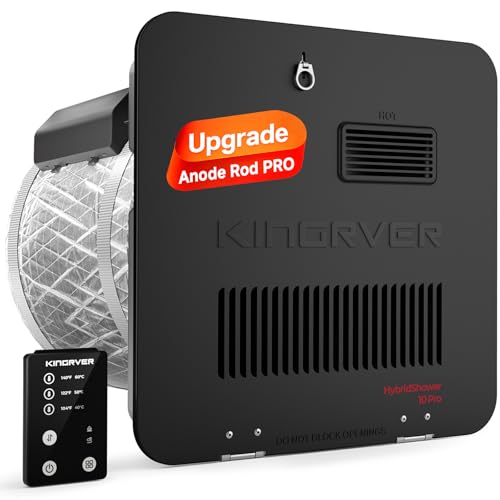
This KINGRVER 10-gallon hybrid tank water heater supports both propane and 120V electric heating and includes a built-in powered anode rod PRO for extended tank life. The design replaces many older 6-gallon units and fits standard openings used by common RV heater models.
Dual-fuel operation can speed recovery times when both energy sources are available. The porcelain-lined steel tank claims corrosion resistance and reduced maintenance due to the integrated anode rod. Tank systems provide stored hot water and are often simpler to size for intermittent usage patterns.
Buying Guide: How To Choose An RV Gas Heater
Choosing the right RV gas heater depends on travel style, installation space, altitude, and propane supply. Below are core considerations and perspectives for comparison.
Tips for Getting the Best HVAC Prices
- Prioritize Quality Over Cost
The most critical factor in any HVAC project is the quality of the installation. Don’t compromise on contractor expertise just to save money. - Check for Rebates
Always research current rebates and incentives — they can significantly reduce your overall cost. - Compare Multiple Quotes
Request at least three estimates before making your choice. You can click here to get three free quotes from local professionals. These quotes include available rebates and tax credits and automatically exclude unqualified contractors. - Negotiate Smartly
Once you've chosen a contractor, use the proven strategies from our guide — How Homeowners Can Negotiate with HVAC Dealers — to get the best possible final price.
Type: Tankless Versus Tank
- Tankless (On-Demand): Heats water as needed, saves space, and provides continuous hot water when propane flow and water pressure suffice. Require higher BTU and proper venting. Best for multiple consecutive showers and long-use scenarios.
- Tank (Storage): Stores a finite amount of hot water for immediate use. Lower initial BTU needs and simpler plumbing, but limited hot water until the tank reheats. Often easier retrofit replacements for older systems.
BTU Rating And Flow Capacity
- Higher BTU provides faster temperature rise and higher flow rates. Match BTU to expected simultaneous demand (showers + dishes).
- GPM (Gallons Per Minute) indicates how much hot water can be delivered continuously. Tankless models list GPM; ensure it meets your peak use.
Fuel Supply And Venting Requirements
- Confirm your RV’s propane delivery capacity and regulator sizing. High-BTU tankless units need steady propane flow.
- Proper venting is critical for combustion safety and performance. Retrofit units often require a compatible door or cutout size to maintain correct airflow.
Altitude And Cold-Weather Capability
- At high altitudes, combustion air is thinner. Some models specify high-altitude operation or staged combustion to maintain output.
- Look for freeze protection features or consider insulating plumbing in cold climates.
Safety And Certification
- Choose units with recognized safety features: over-temperature shutoff, flame sensors, and pressure relief valves.
- Certifications such as ANSI, CSA, or CSA-certified components help ensure compliance with safety norms.
Installation And Retrofit Considerations
- Measure existing cutouts and door dimensions. Many tankless units offer optional doors or are designed for popular opening sizes.
- Consider ease of access for maintenance, ability to replace valves, and compatibility with existing water connections.
Maintenance And Longevity
- Tank units require anode rod checks (some incorporate built-in anode designs). Tankless systems may need descaling in hard-water areas.
- Component availability—gas valves, igniters, and pressure relief valves—affects long-term serviceability.
Performance Versus Energy Use
- Tankless units can save propane by heating only when needed. Tank units use energy to maintain tank temperature but allow fast recovery when both propane and shore power are available.
- Consider whether you often have shore power; hybrid systems that combine gas and electric can offer flexible economy.
Comparison Perspectives
- Efficiency Perspective: Tankless models generally have higher operational efficiency for on-demand needs but require adequate propane supply and venting.
- Reliability Perspective: Simpler tank systems have fewer combustion components and can be more forgiving in low-service environments.
- Installation Perspective: Retrofit-door compatibility and standard plumbing connections simplify replacement; check door dimensions and mounting hardware.
- Climate Perspective: If you camp at high elevation or in freezing weather, confirm high-altitude operation and freeze protection.