
Find efficient, safe, and controllable ceramic heaters with thermostats that keep rooms comfortable while managing energy use. The table below summarizes five top options selected for performance, safety features, and thermostat precision.
| Product | Brand | Key Features |
|---|---|---|
| Dreo Space Heater | Dreo | 1500W PTC, precise 1°F thermostat, tilt sensor, ETL listed |
| Amazon Basics Oscillating Heater | Amazon Basics | 45° oscillation, 3 heat modes, compact portable design |
| Lasko Oscillating Designer | Lasko | Adjustable thermostat, timer, 2 speeds, decor-friendly |
| Aikoper PTC Ceramic Heater | Aikoper | Fast PTC heating, 3 heat settings plus fan, adjustable thermostat |
| GiveBest Portable Ceramic Heater | GiveBest | Two heat levels, thermostat control, tip-over and overheat protection |
Content Navigation
Dreo Space Heater With Precise Thermostat

The Dreo Space Heater combines a 1500W PTC heating element with a redesigned heat funnel to accelerate warm air delivery. Its enhanced NTC chipset enables 1°F increment temperature control across a wide range (41–95°F), which supports energy-conscious set-and-hold operation. Safety features include a tilt-detection sensor, overheat protection, flame retardant materials, and an ETL-certification that aligns with common safety expectations.
Operational modes include multiple heat power settings and a timer, plus a remote and digital display for convenience. These elements support steady room-temperature maintenance without frequent manual adjustments. The unit’s design emphasizes circulating warm air farther than many conventional ceramic heaters, which can be useful in medium-sized rooms.
Amazon Basics Oscillating Ceramic Heater

The Amazon Basics Oscillating Ceramic Heater features 45-degree oscillation for wider heat distribution and three operational modes: High (1500W), Low (900W), and Fan Only. It delivers straightforward thermostat-based control to maintain a target temperature without complex programming.
Call 888-896-7031 for Free Local HVAC Quotes – Compare and Save Today!
At roughly 3 pounds and compact dimensions, this heater is designed for portability and quick placement in smaller spaces. Built-in overheat and tip-over protections are included. The oscillation mechanism is a notable design choice for users prioritizing even coverage across a room rather than directional heating from a single point.
Lasko Oscillating Designer Ceramic Heater

The Lasko Designer Series pairs a 1500W ceramic element with an adjustable thermostat and a programmable timer (1 to 7 hours). Two heat settings and two fan speeds allow moderate control, while a visible LED panel shows selected temperature ranges between 60°F and 85°F or a max-heat option.
Designed with aesthetics in mind, this model is taller and intended to blend into living spaces. The timer function is practical for occupant schedules, and the adjustable thermostat provides basic temperature regulation suitable for bedrooms and home offices.
Aikoper PTC Ceramic Space Heater With Thermostat
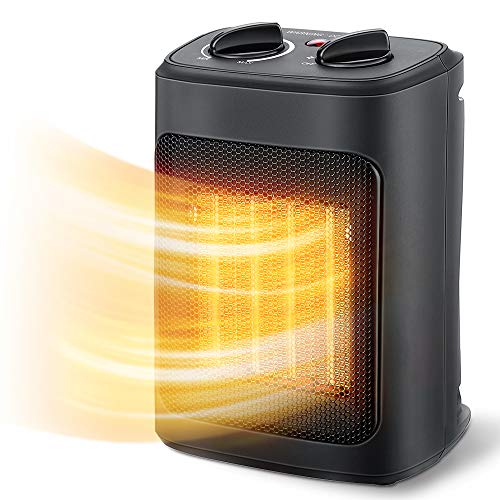
The Aikoper unit emphasizes rapid warmth using PTC ceramic heating technology paired with an efficient fan to speed heat distribution. It offers three heat settings and a fan-only mode, allowing year-round use and tailored power consumption.
Call 888-896-7031 for Free Local HVAC Quotes – Compare and Save Today!
The integrated thermostat governs on/off cycles to sustain the set temperature. The product’s design targets smaller rooms where quick localized heat is needed. Energy-efficiency claims are supported by selectable power levels, which help reduce overall usage compared to continuous high-power operation.
GiveBest Portable Ceramic Heater With Thermostat

GiveBest’s portable heater provides two heat levels (1500W and 750W) plus a cool-air fan, and it uses a thermostat to cycle power based on room temperature. Safety features highlighted include automatic shutoff for overheat and tip-over protection that disengages the unit if knocked over.
The compact design includes a carry handle for quick repositioning and is aimed at users who want a small, controllable heater for single-room use. The thermostat control supports energy-efficient operation by limiting runtime when the setpoint is reached.
Buying Guide: Choosing A Ceramic Heater With Thermostat
This buying guide outlines the critical considerations for selecting a ceramic heater with a thermostat. Use these categories to compare units objectively and pick the heater that fits room size, safety needs, and control expectations.
Heating Technology And Power
PTC Ceramic Elements heat quickly and tend to self-regulate as resistance rises with temperature, which can improve safety and longevity. Look for 1500W max output for small to medium rooms; lower wattage options reduce power draw but also reduce heat output. Multiple power settings allow you to balance comfort and energy use.
Thermostat Precision And Range
Thermostat accuracy affects how consistently a heater maintains target temperature. Units with 1°F increments and digital controls provide finer control than simple low/medium/high switches. Consider the thermostat range and whether you need very low setpoints (e.g., 40s–50s°F) or typical living comfort ranges (60s–80s°F).
Room Size And Heat Distribution
Match heater capacity to room size: compact ceramic heaters suit single rooms or desks, while oscillating models can cover a broader area. Oscillation increases even coverage; directional units provide stronger localized warmth. Check manufacturer guidance on square footage or anecdotal coverage descriptions.
Safety Features
Prioritize units with tip-over protection, overheat shutdown, and robust housing materials (flame retardant where specified). Certifications such as ETL or UL provide independent verification of basic safety standards. For households with pets or children, models with cool-touch housings and automatic safety shutoffs are preferable.
Controls And Convenience
Decide between analog dials and digital displays. Digital controls plus a remote or programmable timer facilitate automated schedules and easier setpoint adjustments. A clear display and intuitive interface reduce misuse and unnecessary manual adjustments.
Energy Efficiency And Operating Costs
Ceramic heaters don’t magically reduce electricity compared to other resistive heaters at the same wattage, but selectable power levels, thermostatic cycling, and targeted use (heating occupied zones only) reduce total consumption. Consider energy-saving features, such as eco-modes, lower wattage settings, and a precise thermostat to minimize run-time.
Noise And Fan Operation
Fan-forced ceramic heaters produce audible noise when distributing heat; look for user descriptions or spec dB levels if quiet operation is important. Fan-only modes are useful for summer circulation but add to noise during operation.
Portability And Form Factor
Smaller, lightweight heaters with handles are easier to move between rooms. Taller or oscillating tower designs can be placed discretely for living areas. Consider footprint and storage needs if space is limited.
Durability And Warranty
Examine manufacturer warranty details and user feedback on long-term reliability. Ceramic elements are generally robust, but fan motors and control electronics can be failure points. A clear warranty and responsive customer service provide added assurance.
Comparison Perspectives
- Precision vs Simplicity: Digital thermostats with 1°F accuracy offer tight control but can increase complexity. Mechanical or dial thermostats are simpler but less precise.
- Coverage vs Portability: Oscillating units distribute heat across a room better; compact directional units provide stronger heat in a focused area while being easier to move.
- Safety vs Performance: High-output models heat faster but require reliable safety features to mitigate risks. Check for certifications and multi-tier safety systems.
- Energy Savings vs Comfort: Lower wattage and eco modes reduce consumption but may take longer to reach comfortable temperatures. Balance immediate comfort needs against long-term operating costs.
When selecting a ceramic heater with a thermostat, evaluate the combination of thermostat accuracy, safety features, heat distribution method, and portability to match the intended use case. Consider how often the heater will run, the size of the space, and whether programmability or simple manual control best fits your routine.
Tips for Getting the Best HVAC Prices
- Prioritize Quality Over Cost
The most critical factor in any HVAC project is the quality of the installation. Don’t compromise on contractor expertise just to save money. - Check for Rebates
Always research current rebates and incentives — they can significantly reduce your overall cost. - Compare Multiple Quotes
Request at least three estimates before making your choice. You can click here to get three free quotes from local professionals. These quotes include available rebates and tax credits and automatically exclude unqualified contractors. - Negotiate Smartly
Once you've chosen a contractor, use the proven strategies from our guide — How Homeowners Can Negotiate with HVAC Dealers — to get the best possible final price.