
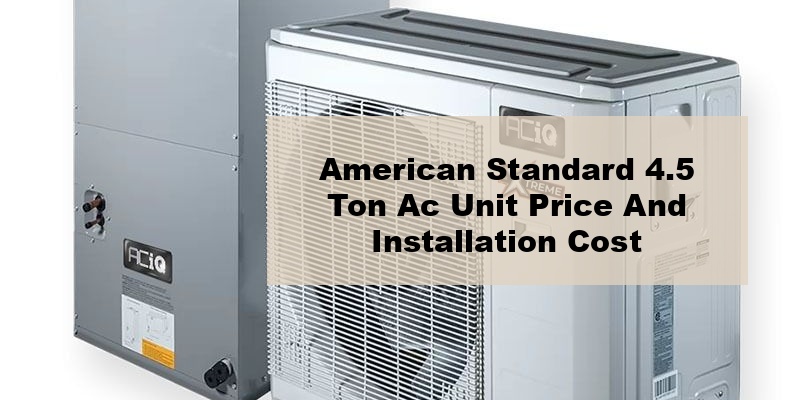
Purchasing a 4.5-ton American Standard air conditioner involves weighing equipment costs against installation expenses. Total price depends on the model’s efficiency, the complexity of the install, the condition of existing ductwork, and local labor rates. This guide provides current price ranges for the unit itself and for professional installation, along with factors that influence total cost, potential savings from efficiency upgrades, and tips for selecting the right system for a typical U.S. home.
Content Navigation
What A 4.5 Ton American Standard System Includes
A 4.5-ton American Standard cooling system typically includes an outdoor condenser rated at 4.5 tons, paired with an indoor air handler or furnace, and an evaporator coil. A matched refrigerant line set, electrical connections, a thermostat, and basic installation components are standard. In many setups, the package also includes a digital or smart thermostat and options for enhanced filtration. Ductwork may be part of the job if upgrades or replacements are required to support the higher-efficiency system.
Price Range For The Unit Itself
Equipment cost varies with SEER, features, and the specific American Standard model. On average, a 4.5-ton outdoor condenser alone can range from roughly $2,500 to $4,800 for common 14-16 SEER units, with higher-efficiency 17-21 SEER models often priced between $3,500 and $5,000. Premium inverter-driven units that offer very high efficiency or advanced modulation may cost more, typically $4,000 to $5,000. Prices reflect the unit, compressor type, and warranty terms.
| Model Type | Equipment Price Range | Notes |
|---|---|---|
| Standard Efficiency (14-16 SEER) | $2,200 – $3,900 | Balanced cost and performance |
| High Efficiency (17-21 SEER) | $3,300 – $4,800 | Lower energy usage, better comfort |
| Premium/Variable-Speed | $4,000 – $5,000+ | Advanced modulation, very quiet |
Installation Costs And Variables
Professional installation often runs between $2,000 and $5,000 for a standard replacement with existing ductwork. When ductwork has to be modified or replaced, or when the installation requires a new electrical service, the cost can rise to $6,000 to $12,000 or more. The total installed price for a 4.5-ton American Standard system commonly falls in the range of $6,500 to $12,000, depending on the complexity and local labor rates.
- Permits and inspections
- Refrigerant line set and insulation
- Electrical wiring and disconnects
- Thermostat and controls
- Removal and disposal of old equipment
- Duct sealing and testing
Factors That Affect Total Cost
Several factors influence the final installed price. Ductwork condition and size determine whether upgrades are needed. The location of the outdoor unit (ground vs. roof) and access for service affect labor time. The age of the home and existing electrical service can require upgrades. Regional labor rates, permit fees, and whether new or replacement ductwork is required all significantly impact total cost.
Savings, Rebates, And Financing
Higher-efficiency models typically cut operating costs, reducing monthly cooling bills over time. The magnitude of savings depends on climate, usage patterns, and electricity rates. Homeowners may access utility rebates, manufacturer incentives, and local tax incentives for energy-efficient systems. Financing options, including low-interest or promotional plans, are commonly available through installers or lenders. It is important to verify current programs and eligibility before purchasing.
Call 888-896-7031 for Free Local HVAC Quotes – Compare and Save Today!
When considering rebates and financing, homeowners should compare the total cost of ownership over the equipment’s life rather than upfront price alone. AHRI-certified matched systems ensure performance expectations are met. Always request documentation of compatibility and warranty terms from the installer.
Choosing The Right Model For Your Home
Choosing the right model hinges on climate, home size, and existing ductwork. For many homes, a 4.5-ton unit paired with a two-stage or variable-speed compressor offers improved comfort and more consistent temperatures. A higher SEER rating yields greater long-term savings, especially in hot southern climates or homes with high cooling loads. Noise level, space for outdoor equipment, and compatibility with an efficient thermostat or smart home setup should also guide selection.
To ensure optimal performance, homeowners should verify that the chosen unit is AHRI-matched to the indoor coil and air handler, and that installation follows local codes and manufacturer requirements. Certification and a proven track record with American Standard products can reduce service issues down the line.
Maintenance And Warranty Considerations
Most American Standard systems come with a 10-year limited warranty on the compressor and parts when registered with the manufacturer. Labor coverage varies by installer and program, with some offering 1- to 10-year labor warranties. Warranty terms typically require annual professional maintenance and proper refrigerant charging. Registration within the specified period is usually necessary to maintain coverage. Homeowners should keep service records and consider an extended warranty if available, especially for high-use or high-value installations.
Tips for Getting the Best HVAC Prices
- Prioritize Quality Over Cost
The most critical factor in any HVAC project is the quality of the installation. Don’t compromise on contractor expertise just to save money. - Check for Rebates
Always research current rebates and incentives — they can significantly reduce your overall cost. - Compare Multiple Quotes
Request at least three estimates before making your choice. You can click here to get three free quotes from local professionals. These quotes include available rebates and tax credits and automatically exclude unqualified contractors. - Negotiate Smartly
Once you've chosen a contractor, use the proven strategies from our guide — How Homeowners Can Negotiate with HVAC Dealers — to get the best possible final price.