
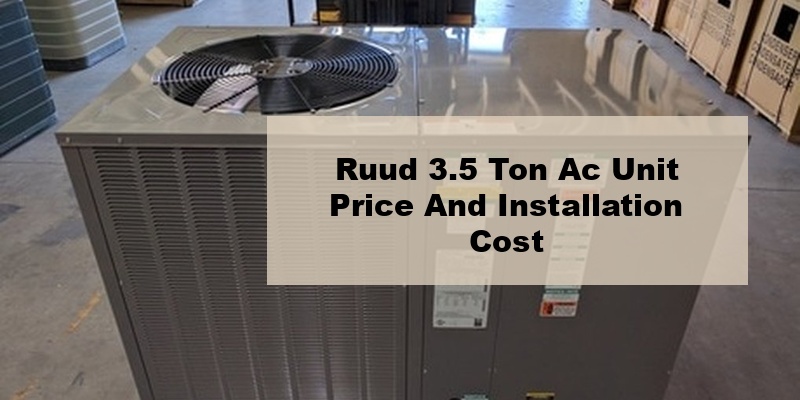
Central cooling hinges on the right outdoor condenser paired with indoor components. For a Ruud 3.5 ton system, price and installation costs vary by efficiency, ductwork needs, and local labor rates. This guide breaks down current pricing, installation considerations, and practical budgeting tips for American homeowners, helping compare quotes, evaluate options, and plan a reliable, energy‑efficient cooling solution.
Content Navigation
What Affects The Price Of A Ruud 3.5 Ton AC Unit
Several factors influence total cost beyond the base equipment price. Efficiency (SEER) and model line affect upfront costs and long‑term energy bills. Higher SEER Ruud models deliver greater energy savings but come with a higher upfront price. System configuration matters too: a standalone outdoor condenser versus a full package that includes an indoor air handler, coil, and smart thermostat changes the price trajectory. Installation complexity—ductwork, line sets, electrical upgrades, permits—can significantly shift the final number. Regional labor rates, refrigerant regulations, and warranties also shape overall costs.
- Efficiency: Higher SEER typically costs more upfront but lowers operating costs over time.
- System configuration: Outdoor condenser only vs complete package with indoor components.
- Installation complexity: Ductwork, electrical work, line set length, and permits.
- Ductwork and zoning: Existing ducts in good condition reduce cost; upgrades or zoning add expense.
- Refrigerant and codes: R‑410A is standard; some changes or retrofits affect pricing.
- Warranties: Longer or enhanced warranties can impact upfront price but provide protection.
Ruud 3.5 Ton AC Unit Price Range
The price for a Ruud 3.5 ton outdoor condenser typically ranges from about $1,800 to $3,000 for standard efficiency (14–16 SEER) models. Upgrading to a premium or higher‑efficiency line (18 SEER and above) can push the outdoor unit price to roughly $2,800 to $3,800. Indoor components, including a matching Ruud air handler and coil, generally cost between $1,200 and $2,500 depending on configuration and efficiency. When purchasing a complete Ruud 3.5 ton system installed, homeowners often see equipment costs in a broad range of $4,000 to $9,500 before labor, ductwork, and permits.
| Component | Estimated Price (USD) | Notes |
|---|---|---|
| Outdoor Condenser (3.5 Ton, 14–16 SEER) | $1,800–$3,000 | Standard efficiency |
| Outdoor Condenser (Premium 18+ SEER) | $2,800–$3,800 | Higher efficiency features |
| Indoor Air Handler / Coil | $1,200–$2,500 | Depends on configuration |
| Full System Installed (No Major Ductwork Changes) | $4,000–$7,000 | Equipment + basic installation |
| Full System Installed (With Ductwork Upgrades) | $6,000–$12,000 | Includes duct repairs or rework |
| Smart Thermostat | $100–$300 | Optional add‑on |
| Permits, Disposal, Misc. | $100–$500 | Depends on locality |
Installation Costs And Factors
Installation costs cover labor, permits, line sets, refrigerant, electrical work, and any duct modifications. In the United States, labor to replace an old AC with a Ruud 3.5 ton system typically ranges from $2,000 to $5,000, depending on region, accessibility, and system complexity. Permits usually run $50 to $300. Ductwork upgrades or repairs can add $2,000 to $5,000. If existing ducts are in good condition and no major electrical upgrades are needed, total installation costs trend lower; complex installs or homes with outdated ductwork push prices higher. Always require a detailed written estimate that itemizes equipment, labor, and additional charges.
- Ductwork condition: No changes save costs; if ducts require sealing, cleaning, or resizing, prices rise.
- Electrical requirements: Panel upgrades or new breakers add to labor and material costs.
: Longer line sets or additional refrigerant charges increase expense.
Cost Breakdown By Installation Scenario
To help budget, consider three common scenarios for Ruud 3.5 ton installations. The following estimates assume a mid‑April to October install window in a typical U.S. market.
- Scenario A – Replacement With Minimal Duct Changes: Full system installed with existing ducts in good condition. Estimated total range: $4,500 to $7,500.
- Scenario B – Replacement With Moderate Duct Upgrades: Duct sealing or resizing plus new line sets. Estimated total range: $6,000 to $9,500.
- Scenario C – New Construction Or Major Duct Overhaul: Significant duct work or new construction adds. Estimated total range: $7,500 to $12,000+.
Getting Quotes And Choosing An Installer
Choosing a qualified installer is essential to performance and longevity. Homeowners should obtain at least three written, itemized quotes. Each quote should specify equipment model, SEER rating, indoor components, ductwork work, permits, labor, warranties, and a separate line for taxes and disposal. Verify licenses and insurance, and ask for references. Check that the equipment is AHRI‑matched and ENERGY STAR certified where applicable. Confirm expected SEER performance and the installer’s plan for refrigerant handling, system startup, and testing.
Call 888-896-7031 for Free Local HVAC Quotes – Compare and Save Today!
- Ask for a written, itemized estimate covering all costs.
- -request third‑party verification of AHRI matchups and efficiency claims.
- Get a clear warranty outline for both equipment and labor.
- Confirm permit requirements and potential rebates or incentives.
- Check reviews and ask about technician certifications (e.g., NATE).
Financing, Warranties, And Rebates
Financing options, extended warranties, and rebates can lower the overall cost of a Ruud 3.5 ton system. Many installers offer promotional financing, or you can use independent HVAC financing. Warranties commonly include a 10‑year limited warranty on the compressor and a separate workmanship warranty, often 1–5 years depending on the installer and product line. Federal, state, and local programs may provide rebates or tax credits for high‑efficiency equipment or for energy‑efficient home improvements. Check federal energy sites and your local utility programs for current offers and eligibility.
Useful resources include the U.S. Department of Energy and ENERGY STAR program pages, which list eligible models and current incentives. Always verify the latest programs before purchase, as rebates and credits can change annually.
Maintenance And Longevity
Regular maintenance extends equipment life and maintains efficiency. Schedule a professional inspection annually, typically in the spring, to check refrigerant levels, electrical connections, blower operation, and condensate drainage. Homeowners should replace or clean filters every 1–3 months, depending on usage and indoor air quality needs. A well‑maintained Ruud 3.5 ton system can last 12–15 years or more with proper care; a neglected system may fail sooner. Expect minor maintenance costs, usually $100–$300 per service visit, not including major repairs.
Signs it might be time to replace include rising energy bills despite steady usage, frequent repairs, inconsistent cooling, and unusual noises or odors. When upgrades are planned, coordinating equipment replacement with seasonal promotions can maximize savings and minimize downtime.
Notes On Regional Variations And Practical Tips
Prices vary by region due to labor rates, permit costs, and accessibility. Warmer climates often see higher cooling demand, impacting installation scheduling and job complexity. Request a detailed, written scope of work and a no‑surprises contract with a fixed price or clear pricing bands. Consider energy efficiency beyond initial cost—longer term savings from a higher SEER unit can justify the upfront premium, especially in homes with high cooling loads.
Practical tip: Have the installer perform a manual J load calculation to verify the correct 3.5 ton sizing for your home. An undersized or oversized system can erode comfort and efficiency. Pair the new system with a programmable or smart thermostat to maximize energy savings and ensure proper system control.
Call 888-896-7031 for Free Local HVAC Quotes – Compare and Save Today!
Tips for Getting the Best HVAC Prices
- Prioritize Quality Over Cost
The most critical factor in any HVAC project is the quality of the installation. Don’t compromise on contractor expertise just to save money. - Check for Rebates
Always research current rebates and incentives — they can significantly reduce your overall cost. - Compare Multiple Quotes
Request at least three estimates before making your choice. You can click here to get three free quotes from local professionals. These quotes include available rebates and tax credits and automatically exclude unqualified contractors. - Negotiate Smartly
Once you've chosen a contractor, use the proven strategies from our guide — How Homeowners Can Negotiate with HVAC Dealers — to get the best possible final price.