
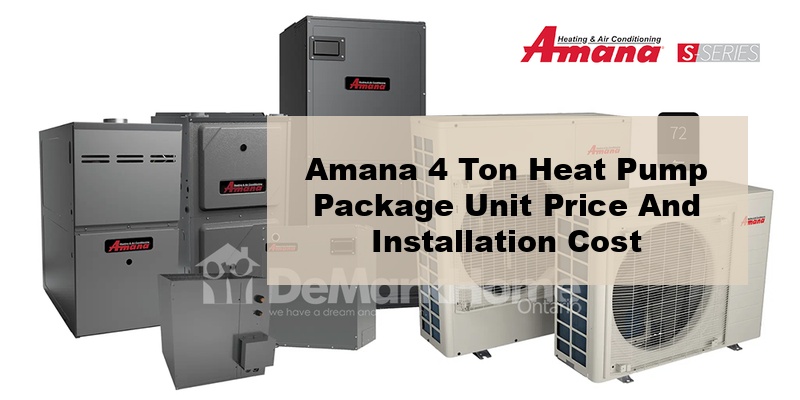
Amana 4-ton heat pump package units offer an all-in-one heating and cooling solution for homes sized to around 1,600 to 2,400 square feet, depending on climate, insulation, and ductwork. Understanding the price and installation costs helps homeowners plan a budgeting strategy that includes upfront equipment, labor, and potential incentives. This guide breaks down the typical price range for Amana’s 4-ton package units, what installation usually entails, and factors that influence total costs. It also covers warranties, rebates, and tips for getting accurate quotes from licensed HVAC contractors.
Content Navigation
What Is A 4-Ton Amana Heat Pump Package Unit?
A package unit combines all essential components—compressor, outdoor coil, air handler, and controls—into a single cabinet placed outside the home. This design is space-efficient and often easier to install than separate indoor and outdoor components. A 4-ton rating indicates the system’s cooling capacity, suitable for moderate climates or larger rooms in warmer areas. Amana’s package units are available in varying efficiencies, typically measured by SEER (Seasonal Energy Efficiency Ratio) and HSPF (Heating Seasonal Performance Factor). Higher efficiency models cost more upfront but can reduce annual energy bills over time.
For American homes, sizing and climate are critical. While a 4-ton unit fits many residences, incorrect sizing can lead to comfort imbalances or increased wear. Professional load calculations, such as Manual J, should guide the final selection. Amana offers several efficiency tiers within its 4-ton range, allowing buyers to balance comfort, energy use, and long-term operating costs.
Price Range For Amana 4-Ton Package Units
The price of an Amana 4-ton package unit varies with efficiency, features, and model lineup. Typical ranges homeowners might expect are outlined below, with the understanding that regional differences and installation specifics can shift costs.
- Entry-level 4-ton package unit: Approximately $3,800 to $4,900 for the unit alone. These models provide basic efficiency suitable for moderate energy savings and dependable cooling and heating.
- Mid-efficiency 4-ton package unit: Roughly $4,800 to $6,500 for the unit. These models offer higher SEER/HSPF ratings, better reliability, and improved energy performance.
- High-efficiency 4-ton package unit: About $5,800 to $7,500 or more for the unit. These units maximize efficiency (often SEER in the mid-to-high teens) and deliver greater long-term energy savings, especially in hot or humid climates.
Note that these figures are for the equipment alone. Actual prices vary by dealer, promotions, warranty packages, and any included accessories such as thermostats or air filtration options. Always obtain multiple quotes to compare not just price but also equipment specifications and warranty terms.
Installation Costs And Factors
Installation costs for a 4-ton Amana package unit depend on site conditions, ductwork, electrical needs, and permit requirements. Labor typically includes removing the old equipment (if present), mounting the new unit, connecting refrigerant lines, electrical wiring, and testing the system. The following ranges provide a practical framework, with specific conditions guiding the final figure.
Call 888-896-7031 for Free Local HVAC Quotes – Compare and Save Today!
- Basic installation: $2,000 to $3,500. Suitable when existing ductwork and electrical panels are in good condition and there are minimal modifications required.
- Moderate installation: $3,500 to $5,000. Common when ductwork needs cleaning, sealing, or minor rerouting, or when a new thermostat and basic controls are added.
- Complex installation: $5,000 to $7,000 or more. Applies when ductwork changes are extensive, electrical service upgrades are required, or the home needs significant modifications to support the system.
Total installed cost typically ranges from $6,000 to $13,000, depending on the unit price, installation complexity, and regional labor rates. Homeowners should budget for potential extras such as duct sealing, refrigerant recovery, or required permits.
What Impacts The Total Cost?
Several factors influence both the equipment and installation costs of a 4-ton Amana package unit. Understanding these helps homeowners anticipate expenses and compare quotes effectively.
- Efficiency and model: Higher SEER/HSPF ratings and advanced features raise the unit price but can lower operating costs over time.
- Ductwork condition and modifications: Existing ducts that are leaky, undersized, or damaged may require repairs or replacements, increasing costs.
- Electrical service and disconnects: Upgrades to the electrical panel or wiring can add to expenses, especially in older homes.
- Permits and inspections: Local codes may require permits, adding administrative costs and potential inspection fees.
- Installation complexity: Attics, crawl spaces, or limited access areas can require more labor, drives, or equipment handling.
- Labor market and region: Prices vary by region and season, with higher rates in certain markets or peak installation times.
- Warranty and service plans: Extended warranties or maintenance plans add to upfront costs but may provide value through reduced repair expenses.
Financing, Rebates, And Warranties
Many homeowners explore financing options, utility rebates, and manufacturer warranties to offset the upfront price. Amana package units typically carry a manufacturer’s warranty that covers major components for a specified period, often including a 10-year limited parts warranty with registration and professional installation requirements. Labor warranties vary by installer and may range from 1 to 5 years. In addition to manufacturer coverage, several utilities and state programs offer rebates or incentives for energy-efficient heat pumps. Local or national programs may provide rebates for installing higher-efficiency units or heat pumps with advanced refrigerants. Prospective buyers should check both manufacturer warranty terms and current regional incentives before purchasing.
To locate rebates, homeowners can consult utility websites, the Database of State Incentives for Renewables & Efficiency (DSIRE), or speak with a licensed HVAC contractor who is familiar with local programs. Always verify rebate eligibility, required documentation, and application deadlines before purchasing.
Energy Savings And Payback Considerations
Switching to a 4-ton Amana heat pump package unit can yield energy savings compared with older or electric-resistance systems. In cooling mode, higher efficiency models typically deliver lower electricity use during summer months. In heating mode, heat pumps can provide substantial savings in mild to moderate climates, especially when paired with a properly insulated home and well-sealed ducts. The actual payback period depends on local electricity rates, climate, insulation, and how well the system is installed and maintained.
Estimating annual savings requires a baseline energy profile for the home. On average, a well-maired 4-ton heat pump can reduce annual heating and cooling energy consumption by 20% to 40% relative to electric resistance heating in favorable climates, with greater gains in hot, humid regions. Homeowners should compare quotes not only on upfront price but also on expected annual energy savings, maintenance needs, and warranty coverage to determine true value over the system’s life.
Call 888-896-7031 for Free Local HVAC Quotes – Compare and Save Today!
Maintenance, Warranties, And Longevity
Regular maintenance extends the life of a 4-ton Amana package unit and helps maintain efficiency. Annual or biannual service includes filter replacement, coil cleaning, refrigerant level checks, and thermostat testing. Clean intake paths, unobstructed airflow, and proper insulation reduce strain on the compressor and fan motors. Typical lifespan for packaged heat pumps ranges from 12 to 15 years with proper care, though individual units may last longer with proactive maintenance. When replacements are necessary, homeowners should plan for disposal of old equipment and potential refrigerant recovery procedures.
Warranties provide coverage for critical components and, in some cases, labor. Review the specific terms offered by the installer and Amana’s warranty policy, including eligibility requirements, registration timelines, and limitations related to refrigerant type and usage conditions. Keeping up with scheduled maintenance often helps preserve warranty validity and performance.
How To Get An Accurate Quote
To obtain an accurate price for a 4-ton Amana package unit and installation, follow these steps when contacting contractors:
- Assess home needs: Confirm square footage, insulation levels, window efficiency, and local climate to determine appropriate efficiency ratings.
- Request detailed quotes: Ask for itemized estimates that separate equipment price, labor, ductwork, permits, and any extras.
- Verify credentials: Ensure contractors are licensed, insured, and have experience with Amana package units.
- Check warranties: Review both equipment and workmanship warranties, and clarify what is covered and for how long.
- Compare energy-savings projections: Look for estimated annual operating costs and payback analysis to evaluate long-term value.
- Ask about rebates: Inquire about available local, state, or utility incentives and required documentation for rebates.
With thorough quotes and careful consideration of efficiency, installation complexity, and warranties, homeowners can select the best Amana 4-ton package unit option that balances upfront cost with long-term savings and reliability.
Tips for Getting the Best HVAC Prices
- Prioritize Quality Over Cost
The most critical factor in any HVAC project is the quality of the installation. Don’t compromise on contractor expertise just to save money. - Check for Rebates
Always research current rebates and incentives — they can significantly reduce your overall cost. - Compare Multiple Quotes
Request at least three estimates before making your choice. You can click here to get three free quotes from local professionals. These quotes include available rebates and tax credits and automatically exclude unqualified contractors. - Negotiate Smartly
Once you've chosen a contractor, use the proven strategies from our guide — How Homeowners Can Negotiate with HVAC Dealers — to get the best possible final price.