
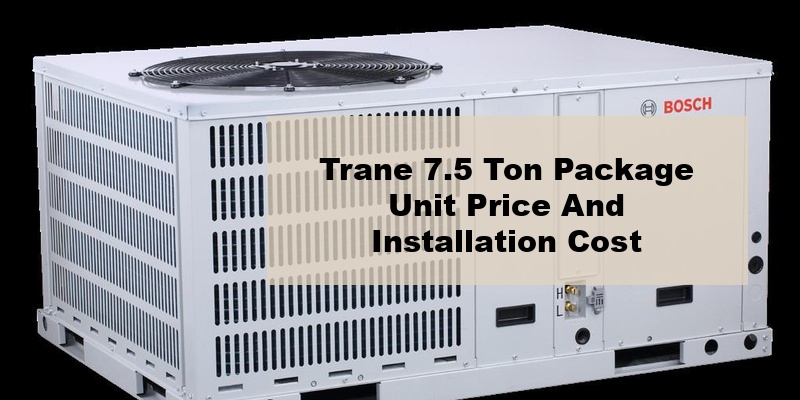
The shopping focus for a 7.5-ton Trane package unit centers on balancing upfront expense with long-term reliability and energy efficiency. In the United States, installed costs hinge on the unit’s cooling capacity, SEER rating, heating configuration, ductwork condition, electrical needs, and local labor rates. This guide delivers a practical, up‑to‑date overview of Trane 7.5-ton package unit pricing and installation costs, explains which factors push costs up or down, and provides strategies to obtain accurate quotes and maximize value.
Content Navigation
- What Is A Trane 7.5 Ton Package Unit?
- Price Breakdown: Unit Price And Installation Cost
- Key Price Drivers That Influence The Total
- Typical Install Scenarios And Budget Ranges
- Upgrades And Accessories That Add Value
- Maintenance, Warranty, And Reliability Considerations
- How To Get Accurate Quotes For A Trane 7.5 Ton Package Unit
- What To Expect During The Installation Process
- Cost-Saving Tips And Rebates
What Is A Trane 7.5 Ton Package Unit?
A Trane 7.5 ton package unit is a single, factory-assembled heating and cooling system designed for large residences or light commercial spaces. In a packaged unit, the evaporator coil, condenser, air handler, and heating components (gas furnace or electric resistance) are housed in one cabinet, typically installed on a concrete pad outside or on a rooftop. This all-in-one configuration simplifies installation and reduces indoor space requirements, making it a popular choice where attic or basement space is limited. Efficiency and comfort depend on the unit’s SEER (cooling) and HSPF (heating) ratings, along with the selected heat-adding option.
Trane’s packaged units come in several configurations, including electric-only, gas/electric (gas furnace with electric cooling), and heat pump variants. The 7.5-ton size corresponds to a substantial cooling capacity suitable for larger homes or multi-zone spaces. Buyers should evaluate AHRI-rated performance, warranty terms, and compatibility with existing ductwork and electrical service. By understanding these basics, homeowners can compare models on an apples-to-apples basis and avoid overpaying for features that don’t fit their needs.
Price Breakdown: Unit Price And Installation Cost
Pricing for a Trane 7.5-ton package unit consists of two main components: the unit itself and the installation. The unit price varies with efficiency, heating configuration, and features, while installation costs reflect site conditions, ductwork, electrical work, and permits. For budgeting, consider the following typical ranges as a baseline for the U.S. market. Unit price range: roughly $4,500 to $9,500 for the packaged unit alone, with higher-efficiency or gas/electric configurations toward the upper end. Installation and labor: generally $2,500 to $6,500, though complex runs, duct modifications, or new electrical service can push this higher. Total installed: broadly $7,000 to $16,000, with variations by region and project specifics.
| Component | Typical Cost Range | Notes |
|---|---|---|
| Trane 7.5-ton package unit (core price) | $4,500–$9,500 | Depends on SEER, heating option, and model |
| Installation and labor | $2,500–$6,500 | Includes refrigerant piping, electrical, and startup |
| Total installed | $7,000–$16,000+ | Higher with ductwork upgrades or access issues |
Key Price Drivers That Influence The Total
- Efficiency and configuration: Higher SEER ratings reduce energy use but raise upfront unit costs. Gas/electric or heat pump configurations add equipment and labor costs but can lower operating expenses in some climates.
- Ductwork condition and size: Existing ducts in good shape reduce labor and material needs; oversized or damaged ducts may require replacement or sealing, increasing the price.
- Electrical service and location: If the site lacks adequate service or requires a new breaker panel, costs rise. Rooftop installations may need structural work or permits.
- Accessibility and installation complexity: Tight spaces, roof access, or difficult crane/hoist requirements add time and labor charges.
- Permits and code compliance: Local permit fees and code-mandated inspections add to the overall cost, especially in new or major renovations.
- Brand, warranty, and dealer pricing: Authorized Trane distributors may offer different warranty packages or promotions that affect the bottom line.
- Additional equipment: Smart thermostats, zoning dampers, air filtration, and coil coatings add to both unit price and installation labor but can improve comfort and efficiency.
Typical Install Scenarios And Budget Ranges
Understanding common install scenarios helps homeowners forecast total costs. The ranges below reflect typical U.S. prices for a 7.5-ton Trane packaged unit and standard installation, excluding unusual site conditions. Scenario A assumes replacement in place with existing ductwork in good condition; Scenario B involves duct modifications or new ductwork; Scenario C covers premium efficiency or gas/electric configurations with expanded features.
- Scenario A: Replacing an aging pack with existing ducts Unit price: $4,500–$8,000; Installation: $2,500–$4,500; Total: $7,000–$12,500. This is common for solid duct infrastructure and accessible locations.
- Scenario B: Moderate ductwork upgrades or rerouting Unit price: $5,000–$9,500; Installation: $3,000–$5,000; Total: $8,000–$14,500. Complexity increases with longer runs or multiple branches.
- Scenario C: High-efficiency or gas/electric configurations with extra features Unit price: $7,000–$9,500; Installation: $3,500–$6,000; Total: $10,500–$15,500. Features like enhanced filtration or smart controls add value but raise upfront costs.
Upgrades And Accessories That Add Value
While not required, several upgrades can enhance comfort, efficiency, and longevity of a Trane 7.5-ton package unit. Smart thermostats enable adaptive control and energy savings; zoning systems improve comfort in larger or multi‑room homes; high‑efficiency air filtration or UV-C lights can improve indoor air quality; coated coils resist corrosion in coastal or harsh environments; and duct sealing and sealing compounds reduce air leakage for better performance. Each addition should be weighed against its expected energy savings and the local climate.
Call 888-896-7031 for Free Local HVAC Quotes – Compare and Save Today!
Maintenance, Warranty, And Reliability Considerations
Consistency and longevity hinge on regular maintenance and proper installation. Trane package units typically come with factory warranties that cover the compressor and parts for several years, and some dealers offer extended labor coverage. Registration, seasonal maintenance, and timely refrigerant checks help preserve efficiency and prevent costly breakdowns. Homeowners should request a copy of the AHRI certificate for verified performance ratings and confirm that the installer follows Trane’s recommended commissioning procedures during startup.
How To Get Accurate Quotes For A Trane 7.5 Ton Package Unit
To obtain precise numbers, gather multiple on-site quotes from authorized Trane dealers. Ensure each bid includes a detailed breakdown of equipment costs, installation labor, ductwork work, electrical requirements, permits, and any added accessories. Verify contractor licenses and insurance, ask for references, and request a written proposal with unit model numbers, SEER/HSPF ratings, and warranty terms. On-site assessments should confirm appropriate electrical service, duct sizing, and space constraints before the project begins. Comparing apples-to-apples bids reduces surprises in the final bill.
What To Expect During The Installation Process
- Pre-installation assessment: technician confirms space, ductwork, electrical service, and permits.
- Equipment delivery and positioning: the unit is placed on a solid pad or rooftop and secured.
- Rough-in work: duct connections, electrical wiring, and refrigerant lines are prepared.
- Installation and connections: refrigerant circuit is charged, condensate drainage is set up, and controls are wired.
- Startup and testing: system is started, performance is tested across modes, and efficiency checks are performed.
- Final walkthrough: technicians explain operation, maintenance steps, and warranty details.
Cost-Saving Tips And Rebates
Smart budgeting can reduce out-of-pocket expense. Shop multiple bids from authorized dealers to compare unit pricing and labor charges. Ask about promotions or bundled warranties. Check with local utilities for rebates or incentives tied to high-efficiency equipment and energy-saving performance. Some regions offer financing options or low-interest plans to ease upfront costs. Finally, schedule installation during off-peak periods to potentially secure lower labor rates. Always verify eligibility for any tax credits or rebates with the latest program guidelines and your tax professional.
Tips for Getting the Best HVAC Prices
- Prioritize Quality Over Cost
The most critical factor in any HVAC project is the quality of the installation. Don’t compromise on contractor expertise just to save money. - Check for Rebates
Always research current rebates and incentives — they can significantly reduce your overall cost. - Compare Multiple Quotes
Request at least three estimates before making your choice. You can click here to get three free quotes from local professionals. These quotes include available rebates and tax credits and automatically exclude unqualified contractors. - Negotiate Smartly
Once you've chosen a contractor, use the proven strategies from our guide — How Homeowners Can Negotiate with HVAC Dealers — to get the best possible final price.