
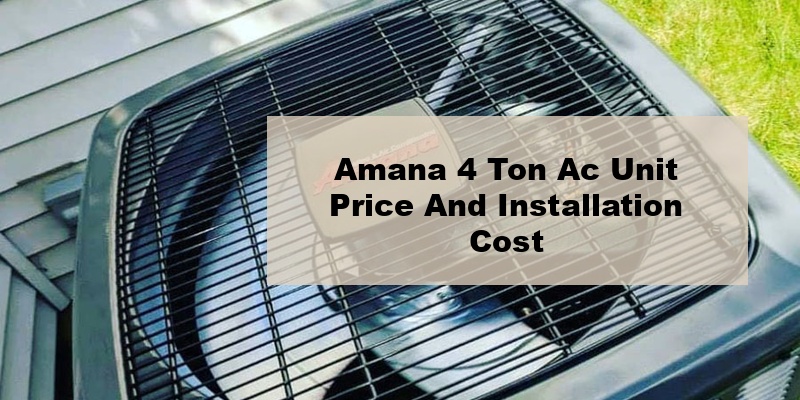
For homeowners evaluating cooling options, a 4-ton Amana central air system is a common mid-size choice that suits many American homes. Understanding the price of the equipment, the installation cost, and factors that influence overall expenses helps buyers budget accurately and avoid surprises. Amana, known for reliability and efficiency, offers a range of SEER ratings and configurations. This guide covers typical equipment costs, installation charges, why prices vary, how to obtain precise quotes, and practical tips to maximize value from an Amana 4-ton AC installation.
Content Navigation
What A 4 Ton Amana Central AC System Includes
A 4-ton central air system typically comprises an outdoor condenser unit paired with an indoor air handler or coil, plus controls and installation hardware. Amana’s 4-ton options span standard to high-efficiency configurations, with different compressor technologies and refrigerants depending on the model. Key components often included or required in a new install are the condenser, evaporator coil, refrigerant lines, thermostat or smart thermostat, a pad or mounting stand, and electrical connections. Warranties and service plans vary by model and installer, so buyers should confirm the exact inclusions with the contractor.
Equipment basics to know: Amana 4-ton units are sized for typical multi-room homes and modern energy codes. Efficiency is expressed as SEER (Seasonal Energy Efficiency Ratio); higher SEER typically costs more upfront but saves energy over time. The choice between single-stage, two-stage, or variable-speed operation affects both comfort and price. While the outdoor unit is often the largest price driver, the indoor coil, ductwork condition, and thermostat controls also influence total cost and performance.
Pricing Overview: What You Can Expect To Pay
Prices for a 4-ton Amana air conditioning system vary widely based on SEER rating, whether the system is a traditional air conditioner or a heat pump, installation complexity, and regional labor rates. The figures below reflect typical ranges homeowners see in the United States when purchasing an Amana 4-ton system and paying for professional installation. These estimates assume standard ductwork and typical labor conditions; actual quotes may differ due to home specifics.
| Scenario | Equipment Price | Installation Cost | Total Installed Price |
|---|---|---|---|
| Standard Efficiency (14–16 SEER, conventional AC) | $1,800 – $2,800 | $1,200 – $2,300 | $3,000 – $5,100 |
| High Efficiency (18–21 SEER, conventional AC) | $2,400 – $3,800 | $1,600 – $3,000 | $4,000 – $6,800 |
| Heat Pump Version (4 Ton) | $3,000 – $5,000 | $1,900 – $3,600 | $4,900 – $8,600 |
Notes: Prices vary by region, installer, and the home’s ductwork. The equipment price reflects the outdoor condenser and indoor coil or air handler, while installation cost includes labor, basic refrigerant charging, and startup. Adding duct modifications, insulation, or extensive electrical work will increase the total. Always request a detailed, written estimate that breaks out components and labor so the total is transparent.
Factors That Influence Installation Cost
- Ductwork condition and modifications: If ducts are undersized, leaky, or poorly sealed, a contractor may need to repair or replace sections, which increases labor and material costs.
- Old equipment removal: Removing an existing system adds disposal fees and labor time, potentially raising the total price.
- Permits and inspections: Local requirements vary; some jurisdictions require permits, inspection fees, and refrigerant recovery documentation.
- Electrical upgrades: A new 4-ton system may require panel upgrades or dedicated circuits, especially if the old setup is underpowered.
- Thermostat and controls: Smart thermostats or advanced zoning systems add equipment and installation time but can improve comfort and efficiency.
- Accessibility and installation complexity: Homes with limited access, multi-story layouts, or tight crawl spaces can extend labor time and cost.
- refrigerant type and line sets: Some models use different refrigerants or require larger line sets, affecting material costs.
- Regional labor rates: Costs vary by city and region, with higher costs in urban centers or areas with skilled-trade shortages.
Warranty And Maintenance Considerations
Warranty terms for Amana central air systems are model- and installer-dependent. Generally, buyers can expect a long-term parts warranty on the outdoor condenser and indoor coil, with the exact duration specified by the model and registration requirements. Labor coverage is typically provided by the installing contractor rather than the manufacturer and may vary by project. Homeowners should verify the warranty details before purchase, ensure proper system commissioning, and schedule annual professional maintenance to preserve performance and eligibility for warranty terms.
Call 888-896-7031 for Free Local HVAC Quotes – Compare and Save Today!
Maintenance enhances reliability and efficiency. A typical maintenance visit includes refrigerant checks, thermostat calibration, electrical connections inspection, coil cleaning, indoor air handler inspection, and duct sealing assessment. Keeping the system clean and properly charged reduces the risk of breakdowns and helps sustain the expected energy savings associated with higher-SEER Amana units.
Buying Tips And How To Get An Accurate Quote
- Get multiple written quotes: Compare at least three reputable HVAC contractors. Look for detailed line-item estimates rather than a single lump sum.
- Ask about SEER and configuration: Confirm the exact SEER rating, compressor type (single-stage, two-stage, or variable-speed), and whether the system is matched with an appropriate coil and air handler for optimal performance.
- Inspect ductwork and home size alignment: Provide builders with current home square footage, insulation levels, and window efficiency to ensure the 4-ton capacity remains appropriate.
- Clarify installation scope: Ensure the quote includes permit fees (if applicable), disposal of old equipment, line-set refrigerant, duct sealing, and thermostat installation.
- Warranty and financing: Review warranty terms, labor coverage, and available financing or promotional offers. Inquire about maintenance plans that keep warranties valid.
- Request a detailed schedule: A clear timeline helps coordinate with other home projects and ensures proper refrigerant evacuation and startup procedures are followed.
DIY Versus Professional Installation
Central air installation is a technically demanding project requiring licensed HVAC technicians. Refrigerant handling, electrical connections, refrigerant line charging, and adherence to local building codes demand professional expertise. Attempting a DIY installation risks improper sizing, refrigerant leaks, electrical hazards, and voided warranties. For safety, efficiency, and long-term performance, choose a qualified contractor who can provide proper load calculations, system matching, and post-installation support.
Tips for Getting the Best HVAC Prices
- Prioritize Quality Over Cost
The most critical factor in any HVAC project is the quality of the installation. Don’t compromise on contractor expertise just to save money. - Check for Rebates
Always research current rebates and incentives — they can significantly reduce your overall cost. - Compare Multiple Quotes
Request at least three estimates before making your choice. You can click here to get three free quotes from local professionals. These quotes include available rebates and tax credits and automatically exclude unqualified contractors. - Negotiate Smartly
Once you've chosen a contractor, use the proven strategies from our guide — How Homeowners Can Negotiate with HVAC Dealers — to get the best possible final price.
Common Questions About Amana 4 Ton Systems
- Is Amana a reliable brand for central air? Amana is a well-known brand in the U.S. HVAC market, recognized for durability and a range of efficiency options. Reliability depends on the model, proper sizing, installation quality, and ongoing maintenance.
- How large should a 4-ton unit be for my home? Sizing depends on factors such as home size, insulation, window efficiency, climate, and load calculations. A professional HVAC contractor conducts a Manual J load calculation to determine the correct size.
- What affects the total installed price beyond equipment? Ductwork updates, electrical work, permits, labor rates, and duct sealing can significantly influence final costs.
- Are there tax credits or incentives for energy-efficient upgrades? Federal, state, and local programs sometimes offer incentives for high-efficiency equipment. Check current programs in your area and consult a tax professional.