
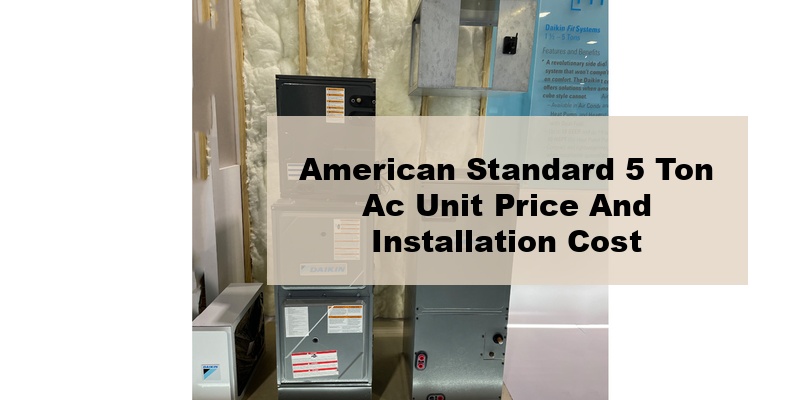
Homeowners evaluating a new American Standard 5 Ton central air conditioner will want clear guidance on both the unit price and installation cost. This guide outlines typical price ranges for the outdoor condenser, common upgrade options, and installation labor. It also covers ductwork considerations, regional price differences, rebates, warranties, and practical tips for obtaining accurate contractor quotes. By understanding SEER ratings, features, and installation complexity, buyers can balance upfront costs with long-term energy savings and comfort.
Content Navigation
- Overview Of American Standard 5 Ton Central Air Conditioners
- Price Range For The Unit Alone
- Installation Costs For A 5 Ton American Standard AC Unit
- Factors That Affect Price
- Rebates, Financing, And Warranties
- How To Get An Accurate Quote
- Maintenance And Long-Term Costs
- Is It Worth It? Value Proposition Of A 5 Ton American Standard
Overview Of American Standard 5 Ton Central Air Conditioners
American Standard offers a range of 5 Ton central air options designed to fit different homes and climates. A 5-ton capacity generally serves mid to large residences, particularly in hot regions where daily cooling needs are substantial. Series vary in efficiency, reliability, and noise levels, with higher-SEER models featuring advanced compressors and temperature control. SEER, or Seasonal Energy Efficiency Ratio, directly influences operating costs and cooling effectiveness. Matching the right series to the home’s ductwork and insulation is essential for practical performance and cost efficiency.
In practice, 5-ton units come in standard efficiency and premium high-efficiency lines. Higher SEER models often include two-stage or variable-speed compressors, which improve humidity management and comfort but raise upfront costs. A qualified installer evaluates system sizing, refrigerant charge, and airflow to ensure the equipment works with the home’s duct design. This assessment helps protect warranty eligibility and ensures the system delivers the expected cooling capacity throughout peak seasons.
Price Range For The Unit Alone
The outdoor condenser for a 5-ton American Standard system, sold as unit price alone, typically falls within a broad range. Depending on SEER rating and model line, prices before installation commonly run from roughly $2,800 to $6,000. Entry-level 14-16 SEER units tend toward the lower end, while premium 20+ SEER units command higher prices due to advanced components and efficiency. The American Standard name can carry a modest premium relative to basic no-brand units, but this is often offset by better warranties and longer expected life in some markets. Obtain local quotes for precision.
- 14-16 SEER: about $2,800-$4,000
- 17-20 SEER: about $3,800-$5,500
- 21+ SEER: about $4,800-$6,000
For quick reference, a table of typical unit prices by SEER range provides a snapshot of what to expect. Note that regional pricing, dealer discounts, and model availability can shift these numbers by a few hundred dollars.
| Seer Range | Approx Unit Price (Outdoor Condenser) |
|---|---|
| 14-16 SEER | $2,800-$4,000 |
| 17-20 SEER | $3,800-$5,500 |
| 21+ SEER | $4,800-$6,000 |
Installation Costs For A 5 Ton American Standard AC Unit
Installation costs cover labor, refrigerant line sets, electrical connections, thermostat, and any required ductwork modifications. A straightforward replacement with existing ductwork and no electrical upgrades can cost between $2,000 and $4,500 for labor and materials. If the project requires a new air handler or furnace, upgraded electrical service, or significant ductwork changes, total installation can range from $4,000 to $8,000 or more. Regional differences in labor rates, permit fees, and accessibility can push prices higher in some markets.
Call 888-896-7031 for Free Local HVAC Quotes – Compare and Save Today!
- Basic replacement (existing ductwork, minimal modifications): $2,000-$4,500
- System upgrade with new air handler and ductwork: $4,000-$8,000
- Permits, electrical upgrades, or complex installs: +$500-$2,000
Some contractors include duct sealing, air sealing, or system balancing within the installation package, while others offer these as add-ons. The presence of extensive ductwork repairs, attic access, or high-efficiency refrigerant charging may influence final costs. Always request a detailed, written estimate that itemizes equipment, labor, permits, and any recommended improvements to ensure transparency.
Factors That Affect Price
Several factors influence the final price of a 5-ton American Standard system. Key elements include the chosen SEER rating, whether a heat pump or conventional air conditioner is installed, refrigerant management, and the intricacy of duct design. Variable-speed or two-stage compressors add upfront costs but typically yield energy savings and better comfort. Regional labor rates, permit requirements, and travel charges also impact total price. Additionally, the cost can vary by model line, availability of parts, and dealer promotions. A qualified contractor can explain how each factor affects the bottom line.
Other considerations include installation timing, such as shoulder seasons when discounts may be available, and the potential benefits of bundling equipment replacement with duct improvements or smart thermostats. The long-term value should be weighed against the initial outlay, especially in climates with long cooling seasons.
Rebates, Financing, And Warranties
Many utility programs and manufacturers offer rebates for high-efficiency American Standard systems. Local incentives can meaningfully reduce the net cost, particularly for 20 SEER and higher models. Financing options are commonly available through installers and manufacturers, including low-interest plans or deferred payments. Warranties typically cover parts for five to ten years and offer longer coverage on compressors; some models provide extended or transferable warranties. It is essential to confirm warranty terms in writing and to register the equipment after installation to activate coverage. Always verify current programs with local utilities and dealers.
How To Get An Accurate Quote
To obtain an accurate price, homeowners should secure multiple written quotes from licensed HVAC contractors. An on-site assessment will determine the correct tonnage, duct integrity, insulation, and any required electrical upgrades. Request a breakdown that includes equipment cost, labor, permits, duct work, refrigerant charges, and disposal. Verify the contractor’s licenses and insurance, and ask for references. Inquire about seasonal promotions and potential rebates. Ensure quotes specify the exact American Standard model, SEER rating, and installation scope, including any future service requirements.
Maintenance And Long-Term Costs
Post-installation maintenance typically runs about $100-$150 per year for a tune-up, with additional charges for coil cleaning or refrigerant checks if needed. A well-maintained system can last 12-15 years or longer, with regular filter changes and system inspections supporting efficiency. Refrigerant leaks or compressor failures are potential unexpected costs, but preventive maintenance reduces risk. In the long run, a higher-SEER American Standard system may offer meaningful energy savings, potentially offsetting higher upfront costs through reduced operating expenses over time.
Call 888-896-7031 for Free Local HVAC Quotes – Compare and Save Today!
Is It Worth It? Value Proposition Of A 5 Ton American Standard
For homes where a 5-ton load is appropriate, American Standard provides reliable equipment backed by robust warranties and a nationwide service network. The value hinges on energy efficiency, humidity control, comfort, and durability. Although higher-SEER models require a larger upfront investment, energy savings and available rebates can shorten the payback period. Homeowners should weigh cooling load, duct condition, climate, and energy prices to determine the best fit. A thoughtful comparison of models, quotes, and expected maintenance will help maximize long-term value.
Tips for Getting the Best HVAC Prices
- Prioritize Quality Over Cost
The most critical factor in any HVAC project is the quality of the installation. Don’t compromise on contractor expertise just to save money. - Check for Rebates
Always research current rebates and incentives — they can significantly reduce your overall cost. - Compare Multiple Quotes
Request at least three estimates before making your choice. You can click here to get three free quotes from local professionals. These quotes include available rebates and tax credits and automatically exclude unqualified contractors. - Negotiate Smartly
Once you've chosen a contractor, use the proven strategies from our guide — How Homeowners Can Negotiate with HVAC Dealers — to get the best possible final price.