
Looking For A 10,000 BTU Electric-Equivalent Heater? Many popular room heaters advertise power in watts, not BTU. This guide compares compact electric heaters and related 10,000 BTU-capable heating solutions so you can match heating needs, room size, and safety features. Below is a quick comparison of the products covered.
| Product | Type | Power/BTU | Coverage |
|---|---|---|---|
| ProCom ML100TPA-B | Propane Infrared | 10,000 BTU | Up To 500 Sq. Ft. |
| Dura Heat EUH1465 | Electric Forced Air (PTC) | ~1,500W (≈5,120 BTU) | Small Rooms, Garages |
| Sengoku HeatMate 110 | Kerosene Portable | 10,000 BTU | Up To 400 Sq. Ft. |
| Heat Storm HS-1500-PHX-WIFI | Electric Infrared (Wall) | 1,500W (≈5,118 BTU) | Bedrooms, Offices |
| Dreo Smart Wall Heater WH719S | Electric PTC Wall | 1,500W (≈5,118 BTU) | Bedrooms, Small Living Areas |
Content Navigation
- ProCom ML100TPA-B Ventless Propane Infrared Space Heater
- Dura Heat EUH1465 Electric Forced Air Heater With Pivoting Base
- Sengoku HeatMate Portable Kerosene Indoor Outdoor Space Heater
- Heat Storm HS-1500-PHX-WIFI Infrared Wall Mounted Heater
- Dreo Smart Wall Heater WH719S Electric Space Heater
- Buying Guide: How To Choose The Right 10000 BTU Or Electric-Equivalent Heater
ProCom ML100TPA-B Ventless Propane Infrared Space Heater

Overview: This ProCom unit Is A 10,000 BTU infrared, ventless propane heater rated to heat up to 500 sq. ft. It’s designed for residential spaces such as living rooms, bedrooms, and offices where vent-free propane heating is permitted.
Key Features:
- Power: 10,000 Maximum BTU Using Liquid Propane.
- Control: Built-In Thermostat With High/Medium/Low Settings For Temperature Regulation.
- Mounting Options: Includes Wall Mount Hardware And Base Feet For Floor Placement.
- Design: Slim Profile For Small Spaces.
Notes: As A Propane, Ventless Infrared Heater, installation rules, indoor fuel codes, and combustion air requirements vary by location. Verify local regulations and adequate ventilation before installation.
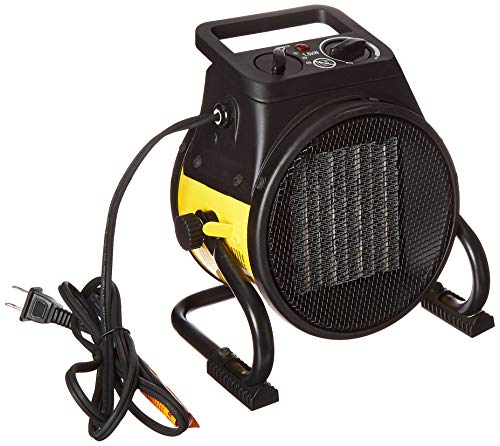
Dura Heat EUH1465 Electric Forced Air Heater With Pivoting Base
Call 888-896-7031 for Free Local HVAC Quotes – Compare and Save Today!
Overview: The Dura Heat EUH1465 Is A 1,500W PTC electric forced-air heater offering rapid warm-up and targeted airflow. It’s commonly used in garages, workshops, and small rooms where durable construction is important.
Key Features:
- Heating Type: Forced Air With PTC Ceramic Element—Quick Heat Delivery.
- Construction: Rugged Steel Body Suitable For Workspaces.
- Settings: Heat And Fan-Only Modes For Year-Round Use.
- Mobility: Pivoting Base For Directional Heating.
Notes: At ~1,500W, this unit’s equivalent is roughly 5,100 BTU. For spaces that require 10,000 BTU of output, multiple units or a higher-capacity heater would be necessary.
Sengoku HeatMate Portable Kerosene Indoor Outdoor Space Heater

Overview: The Sengoku HeatMate 110 Is A Portable KeroseNe Heater Rated At 10,000 BTU Designed For Indoor/Outdoor Use. It’s Often Used Where Electricity Or Gas Supply May Not Be Available.
Key Features:
Call 888-896-7031 for Free Local HVAC Quotes – Compare and Save Today!
- Run Time: 1.2-Gallon Tank Providing Extended Runtime—Up To About 14 Hours Typical.
- Safety: Automatic Safety Shut-Off And Easy Push-Button Start.
- Portability: Compact, Easy-To-Carry Design For Garages Or Outdoor Use.
Notes: Kerosene heaters emit combustion products and require ventilation and fuel handling safety. Check indoor fuel-use rules for your area and follow manufacturer safety guidance.
Heat Storm HS-1500-PHX-WIFI Infrared Wall Mounted Heater

Overview: The Heat Storm HS-1500 Is A Wi‑Fi-Enabled Electric Infrared Wall Heater Offering 1,500W Output With Remote Control And Digital Thermostat. It’s Intended For Space-Saving Wall Installation In Bedrooms And Offices.
Key Features:
- Smart Control: Wi‑Fi Enabled For App Control And Remote Operation.
- Safety: Tip-Over Safety (For Some Models), Touch Screen Thermostat And Remote Included.
- Design: Slim Wall-Mounted Form Factor To Preserve Floor Space.
Notes: At 1,500W the heat output is about half of 10,000 BTU. For stronger heating needs, wall-mounted infrared units can be used as supplemental heating or combined with other heat sources.
Dreo Smart Wall Heater WH719S Electric Space Heater

Overview: The Dreo WH719S Is A Wall-Mount Electric PTC Space Heater With 120° Vertical Oscillation, 1,500W Power, Precise Thermostat Control, And Smart-Home Integration For Remote Scheduling.
Key Features:
- Widespread Warmth: 120° Vertical Oscillation For Even Heat Distribution.
- Smart Control: App Control, Alexa/Google Home Compatibility, And Scheduling.
- Accuracy: Fine Temperature Adjustment With 1°F Accuracy And 24-Hour Timer.
Notes: This unit is optimized for efficient localized heating. Its 1,500W rating means about 5,100 BTU equivalent—adequate for small rooms when used as primary heat or as supplemental heat in larger spaces.
Buying Guide: How To Choose The Right 10000 BTU Or Electric-Equivalent Heater
Understand BTU Versus Watts: BTU Measures Heat Energy; watts measure electrical power. 1,000 watts ≈ 3,412 BTU. A true 10,000 BTU output equals roughly 2,930 watts, which is above typical single‑circuit electric portable heaters (usually 1,500W). If you need a full 10,000 BTU equivalent from electric power, plan for multiple 1,500W units or a hardwired higher-capacity electric heater installed by a professional.
Room Size And Heat Load: Estimate square footage and room insulation. A rough guideline: 20 BTU per square foot for moderate climates. For 10,000 BTU you could theoretically heat ~500 sq. ft. in moderate conditions; practical effectiveness depends on insulation, ceiling height, and windows.
Energy Source Considerations:
- Electric Heaters: Clean, easy to install, low maintenance. Common ratings are 750–1,500W for portable units. Wall-mounted infrared and PTC units provide efficient localized heat.
- Gas/Propane/Kerosene Heaters: Provide higher BTU per device without large electrical draw. Require ventilation, suitable fuel supply, and attention to indoor air quality and local codes.
Heating Type:
- Infrared/Radiant: Heats objects and people directly—effective for targeted warmth and lower energy usage in some cases.
- Convection/Forced Air: Heats air, distributes warm air throughout the room; can be faster for whole-room heating.
- PTC Ceramic: Self-regulating ceramic elements offer stable heat and overheat protection.
Installation And Electrical Capacity: Check circuit amperage and breaker capacity. Most portable electric heaters plug into standard 120V outlets (limit ~1,500W). Higher-capacity electric heaters may require 240V circuits and professional installation.
Safety Features: Look For tip-over protection, overheat shutoff, cool-touch housing, and, for fuel-burning devices, oxygen depletion sensors (ODS) and proper ventilation. Follow manufacturer instructions and local codes when using fuel-burning equipment indoors.
Controls And Smart Features: Thermostats, timers, oscillation, remote control, and Wi‑Fi/app integration improve convenience and energy management. Smart scheduling can reduce runtime and energy costs.
Noise And Placement: Forced-air models produce fan noise, while infrared and radiant models operate quietly. Consider bedroom use and place heaters where airflow and safety clearances are maintained.
Durability And Build: For garages and workshops choose rugged steel-bodied units. For living areas, slim wall-mounted or decorative finishes may be preferable.
Multi-Unit Strategies: If you require an electric-equivalent of 10,000 BTU but have only 1,500W units available, plan multiple units across different circuits or consider a permanently installed electric heater sized by a licensed electrician.
Regulatory And Ventilation Requirements: Fuel-burning heaters (propane, natural gas, kerosene) may be restricted or require specific clearances and ventilation. Verify local building codes and fuel-use rules before purchase or installation.
Comparison Perspectives:
- Cost To Run: Electric heaters are typically simpler to operate but can be costly at high wattages. Fuel-burning heaters use less electricity but incur fuel costs and ventilation needs.
- Effectiveness: Radiant units feel warmer quickly for occupants; convection units warm entire rooms more uniformly.
- Safety And Air Quality: Electric models avoid combustion byproducts; fuel-burning models require ODS and ventilation management.
Final Selection Tips: Choose electric PTC or infrared wall-mounted heaters for quiet, localized heating and simple installation. For genuine 10,000 BTU requirements without extensive electrical upgrades, consider properly installed fuel-burning solutions while adhering to safety and code requirements.
Tips for Getting the Best HVAC Prices
- Prioritize Quality Over Cost
The most critical factor in any HVAC project is the quality of the installation. Don’t compromise on contractor expertise just to save money. - Check for Rebates
Always research current rebates and incentives — they can significantly reduce your overall cost. - Compare Multiple Quotes
Request at least three estimates before making your choice. You can click here to get three free quotes from local professionals. These quotes include available rebates and tax credits and automatically exclude unqualified contractors. - Negotiate Smartly
Once you've chosen a contractor, use the proven strategies from our guide — How Homeowners Can Negotiate with HVAC Dealers — to get the best possible final price.