
The 10000 BTU kerosene heater is a popular choice for supplemental and emergency heat in garages, basements, cabins and campsites. Below is a quick comparison of five well-known 10,000 BTU models selected for reliability, fuel capacity, safety features and portability.
| Model | Brand | Key Feature |
|---|---|---|
| Sengoku CTN-110 | KeroHeat | 1.2-gallon tank, 14-hour runtime, safety shutoffs |
| Sengoku HeatMate 110 | HeatMate | Compact design, battery ignition, 14-hour runtime |
| Dyna-Glo RMC-55R7 | Dyna-Glo | Radiant heat, no electricity required |
| Kero World 10,000 BTU | Kero World | Glass burner system, removable 1.1-gallon tank |
| Windpost Portable Kerosene Stove | Windpost | Removable grill pan, efficient combustion, adjustable flame |
Content Navigation
- Sengoku Indoor & Outdoor Kerosene Heater, 10,000 BTU
- Sengoku HeatMate Portable Kerosene Space Heater, 10,000 BTU
- Dyna-Glo RMC-55R7 Indoor Kerosene Radiant Heater, 10,000 BTU
- Kero World 10,000 BTU Wick Heater With Glass Burner System
- Kerosene Heater Indoor/Outdoor With Grill Pan, 10,000 BTU
- Buying Guide: Choosing The Right 10000 BTU Kerosene Heater
- Heating Capacity And Coverage
- Fuel Capacity And Runtime
- Ignition Type
- Burner Type: Radiant Vs. Convection
- Safety Features
- Portability And Size
- Emissions, Ventilation And Indoor Use
- Maintenance And Replacement Parts
- Additional Functionality
- Noise And Operation
- Regulatory And Local Considerations
- Comparison Perspectives
Sengoku Indoor & Outdoor Kerosene Heater, 10,000 BTU

This model (CTN-110) is positioned as a versatile heat source for indoor and outdoor use. Its 10,000 BTU output is rated to heat up to 400 square feet. The heater includes a 1.2-gallon fuel tank offering up to 14 hours of continuous runtime on a fill. Safety is emphasized with an automatic shutoff, tip-over switch and protective guard grills. The cordless operation and portability make it suitable for temporary heating or emergency scenarios. The features list highlights both heating capacity and safety systems, making it a balanced option where mobility and runtime matter.
Sengoku HeatMate Portable Kerosene Space Heater, 10,000 BTU

The Sengoku HeatMate 110 is a compact, portable model designed for easy transport and simple setup. It features a 1.2-gallon tank and a claimed runtime of up to 14 hours. This heater includes a battery-powered ignition (push-button start) and an automatic safety shutoff. The product positioning emphasizes quick deployment and straightforward operation without mains power. Because of its size and run time, it is often chosen for stalls, workshops, and emergency heat where compactness and simple ignition are priorities.
Dyna-Glo RMC-55R7 Indoor Kerosene Radiant Heater, 10,000 BTU

Call 888-896-7031 for Free Local HVAC Quotes – Compare and Save Today!
The Dyna-Glo RMC-55R7 emphasizes radiant heating and no electricity needed. Rated at 10,000 BTU, it is promoted for heating up to 500 sq. ft. Radiant units heat objects and people directly rather than relying only on air circulation, which can offer faster perceived warmth at short range. The model is notable for straightforward operation and suitability when electrical power is unavailable. Key feature notes are its radiant burner design and the claim of being fully independent of mains power.
Kero World 10,000 BTU Wick Heater With Glass Burner System

The Kero World wick-style heater includes a glass burner system and a removable 1.1-gallon fuel tank. Rated for radiant heat up to 450 sq ft, the unit is positioned for indoor emergency heating and supplemental room warmth. A wick-style burner typically offers a steady flame and simple maintenance; this model also notes battery ignition capability for easier starts. The design targets users who want a traditional wick heater with modern conveniences like removable fuel and easy ignition.
Kerosene Heater Indoor/Outdoor With Grill Pan, 10,000 BTU
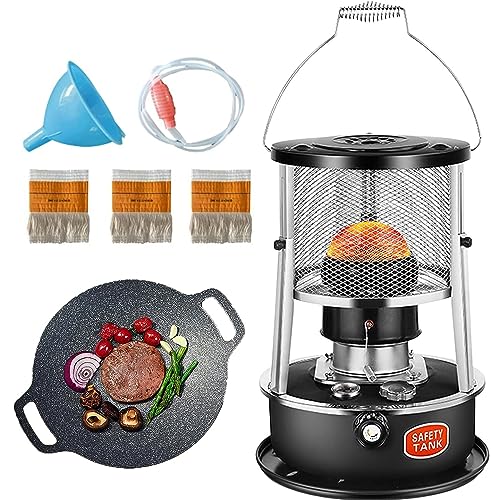
The Windpost portable kerosene stove highlights efficient combustion and a removable enamel grill pan for cooking or warming. The product states 12–15 hours of heating on a fill and includes flame adjuster, tip-over switch, and protective safety grills. The manufacturer stresses fast heating without electricity and an emphasis on safety features and durable combustion materials. This model appeals to users who want a multifunctional heater/stove with adjustable heat output and cooking capability.
Buying Guide: Choosing The Right 10000 BTU Kerosene Heater
Selecting the appropriate 10,000 BTU kerosene heater depends on intended use, space size, safety expectations, and maintenance willingness. Below are core considerations to compare models effectively.
Call 888-896-7031 for Free Local HVAC Quotes – Compare and Save Today!
Heating Capacity And Coverage
BTU rating is a baseline measure of heat output. A 10,000 BTU unit typically provides effective supplemental heat for 300–500 sq. ft. Coverage depends on insulation and ceiling height. For poorly insulated spaces, expect reduced effective area compared with a well-sealed room.
Fuel Capacity And Runtime
Look at the tank size and manufacturer runtime estimates. Common sizes near 1.0–1.2 gallons deliver 12–14 hours at low-to-moderate settings. If long unattended runtime is required, choose larger tanks and models with efficient burners.
Ignition Type
Ignition methods include battery-powered push-button, manual match lighting or wick lighting. Push-button ignitions simplify use and are safer for quick starts, while wick systems can be simpler to service.
Burner Type: Radiant Vs. Convection
Radiant heaters warm people and objects directly and feel warmer at a distance, making them effective for work areas or seating zones. Convection or forced-air styles (less common in basic kerosene models) circulate warmed air more evenly for whole-room warmth.
Safety Features
Prioritize models with automatic shutoff and tip-over protection. Protective grills and cool-touch handles reduce burn risks. Some units include low-fuel cutoffs and overheat sensors—important for unattended operation and household environments.
Portability And Size
Consider weight, handle placement and overall footprint if you need to move the heater between rooms or outdoors. Compact models trade off tank size for mobility, while larger tanks increase runtime but add bulk.
Emissions, Ventilation And Indoor Use
Kerosene combustion produces water vapor and combustion byproducts. Use kerosene heaters only with recommended fuel and ensure adequate ventilation. Follow local codes and manufacturer guidance for indoor use, especially in tight spaces.
Maintenance And Replacement Parts
Check availability of wicks, burners and replacement parts. Wick-style heaters require periodic wick trimming and replacement. Radiant burners typically need cleaning and occasional component replacement to maintain efficiency.
Additional Functionality
Some models include cooking-friendly tops, grill pans or removable enamel tops for warming food. If multipurpose use is desired, verify the manufacturer’s guidance for safe cooking on the unit and any accessories required.
Noise And Operation
Kerosene heaters generally operate quietly but may produce a soft hum or burner sound. If noise is a concern for sleeping areas, seek user descriptions of silent operation and look for models billed as “quiet.”
Regulatory And Local Considerations
Review local regulations regarding indoor kerosene heater use and fuel storage. Many municipalities and building codes limit or guide the use of open-flame fuel heaters indoors. Always follow local safety codes and the product manual.
Comparison Perspectives
- Runtime vs Portability: Larger tanks extend runtime but reduce portability. Choose based on whether you prioritize continuous operation or frequent relocation.
- Ignition Convenience vs Simplicity: Battery ignitions add convenience; wick-only units are mechanically simpler and easier to service in austere settings.
- Radiant vs Whole-Room Warmth: Radiant heaters provide faster local warmth; convection-style heat is better when even whole-room temperature is required.
- Safety Features vs Cost: More safety features (tip-over shutoff, overheat cutouts, guards) improve household suitability but may add upfront cost.
When comparing the five models covered, prioritize the combination of safety systems, runtime, and ignition method that best matches your intended use. Carefully read the manufacturer manual for ventilation and fuel recommendations before operation.
Tips for Getting the Best HVAC Prices
- Prioritize Quality Over Cost
The most critical factor in any HVAC project is the quality of the installation. Don’t compromise on contractor expertise just to save money. - Check for Rebates
Always research current rebates and incentives — they can significantly reduce your overall cost. - Compare Multiple Quotes
Request at least three estimates before making your choice. You can click here to get three free quotes from local professionals. These quotes include available rebates and tax credits and automatically exclude unqualified contractors. - Negotiate Smartly
Once you've chosen a contractor, use the proven strategies from our guide — How Homeowners Can Negotiate with HVAC Dealers — to get the best possible final price.