
Quick Summary: This guide reviews five 12‑volt heaters suited for UTVs, side-by-sides and other small cabs. The selections include compact high-BTU auxiliary heaters, underdash defrosters, and universal low-profile units to fit tight spaces.
| Product | Type / Notable Feature | Best For |
|---|---|---|
| JEGS Auxiliary UTV Heater 40,000 BTU | High BTU, 300 CFM | Larger UTV cabs / fast warm-up |
| JEGS Auxiliary UTV Heater 28,000 BTU | Compact, 260 CFM | Tight spaces, tractors, carts |
| 13,000 BTU Low Profile Universal Heater | Low profile, universal fit | Underdash installs / compact cabs |
| Saihisday 12V 4-Port Underdash Heater | 4 vents, compact blower | Defrosting and targeted venting |
| Upgraded 12V Universal Underdash Heater | Speed switch, mounting brackets | Retrofits for trucks, minivans, equipment |
Content Navigation
JEGS Auxiliary UTV Heater 40,000 BTU

Type: High-output 12V auxiliary heater. Key Features: 40,000 BTU output, 300 CFM airflow, 3-speed fan, injection-molded glass-filled nylon housing, mountable switch and three vents. The design emphasizes rapid cabin warm-up and robust airflow for larger UTV cabs or small tractor cabs.
Notes: The 300 CFM blower and higher BTU rating make this unit suitable where quicker temperature rise is needed. The injection-molded housing helps with durability in off-road environments. Installation requires space for mounting and routing power lines; check mounting bracket compatibility with your UTV cab.
JEGS Auxiliary UTV Heater 28,000 BTU

Type: Compact 12V auxiliary heater. Key Features: 28,000 BTU, 260 CFM airflow, compact design, mountable switch, dual front vents, 3-speed fan. This model targets small cabs where space is limited but a meaningful heat output is still required.
Call 888-896-7031 for Free Local HVAC Quotes – Compare and Save Today!
Notes: The smaller footprint is advantageous for cramped UTV dash areas. Dual front vents allow directional airflow, and the 3-speed motor gives control over noise versus warmth. Suitable when a balance of size and heat output is required.
13,000 BTU Low Profile Universal Heater
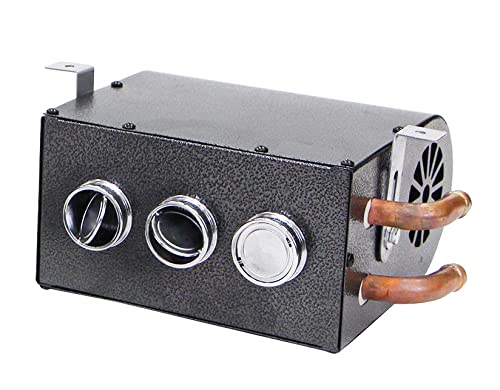
Type: Low-profile universal auxiliary cab heater. Key Features: 13,000 BTU rating, universal fit, includes installation kit. Designed to fit underdash spaces or against bulkheads where larger heaters won’t mount.
Notes: The lower BTU output is appropriate for smaller cabs, quick defrosting, or supplemental warmth. The universal mounting kit simplifies retrofit installs on UTVs, vans, and trucks. Check airflow path and ducting needs to ensure heat reaches occupants effectively.
Saihisday 12V 4-Port Underdash Heater

Type: Compact underdash defroster and heater. Key Features: 4 vent holes, powerful blower motor, designed for windscreen defrosting, 12V operation, power supply approx 8A, requires a 5/8″ (16 mm) inner diameter water hose if used with hot water lines.
Call 888-896-7031 for Free Local HVAC Quotes – Compare and Save Today!
Notes: This unit is optimized for defrosting and directing warmed air across the windshield. It’s a lightweight option for UTVs focused on visibility and targeted heating rather than whole-cab climate. Wiring and hose-fit requirements should be confirmed before buy.
Upgraded 12V Universal Underdash Heater

Type: Energy-saving under dash heater with speed control. Key Features: Mounting brackets, speed control switch, designed for underdash installation on trucks, minivans, excavators and harvesters.
Notes: The included bracketry and speed switch simplify retrofit installs. This model targets users who want variable blower speeds and compact placement. Confirm electrical draw and switch wiring compatibility with your UTV electrical system.
Buying Guide: Choosing A 12V Heater For Your UTV
Heat Output (BTU) And Airflow (CFM): Higher BTU and higher CFM deliver faster warm-up and better circulation. For small UTV cabs, 13,000–28,000 BTU units can be adequate; larger or insulated cabs benefit from 28,000–40,000 BTU units. Match CFM to cabin volume for even distribution.
Size, Mounting Location, And Fit: Measure available dash or underdash space. Low-profile units suit tight spaces; larger auxiliary boxes require mounting brackets and clearance for vents. Consider whether the unit mounts under the dash, on the floor, or behind a panel.
Power Draw And Vehicle Electrical Capacity: Confirm your UTV’s 12V system and alternator can handle continuous heater loads. Higher-output units draw more current; verify wiring, fuses, and switch ratings. Use proper gauge wire and inline fusing to protect circuits.
Control Options And Fan Speeds: Multiple fan speeds allow trade-offs between noise and warmth. Built-in switches or remote-mounted controllers add convenience. Choose models with speed control if you want variable airflow and quieter low-speed operation.
Defrosting And Vent Orientation: If windshield visibility is a priority, select units with directional vents or dedicated defrost ports. 4‑port or multi-vent designs concentrate airflow along the glass for faster defogging.
Durability And Materials: Off-road conditions demand rugged housings and corrosion-resistant fasteners. Look for reinforced plastics or metal housings for repeated vibration and moisture exposure.
Installation Complexity: Some units include installation kits and brackets; others require custom ducting or hose connections. Assess whether you can perform a DIY install or will need professional help. Check included hardware and wiring diagrams.
Safety Features: Confirm proper fusing and switch ratings. For propane heaters (not covered in the five product reviews here) consider oxygen depletion sensors and tip-over protection. For electric 12V units, ensure thermal protection or automatic shutoff features are present.
Noise Level: High CFM blowers tend to be louder. If cabin noise is a concern, prioritize models with multi-speed fans and quieter low-speed operation.
Intended Use Case: Choose based on primary need: Rapid cabin warming (higher BTU), defogging/defrosting (underdash/multi-vent), or space-limited installs (low-profile compact units).
Comparison Perspectives:
- Performance vs Size: Higher BTU JEGS units provide faster warming but need more space and power. Low-profile 13,000 BTU models compromise peak heat for fit flexibility.
- Defrosting vs Whole-Cab Heating: 4-port underdash units focus on windshield clarity; high CFM box heaters distribute warmth to the whole cabin.
- Electrical Load vs Output: Balance desired heat with what your UTV electrical system can safely supply. Higher output often means higher continuous draw.
- Installation Effort vs Features: Plug-and-play or bracket-included units reduce install time. Custom installs may deliver better ducting but require more labor.
Final Considerations: Measure your cab volume, evaluate electrical capacity, and decide whether rapid warming or targeted defrosting is primary. Choose a heater whose mount, airflow pattern, and electrical requirements match your UTV for the best performance and reliability.
Tips for Getting the Best HVAC Prices
- Prioritize Quality Over Cost
The most critical factor in any HVAC project is the quality of the installation. Don’t compromise on contractor expertise just to save money. - Check for Rebates
Always research current rebates and incentives — they can significantly reduce your overall cost. - Compare Multiple Quotes
Request at least three estimates before making your choice. You can click here to get three free quotes from local professionals. These quotes include available rebates and tax credits and automatically exclude unqualified contractors. - Negotiate Smartly
Once you've chosen a contractor, use the proven strategies from our guide — How Homeowners Can Negotiate with HVAC Dealers — to get the best possible final price.