
Choosing the right 120V garage heater matters for safety, ease of installation, and efficient warmth in small garages and workshops. Below is a quick comparison of five well-matched 120V options, followed by individual overviews and a detailed buying guide to help you decide.
| Product | Type | Key Feature |
|---|---|---|
| NewAir NGH160GA00 | Portable Ceramic Heater | Cool-to-touch design, internal thermostat |
| Dr Infrared Heater DR-238 | Infrared Outdoor/Indoor | IP55 rated, 3 power settings (900–1500W) |
| Dreo Smart Wall Heater WH719S | Wall-Mount PTC Ceramic | 120° oscillation, smart controls |
| Dura Heat EUH1465 | Portable Forced-Air | 1500W PTC ceramic, pivoting base |
| 9815WH Wall Heater (Leafinnerin) | Wall-Mount Electric | 1500W, 120/240V factory wired 120V option |
Content Navigation
- NewAir NGH160GA00 120V Electric Portable Garage Heater
- Dr Infrared Heater DR-238 Carbon Infrared Outdoor Heater 120V
- Dreo Smart Wall Heater WH719S 1500W For Indoor Use
- Dura Heat EUH1465 Electric Forced Air Heater 1500W
- 9815WH Large Capacity Electric Wall Heater 1500W 120/240V
- Buying Guide: Choosing The Right 120V Garage Heater
NewAir NGH160GA00 120V Electric Portable Garage Heater

The NewAir NGH160GA00 is a compact, portable ceramic garage heater designed for small spaces up to about 160 square feet. It emphasizes safety features such as a cool-to-the-touch housing, an internal thermostat, and an automatic shut-off to reduce overheating risk. The unit includes two heat modes, adjustable temperature control, a tilting head for directional heat, and an easy-carry handle for mobility.
Heat delivery relies on a ceramic heating plate and a 200 CFM fan, providing fast heat for localized work areas. Its portability makes it suitable for temporary or seasonal use in garages, sheds, or workshops where hardwiring is not an option. For tighter spaces where direct, quick warmth is needed, this unit targets the task without complex installation.
Dr Infrared Heater DR-238 Carbon Infrared Outdoor Heater 120V
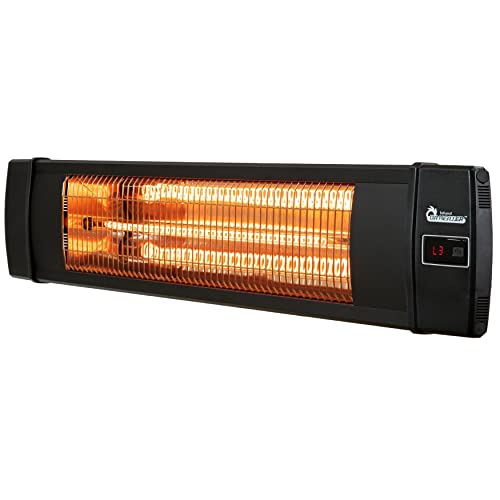
The DR-238 is a 120V infrared heater built for both indoor and outdoor settings, carrying an IP55 rating for moisture protection. It provides clean, instant infrared heat across three power settings (900W, 1200W, 1500W), making it flexible for garages with varying insulation levels.
Call 888-896-7031 for Free Local HVAC Quotes – Compare and Save Today!
Operation is plug-and-play with a standard 120V outlet and includes remote control. Infrared heating warms objects and people directly instead of relying solely on air temperature, which can be advantageous in garages where door openings or drafts limit ambient heat retention. The model is positioned for versatility when a weather-resistant, portable heat source is preferred.
Dreo Smart Wall Heater WH719S 1500W For Indoor Use

The Dreo WH719S is a wall-mounted PTC ceramic heater rated for 1500W and designed to distribute heat via 120° vertical oscillation. It emphasizes even heat distribution across the room and is intended for indoor spaces like garage offices or heated workshops.
This model supports smart controls through an app and voice assistants, and offers a 24-hour timer and precise thermostat control with 1°F increments. Its fixed installation reduces clutter on the floor and makes it a good choice for garages converted into workspaces or hobby rooms where consistent temperature control is desirable.
Dura Heat EUH1465 Electric Forced Air Heater 1500W
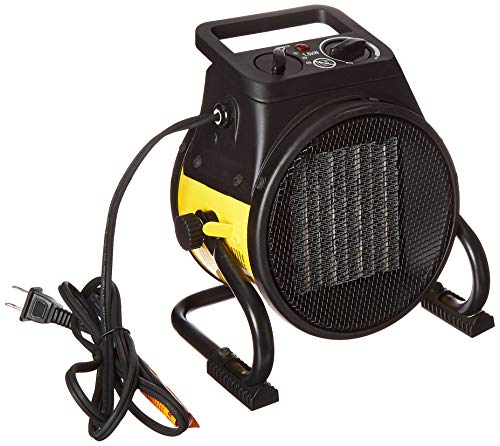
The Dura Heat EUH1465 is a portable forced-air heater delivering 1500W via PTC ceramic elements and a pivoting base for directional airflow. Its rugged steel construction suits garage use where durability is important.
Call 888-896-7031 for Free Local HVAC Quotes – Compare and Save Today!
Controls are straightforward, offering heat and fan-only modes for flexible use as either a direct heater or an air circulator when temperatures are milder. This unit performs well as a task heater for bench areas, mechanic bays, or compact garages where a durable, straightforward 120V heater is needed.
9815WH Large Capacity Electric Wall Heater 1500W 120/240V

The 9815WH wall heater offers a wall-mounted solution with louvers for even heat distribution and a built-in adjustable thermostat. Factory wired for 120V/1500W, it can also adapt to 240V in different installations, making it flexible depending on wiring choices.
It emphasizes quiet operation through a copper motor and a design aimed at delivering consistent, widespread heat without prolonged warm-up times. This model is suitable for garages where permanent installation and unobtrusive performance are priorities.
Buying Guide: Choosing The Right 120V Garage Heater
Selecting a 120V garage heater involves evaluating space, usage, safety, and installation. Below are the key factors to compare before purchasing.
Tips for Getting the Best HVAC Prices
- Prioritize Quality Over Cost
The most critical factor in any HVAC project is the quality of the installation. Don’t compromise on contractor expertise just to save money. - Check for Rebates
Always research current rebates and incentives — they can significantly reduce your overall cost. - Compare Multiple Quotes
Request at least three estimates before making your choice. You can click here to get three free quotes from local professionals. These quotes include available rebates and tax credits and automatically exclude unqualified contractors. - Negotiate Smartly
Once you've chosen a contractor, use the proven strategies from our guide — How Homeowners Can Negotiate with HVAC Dealers — to get the best possible final price.
1. Heater Type And Heat Delivery
- Ceramic Forced-Air Heaters: Provide quick air heating with a fan. Good for directional task heating and small garages that need rapid warmth.
- Infrared Heaters: Heat objects and people directly rather than air. Useful in drafty spaces or where you need targeted warmth near work areas.
- Wall-Mounted PTC Heaters: Offer steady, even distribution and free up floor space. Best for workshops converted to permanent heated areas.
2. Power Output And Coverage
- Most 120V units deliver up to 1500W. Expect effective heating for small garages or localized zones (roughly up to 150–200 sq ft depending on insulation).
- For larger, poorly insulated garages, multiple 120V units or a higher-voltage hardwired solution may be required to maintain comfortable temperatures.
3. Safety Features
- Overheat Protection & Auto Shut-Off: Prevent damage and fires if airflow is blocked or internal temps rise.
- Cool-To-Touch Housing: Important when working around flammable materials or where people may bump into the unit.
- IP Rating For Outdoor Use: If the heater may see moisture or dust, choose a model with an appropriate IP rating (e.g., IP55).
4. Installation & Portability
- Plug-In Units: Easy to move and install; ideal for temporary needs or renters.
- Wall/Ceiling Mounted: Require secure installation and sometimes hardwiring; they save floor space and provide more permanent, distributed heating.
- Power Requirements: Confirm your outlet and circuit capacity—120V heaters draw significant current, so avoid overloading a single circuit shared with heavy tools.
5. Controls And Usability
- Built-In Thermostats: Help maintain target temperatures without constant manual adjustment.
- Remote Or Smart Controls: Add convenience for preheating the garage before arrival and allow scheduling for energy savings.
- Oscillation And Louvers: Improve coverage by distributing heat more evenly rather than concentrating it in one spot.
6. Durability And Build
- Look for steel housings or commercial-grade components if the heater will see heavy, workshop-level use.
- Corrosion-resistant or IP-rated finishes help when the unit may be exposed to moisture or dust.
7. Noise And Air Movement
- Fan-forced models produce mechanical noise; if you use the garage as an office or studio, prefer quieter wall-mounted options or units with low-noise fans.
- Fan-only mode is useful during transitional seasons to circulate air without heating.
8. Energy Efficiency And Cost To Operate
- 120V heaters at 1500W deliver predictable heat output but can increase energy usage if run continuously. Use thermostats and timers to control runtime.
- Infrared units may feel warmer at lower air temperatures because they heat objects directly, sometimes reducing runtime compared to air-based heaters.
9. Intended Use Cases
- Task Heat For Specific Areas: Choose portable forced-air or infrared units for benches and worktops.
- Whole-Garage Comfort: Prefer wall-mounted or multiple distributed units to avoid cold spots.
- Intermittent Use: Portable plug-in heaters work well for occasional projects; permanent installs make sense for daily use.
10. Installation And Local Codes
- Hardwired or ceiling-mounted heaters may require professional installation to meet local electrical codes. Confirm cord type and mounting hardware are appropriate for garage conditions.