
Finding the right 120-volt heater for a garage means balancing safety, mounting style, wattage limits, and thermostat control. Below is a quick comparison of five relevant models featured in this guide, including true 120V options and a hardwired ceiling unit for context. The following table summarizes core attributes to help you compare at a glance.
| Product | Type | Voltage | Key Feature |
|---|---|---|---|
| NewAir NGH160GA00 | Portable Ceramic | 120V | Cool-To-The-Touch, Tilting Head |
| Dr Infrared Heater DR-238 | Infrared Outdoor/Indoor | 120V | IP55 Rated, 3 Power Settings |
| Cadet Com-Pak CSC151TW | Wall Heater With Thermostat | 120V | Integrated Thermostat, 1500W |
| Heat Storm HS-1500-PHX-WIFI | Wi‑Fi Wall Mounted Infrared | 120V | Smart Control, Space-Saving Mount |
| Comfort Zone Ceiling Heater | Ceiling Mounted (Hardwired) | 240V (Included For Comparison) | Ceiling Mount For Large Spaces |
Content Navigation
NewAir NGH160GA00 Portable Garage Heater

This 120V portable ceramic heater is designed for small garages and workspaces. The unit emphasizes safety with a cool-to-the-touch design, internal thermostat, and automatic shut-off to prevent overheating. Its ceramic heating plate and a 200 CFM fan enable relatively fast warm-up for spaces around 160 square feet.
Controls include adjustable temperature and two heat modes. A tilting head and carry handle provide portable flexibility, allowing directional heat and easy relocation. The combination of ceramic element and forced fan flow helps distribute heat faster than radiant-only units in confined garage corners.
Dr Infrared Heater DR-238 Carbon Infrared
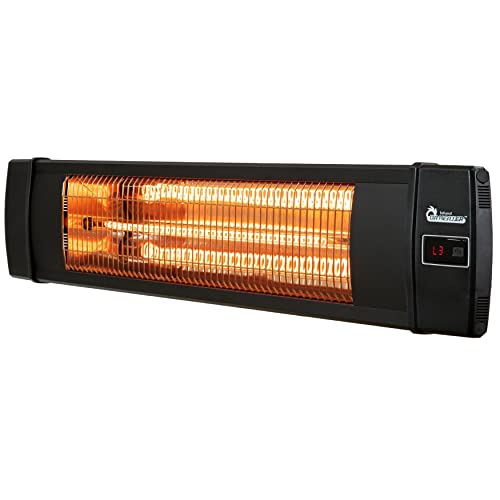
The DR-238 offers clean, instant infrared heat and operates on standard 120V. Rated IP55 for indoor and outdoor use, it suits garages with open bays or semi-exposed patios where moisture or dust may be present. It provides three power settings—900W, 1200W, and 1500W—allowing scalable heat output.
Call 888-896-7031 for Free Local HVAC Quotes – Compare and Save Today!
Infrared heating warms objects and people directly rather than heating air, which can be advantageous in drafts or high-ceiling spaces. The unit is plug-and-go and includes remote control, making it simple to deploy without hardwiring. IP55 rating and the multiple wattage settings make it versatile for both attached and detached garage setups.
Cadet Com-Pak Electric Wall Heater CSC151TW

The Cadet Com-Pak is a 120V wall-mounted electric heater with a built-in thermostat, delivering about 1500W (approx. 5120 BTU). As a wall-mounted unit, it preserves floor space and offers steady, controlled heat for a small-to-medium garage or workshop.
Integration of the thermostat simplifies temperature regulation and helps maintain consistent ambient conditions. The design is compact and intended for indoor environments where a fixed, low-profile heating solution is preferred. Installation requires mounting to a wall surface and following electrical guidelines for 120V circuits.
Heat Storm HS-1500-PHX-WIFI Infrared Heater

The Heat Storm HS-1500 is a 120V Wi‑Fi enabled wall-mounted infrared heater that emphasizes smart control and space-saving installation. The built-in Wi‑Fi allows remote temperature adjustments via smartphone, enabling preheating before entering the garage.
Call 888-896-7031 for Free Local HVAC Quotes – Compare and Save Today!
Safety features include tip-over shutoff (note: tip-over is primarily relevant for portable units), a touch screen with a digital thermostat, and remote control. Being wall-mounted, it avoids taking floor space and provides targeted radiant heat—useful for workshops where tools and people need direct warming.
Comfort Zone Ceiling Heater (Context Comparison)

Although this Comfort Zone ceiling heater is a 240V hardwired unit, it is included for context because many garage owners consider ceiling or hardwired solutions when seeking whole-space comfort. It offers a ceiling-mount design, heavy-gauge steel construction, and targeted louvers for directional airflow.
Ceiling-mounted heaters typically provide higher output suitable for larger garages, but they require appropriate wiring and often a 240V supply. For single-circuit 120V garages, portable or 120V wall heaters are usually the practical choice.
Buying Guide: How To Choose A 120V Garage Heater
Choosing a 120V heater for a garage depends on garage size, wiring, mounting preference, insulation, and intended use. Below are practical factors and comparison perspectives to guide a purchase.
1. Confirm Electrical Compatibility
Verify that your garage outlet or circuit can support a 120V heater. Most 120V portable and wall units draw up to 1500W and require a dedicated 15A or 20A circuit. Avoid overloading shared circuits with high-demand tools or compressors while the heater runs.
2. Heater Type: Radiant vs Forced Air vs Infrared
- Infrared Heaters: Heat objects and people directly. Efficient for spot heating and open or drafty garages where heating air is inefficient.
- Forced-Air/Ceramic Heaters: Use a fan to distribute warm air quickly. Better for faster rise in air temperature in small enclosed spaces.
- Wall-Mounted Units: Provide consistent ambient heat and free floor space; usually thermostat-controlled for steady temperatures.
3. Safety Features
Look for overheat shut-off, cool-to-touch housing, tip-over protection (for portable units), and ETL/UL certification. Garages often contain flammable materials; choose models with robust safety systems and follow clearance instructions during installation.
4. Control And Convenience
Thermostats, programmable timers, remote controls, and Wi‑Fi connectivity offer more precise control and energy savings. If preheating before entering the garage matters, Wi‑Fi or remote control can be a decisive feature.
5. Coverage Area And Wattage
120V units often top out around 1500W; expect effective heating for small-to-medium garages or spot heating. For larger garages or whole-space heating, 240V hardwired heaters deliver much higher output but require compatible wiring.
6. Installation And Placement
Portable units require minimal installation but need safe placement and clearance. Wall-mounted and ceiling-mounted units require secure mounting and typically a dedicated circuit. Consider whether you prefer a permanent installation or a moveable solution.
7. Durability And Environmental Suitability
For garages exposed to moisture or dust, choose units rated for damp locations (e.g., IP ratings) or specifically listed for garage/outdoor use. Robust steel housings and corrosion-resistant finishes increase longevity in harsher environments.
8. Noise And Comfort
Fan-forced heaters produce audible sound; infrared models are usually quieter. If you use the garage as a workshop or living-adjacent space, noise level and steady comfort matter.
Comparison Perspectives
- Small Garage/Spot Heating: 120V wall or portable units (Cadet Com-Pak, NewAir) provide controlled warmth without rewiring.
- Semi-Open Garages or Attached Garage With Drafts: Infrared (Dr Infrared, Heat Storm) warms people and objects effectively despite air exchange.
- Whole-Garage, Large Space: Consider 240V hardwired ceiling heaters for full-space coverage; note this requires electrical upgrades.
- Smart Control Needs: Wi‑Fi-enabled models (Heat Storm) enable remote preheating, which is useful for frequent, timed use.
When comparing models, cross-check the listed features for safety certifications, mounting options, thermostat capabilities, and power settings. For many garages that only have standard 120V outlets, portable ceramic, infrared plug-in, and 120V wall heaters provide the most practical heating solutions without costly electrical upgrades.
Tips for Getting the Best HVAC Prices
- Prioritize Quality Over Cost
The most critical factor in any HVAC project is the quality of the installation. Don’t compromise on contractor expertise just to save money. - Check for Rebates
Always research current rebates and incentives — they can significantly reduce your overall cost. - Compare Multiple Quotes
Request at least three estimates before making your choice. You can click here to get three free quotes from local professionals. These quotes include available rebates and tax credits and automatically exclude unqualified contractors. - Negotiate Smartly
Once you've chosen a contractor, use the proven strategies from our guide — How Homeowners Can Negotiate with HVAC Dealers — to get the best possible final price.