
Quick Overview: This guide compares five practical 120V infrared heating options for patios, garages, bathrooms, saunas, and rooms. Each product entry summarizes key features, intended use, installation notes, and suitability so you can match heater type to space and safety needs.
| Product | Type | Key Uses |
|---|---|---|
| Dr Infrared Heater DR-238 Carbon Infrared Outdoor Heater | Electric Carbon Infrared, Plug-In | Patio, Garage, Decks, Restaurants (IP55) |
| Heliosa 66 Black Infrared Electric Outdoor Patio Heater | High-Intensity Halogen/Infrared, Plug-In | Wall-Mounted Patio Heat, Weather Resistant (IPX5) |
| iDOTODO 300W Infrared Sauna Heater Plate (120V) | Carbon Fiber Heating Plate (Sauna Build-In) | Indoor Sauna Heating Element (Requires Control Panel) |
| 250W R40 Infrared Heat Lamp Bulb (BULBMASTER) | Infrared Heat Lamp Bulb (E26) | Bathroom Shower Heat, Pet Brooder, Localized Spot Heat |
| Dr Infrared Portable Space Heater, 1500W | Portable Infrared + PTC, Plug-In | Room Heating, Energy Saving Modes, Safety Features |
Content Navigation
- Dr Infrared Heater DR-238 Carbon Infrared Outdoor Heater
- Heliosa 66 Black Infrared Electric Outdoor Patio Heater
- iDOTODO 300 Watt Infrared Sauna Heater Plate (120V)
- 250 Watt Heat Lamp Bulb For Bathroom R40 Incandescent
- Dr Infrared Heater Portable Space Heater, Original, 1500-Watt
- Buying Guide: How To Choose A 120V Infrared Heater
Dr Infrared Heater DR-238 Carbon Infrared Outdoor Heater
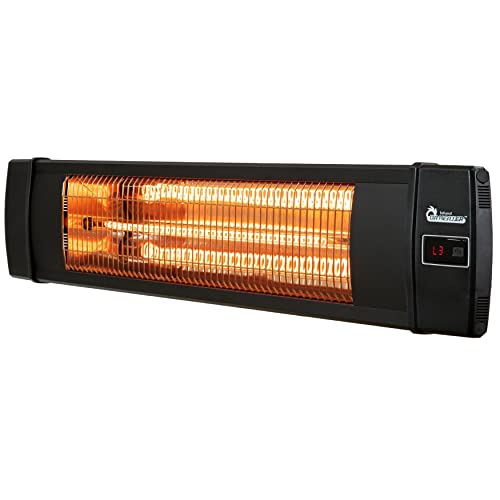
Type: Carbon infrared electric heater with three power settings. Power Options: 900W, 1200W, 1500W (120V, 60Hz).
Weather Resistance: IP55 rated for indoor and outdoor use, making it suitable for covered patios, open-air restaurant spaces, garages, and decks.
Operation & Controls: Plug-and-go design with remote control for power level selection and convenience.
Heat Delivery: Clean, instant, odorless infrared heat aimed at warming people and surfaces rather than air, which helps perceived comfort in outdoor or drafty spaces.
Call 888-896-7031 for Free Local HVAC Quotes – Compare and Save Today!
Installation Notes: Designed for mounting in outdoor locations; follow manufacturer mounting guidelines and ensure the unit is placed to avoid direct exposure to heavy rain or immersion despite IP55 rating.
Heliosa 66 Black Infrared Electric Outdoor Patio Heater

Type: High-intensity halogen-style infrared heater with reduced glare safety glass. Power: 1500W, 120V plug-in cord included with inline switch.
Durability: Water-resistant with IPX5 rating intended for outdoor use. The unit is built to withstand rain and typical outdoor elements but should be mounted per instructions.
Glare Reduction: Includes heat-resistant black safety glass to reduce visible red glow while maintaining radiant output.
Installation & Use: Wall-mounted system that plugs into standard 120V circuits; suitable for residential and commercial patios where a local hardwired solution is not wanted.
Call 888-896-7031 for Free Local HVAC Quotes – Compare and Save Today!
iDOTODO 300 Watt Infrared Sauna Heater Plate (120V)

Type: Carbon fiber infrared heating plate designed as a component for sauna rooms. Power: 300W, 120V compatible model.
Installation: Product does not include plug or controller. Requires integration with an existing sauna control panel and a qualified electrician for safe installation and connection to the sauna circuit.
Compatibility: Intended as a replacement/upgrade heating element—check voltage and power compatibility against your sauna system before purchase. Delivered with wooden frame and mounting screws.
Use Case: Best for builders or owners constructing or refurbishing a small infrared sauna where a 120V, low-watt heating element is required.
250 Watt Heat Lamp Bulb For Bathroom R40 Incandescent

Type: 250W R40 incandescent infrared heat lamp bulb with E26 base. Voltage: 120V.
Primary Uses: Localized infrared warmth for bathroom showers, recessed shower fixtures, and animal brooders. Also used in food-service warming and spot heating applications.
Open Fixture Considerations: These bulbs produce concentrated radiant heat and should be used in fixtures rated for heat lamp use. Ensure appropriate fixture spacing and mounting to avoid contact with combustible materials.
Light Output: Red/orange infrared glow delivers direct radiant warmth; not intended as whole-room heating but effective for close-range heating needs.
Dr Infrared Heater Portable Space Heater, Original, 1500-Watt
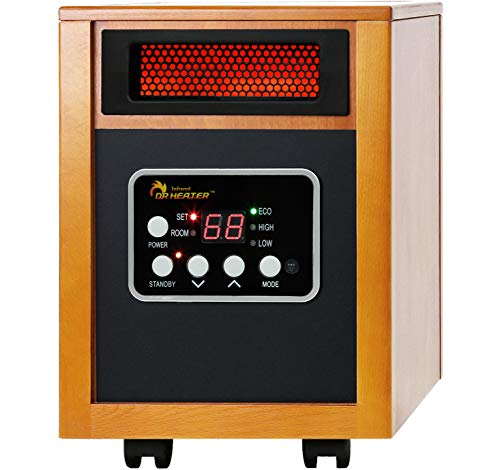
Type: Portable space heater combining infrared quartz tubes with PTC ceramic heating for mixed radiant and convective heat. Power: 1500W, 120V.
Heating Performance: Dual heating system intended to increase effective heat output and raise perceived warmth in medium to large rooms. Rated around 5200 BTU equivalent.
Safety & Controls: Includes tip-over protection, overheat protection, 12-hour automatic shut-off timer, and remote control. Quieter blower and energy-saving modes available.
Installation & Mobility: Plug-in portable design for room-to-room use. Check circuit capacity if running on shared breakers with other high-draw devices.
Buying Guide: How To Choose A 120V Infrared Heater
Define The Intended Use: Identify whether you need localized spot heat (bath/shower bulb), portable room heating, fixed patio heating, or an integrated sauna element. Each application requires different form factors and safety features.
Power And Coverage: On a 120V circuit, common residential infrared units range from a few hundred watts up to 1500W. Higher wattage yields more radiant output and larger coverage but demands more circuit capacity. Match wattage to space size: small enclosed spaces need less power than open outdoor patios.
Indoor Vs Outdoor Ratings: For patios and decks, choose products with an IP rating (IP55, IPX5, etc.). These indicate protection from water spray and dust. Never use indoor-only fixtures outdoors.
Installation Type: Plug-In vs Hardwired: Plug-in units (with included cords/plugs) are easier to install; hardwired or built-in components (like sauna elements) require a qualified electrician and proper controls. Confirm whether a product includes a plug or requires separate wiring.
Mounting And Placement: Wall- or ceiling-mounted radiant heaters should be placed at recommended heights and angles for uniform coverage and to meet clearance requirements. Heat lamps and sauna plates must be mounted to avoid direct contact with combustible materials.
Safety Features: Look for tip-over switches, thermal cutoffs, overheat protection, and IP/weatherproof ratings where applicable. For bathroom fixtures, use fixtures rated for wet-location installation when installing heat lamps over showers.
Control Options: Remote control, multiple power settings, timers, and integrated thermostats improve convenience and energy management. For saunas, ensure compatibility with your control panel and temperature sensors.
Heat Type And Comfort: Infrared warms people and objects directly rather than heating air. This can be more efficient in drafty spaces or outdoor settings. Halogen-style elements produce immediate high-intensity radiant heat; carbon and PTC systems offer steadier, extended warmth.
Energy And Circuit Considerations: A standard 15A household circuit can typically support a 1500W device. If multiple high-wattage devices run on the same circuit, verify breaker capacity. For hardwired units, ensure wiring and breaker rating match manufacturer requirements.
Glare And Light Output: Some infrared heaters emit visible red/orange glow. If glare is a concern in dining or living areas, seek models with glare-reducing glass or design features to minimize visible light while preserving radiant heat.
Durability And Warranty: For outdoor use, select corrosion-resistant finishes and proven weather seals. Check warranty length and service terms, especially for commercial deployment.
Comparison Perspectives: – For outdoor patios, compare IP ratings, mounting options, and coverage angle.
– For indoor room heat, compare mixed infrared + PTC systems against pure radiant-only units for response time and sustained warmth.
– For saunas, prioritize element compatibility, required control systems, and installation complexity.
– For spot heating (bath/pets), prioritize fixture compatibility and safety with heat-rated housings.
Tips for Getting the Best HVAC Prices
- Prioritize Quality Over Cost
The most critical factor in any HVAC project is the quality of the installation. Don’t compromise on contractor expertise just to save money. - Check for Rebates
Always research current rebates and incentives — they can significantly reduce your overall cost. - Compare Multiple Quotes
Request at least three estimates before making your choice. You can click here to get three free quotes from local professionals. These quotes include available rebates and tax credits and automatically exclude unqualified contractors. - Negotiate Smartly
Once you've chosen a contractor, use the proven strategies from our guide — How Homeowners Can Negotiate with HVAC Dealers — to get the best possible final price.