
This guide compares effective 220/240-volt electric heaters for garages, workshops, rooms, and point-of-use hot water. Below is a quick comparison table of the five selected products, followed by focused product summaries and a detailed buying guide to help you choose the right 220V heater for your needs.
| Product | Type | Key Feature |
|---|---|---|
| Comfort Zone CZ220 | Ceiling-Mount Space Heater | Fan-Forced, 5000W, Hard-Wired |
| ENVI 220 Volt Panel Heater | Wall-Mounted Electric Panel | Fan-Less Convection, Child-Safe |
| Dr Infrared DR-988A | Garage/Shop Heater | 240V, 4800/5600W, NEMA 6-30R Plug |
| Cadet F Series Baseboard | Electric Baseboard Heater | 1000W (240/208V), Simple Installation |
| ECOTINYMACH 4000W Tankless | Instant Tankless Water Heater | 220V, Remote Control, Compact |
Content Navigation
- Comfort Zone Hard-Wired Ceiling Mount Garage Heater CZ220
- Envi 220 Volt Hardwired Electric Panel Wall Heater
- Dr Infrared Heater DR-988A Garage Shop 240V
- Cadet F Series 48″ Electric Baseboard Heater 4F1000W
- ECOTINYMACH Tankless Water Heater Electric 220V 4000W
- Buying Guide: How To Choose The Right 220V Electric Heater
- 1. Match Heater Type To Application
- 2. Electrical Requirements And Circuit Capacity
- 3. Heating Output Versus Room Size
- 4. Distribution Method: Fan-Forced, Convection, Or Infrared
- 5. Safety Features And Installation Considerations
- 6. Energy Efficiency And Operating Cost
- 7. Installation Type: Hard-Wired Vs Plug-In
- 8. Maintenance And Durability
- 9. Special Features And Controls
- 10. Comparison Perspectives
Comfort Zone Hard-Wired Ceiling Mount Garage Heater CZ220

This fan-forced, ceiling-mounted heater is designed for large open spaces such as garages, workshops, and warehouses. Its hard-wired installation uses 240V input and delivers a high wattage output suitable for spot and ambient heating.
- Space-Saving Ceiling Mount: Frees floor space and directs heat downward with adjustable louvers and mounting angle for targeted distribution.
- Robust Steel Construction: Heavy-gauge steel housing intended for durability in fluctuating temperature environments.
- Safety Features: Includes overheat protection and a thermal cut-out switch for automatic shutoff in unsafe conditions.
This unit is appropriate where hard-wiring is acceptable and high output is required. Its fan-forced delivery improves circulation compared to passive systems, and adjustable louvers assist with directing heat to work areas or vehicle bays.
Envi 220 Volt Hardwired Electric Panel Wall Heater

The ENVI wall panel is a low-wattage, fan-less convection heater designed for residential rooms where silent, gentle warmth and safety are priorities. It operates on 220V and is intended as a supplement to central heating or as a primary heat source in small spaces.
Call 888-896-7031 for Free Local HVAC Quotes – Compare and Save Today!
- Energy Efficiency: Marketed to reduce overall heating bills by allowing zone heating and lower central thermostat settings.
- Child And Pet Safety: Surface temperature around 90°F; wall-sensing safety feature cuts power if removed from the wall.
- Quiet Operation: Fan-less design uses stack convection technology for silent, gentle circulation without moving parts.
Applicable in bedrooms, home offices, or bathrooms where quiet operation and safety are essential. The wall-mounted design avoids circulating dust and typically requires professional hard-wiring to match 220V circuits.
Dr Infrared Heater DR-988A Garage Shop 240V

The DR-988A is a high-power garage/shop heater designed for 240V circuits. It offers selectable wattages (typically 4800W or 5600W), making it suitable for heating large, poorly insulated spaces.
- High Output: Designed for 5600W operation on 240V for rapid heating of large areas.
- Special Outlet Requirement: Uses a NEMA 6-30R receptacle (250V 30A). Ensure your electrical supply matches the plug and circuit rating.
- Durability For Workshop Use: Built to withstand heavier duty operation common in garages and shops.
This model is appropriate when a plug-in solution using a dedicated 240V NEMA outlet is preferred over hard-wiring. Confirm circuit capacity and outlet compatibility before purchase or installation.
Cadet F Series 48″ Electric Baseboard Heater 4F1000W
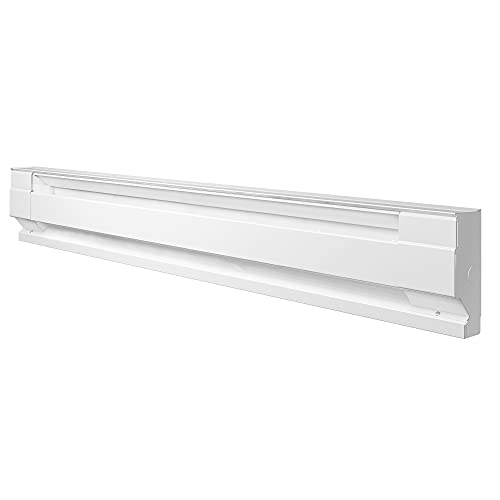
The Cadet F Series baseboard heater is a traditional 240/208V electric baseboard offering quiet, convection-based heating for small to medium rooms. It provides surface-mounted heating with simple wiring and safety cutout features.
Call 888-896-7031 for Free Local HVAC Quotes – Compare and Save Today!
- Power And Coverage: 1000/750W rating on 240/208V suitable for zone heating and supplemental warmth in individual rooms.
- Installation Simplicity: Universal wiring and pre-punched knockouts ease floor or wall installation.
- Safety: Built-in high-temperature safety shutoff reduces risk of overheating.
Baseboard systems provide steady, even heat without fans. They are a good option when controlled, localized heating is needed and radiator-style mounting fits the room layout.
ECOTINYMACH Tankless Water Heater Electric 220V 4000W
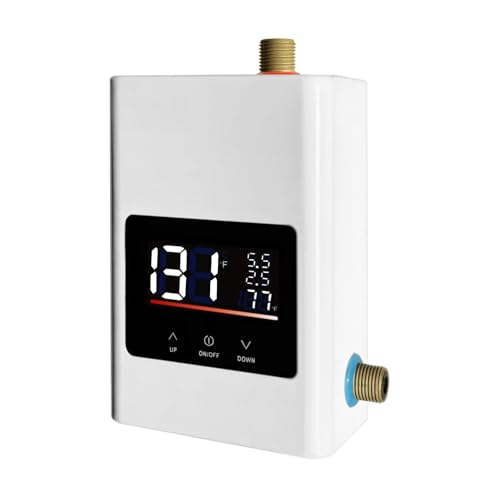
This compact 220V electric tankless water heater is designed for point-of-use hot water under sinks or in small living spaces. With a 4000W rating it delivers on-demand hot water and includes a remote control for convenience.
- Space-Saving Design: Compact footprint suits apartments, RVs, and small homes where storage space is limited.
- Remote Control And Temp Conversion: Remote wireless control and easy conversion between Fahrenheit and Celsius for user convenience.
- Instant Hot Water: On-demand heating eliminates tank standby losses and reduces wait time for hot water at the point of use.
While not a space heater, this 220V electric device is relevant for readers seeking electric heating solutions using 220/240V circuits. Check water flow rate and incoming water temperature to ensure the unit meets hot water output needs.
Buying Guide: How To Choose The Right 220V Electric Heater
Selecting the right 220/240V heater depends on application, electrical capacity, installation preferences, and safety needs. Below are key factors and comparative perspectives to guide purchase decisions.
1. Match Heater Type To Application
Consider intended use: space heaters (fan-forced or infrared) for garages and workshops, wall panel or baseboard heaters for living spaces, and tankless water heaters for point-of-use hot water. Each type optimizes different output profiles and user expectations.
2. Electrical Requirements And Circuit Capacity
220/240V heaters draw high current. Confirm the following before buying:
- Available circuit amperage (e.g., 30A for many 240V devices)
- Whether you need a dedicated circuit or can hard-wire
- Outlet type compatibility (e.g., NEMA 6-30R for some plug-in garage units)
For hard-wired units, plan for professional installation if you are not a licensed electrician.
3. Heating Output Versus Room Size
Estimate heat load by room size, insulation, ceiling height, and desired temperature rise. High-wattage units (3000–5600W+) heat larger, less-insulated spaces. Lower wattage, efficient panel units suit smaller rooms or continuous low-level heating.
4. Distribution Method: Fan-Forced, Convection, Or Infrared
Fan-Forced heaters (like some garage units) move air quickly and warm spaces faster. ConvectionInfrared
5. Safety Features And Installation Considerations
Look for:
- Overheat protection and thermal cut-out switches
- Cool-to-touch surfaces for child or pet safety
- Mounting hardware and clearances specified by manufacturer
- Tip-over protection for portable units (if applicable)
Hard-wired or high-wattage plug-in heaters should be installed per local electrical codes.
6. Energy Efficiency And Operating Cost
Electric heaters convert nearly all input power to heat, but operating cost depends on wattage and runtime. For energy-conscious choices:
- Use zone heating to reduce central system load
- Prefer programmable thermostats or controllers to avoid wasted run-time
- Consider fan-less convection panels for continuous low-cost operation in small rooms
7. Installation Type: Hard-Wired Vs Plug-In
Hard-wiredPlug-in
8. Maintenance And Durability
Evaluate construction materials and maintenance needs:
- Metal housings and rust-resistant finishes for garages
- Fan motors may require occasional checks; fan-less models have fewer moving parts
- For water heaters, water quality and scale buildup can affect lifespan—follow manufacturer maintenance recommendations
9. Special Features And Controls
Consider features that affect usability:
- Remote controls and digital thermostats for convenience
- Adjustable louvers or directional mounts for targeted heating
- Auto-dimming lights or timers for night operation
10. Comparison Perspectives
When comparing units, weigh these perspectives:
- Performance vs. Cost: Higher wattage provides faster heating but increases operating cost.
- Convenience vs. Permanence: Plug-in models are convenient, hard-wired models integrate cleanly into a facility.
- Noise vs. Circulation: Fans improve distribution but add noise; fan-free panels are quiet but slower to warm.
- Safety vs. Output: Child-safe panels reduce surface temperatures but may not provide enough output for large, cold spaces.
Use this guide to confirm the right combination of voltage, wattage, mounting type, and safety features for your specific use case. If you are unsure about electrical compatibility or installation, consult a licensed electrician to verify circuit capacity and code compliance prior to purchase or installation.
Tips for Getting the Best HVAC Prices
- Prioritize Quality Over Cost
The most critical factor in any HVAC project is the quality of the installation. Don’t compromise on contractor expertise just to save money. - Check for Rebates
Always research current rebates and incentives — they can significantly reduce your overall cost. - Compare Multiple Quotes
Request at least three estimates before making your choice. You can click here to get three free quotes from local professionals. These quotes include available rebates and tax credits and automatically exclude unqualified contractors. - Negotiate Smartly
Once you've chosen a contractor, use the proven strategies from our guide — How Homeowners Can Negotiate with HVAC Dealers — to get the best possible final price.