
Finding a 220V garage heater that plugs into an appropriate outlet simplifies installation and keeps your workspace warm without rewiring. The table below summarizes five plug-friendly garage heaters from Amazon, highlighting key specs to help you compare at a glance.
| Product | Power / Voltage | Mounting | Plug/Outlet | Key Feature |
|---|---|---|---|---|
| Dr. Infrared Heater 10,260 BTU (3000W) | 3000W / 220–240V | Ceiling or wall | Power Plug Included | Infrared carbon element, IP55 weatherproof |
| Dr Infrared DR-988A Garage Shop | 4800–5600W / 208–240V | Ceiling / Wall | NEMA 6-30P Cord (Requires 6-30R) | High wattage option with industrial outlet |
| NewAir 5600W Portable Electric Heater | 5600W / 240V | Portable / Floor | 6-Foot Cord (Plug) | Portable with thermostat and auto-fan control |
| TEMPWARE 7500W Digital Ceiling Heater | 6250–7500W / 240V | Ceiling Mounted | Hardwired Typical (Check Listing) | Digital controls, ECO mode, timer |
| CTSC 10000W Electric Garage Heater | 7500–10000W / 240V | Ceiling Mounted | Hardwired (Voltage Display) | Voltage display, digital thermostat, remote |
Content Navigation
Dr. Infrared Heater 10,260 BTU / 3000W Infrared
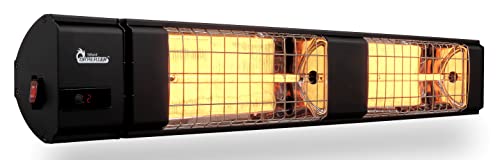
Key Features: 10,260 BTU / 3000W carbon infrared element, 220–240V operation, remote included, ceiling or wall mount, IP55 weatherproof rating, power plug included.
This unit uses a carbon infrared element to provide instant, clean heat and supports indoor and outdoor-rated installation thanks to an IP55 weatherproof design. The included remote and simple mounting hardware make installation and day-to-day control straightforward for many garages and covered patios. The product listing specifies a power plug is included, which reduces the need for hardwiring in setups that already have a compatible 220–240V outlet.
Because infrared heating warms objects and people directly rather than relying solely on air circulation, this style can be efficient for localized workspace heating. The two power levels and standby mode assist with flexible operation in different weather conditions.
Dr Infrared DR-988A Garage Shop 208/240V

Call 888-896-7031 for Free Local HVAC Quotes – Compare and Save Today!
Key Features: 4800–5600W power, 240V required, NEMA 6-30P plug (requires NEMA 6-30R receptacle), designed for garage/shop use.
This high-wattage model is built for larger garages and workshops, offering up to 5,600 watts when full power is used. The inclusion of a NEMA 6-30P plug simplifies installation where a compatible 240V 30A outlet exists, making it a viable plug-in option for higher-power applications without permanent hardwiring.
When evaluating this model, consider electrical capacity and the need for a dedicated circuit and proper receptacle. The heater’s higher wattage can deliver fast warm-up for bigger spaces, but it requires the correct outlet and breaker to operate safely.
NewAir 5600W Portable Electric Garage Heater

Key Features: 5,600 watts, heats up to 600 sq. ft., portable with 6-foot cord wrap and carrying handle, thermostat and auto-fan control, rugged steel body.
This portable option combines substantial wattage with mobility, letting you position heat where you need it. The integrated thermostat and auto-fan function maintain the target temperature while the steel construction suits garage environments. The product references a cord and carrying handle, indicating plug-in convenience appropriate for garages with the right 240V receptacle.
Call 888-896-7031 for Free Local HVAC Quotes – Compare and Save Today!
Portability is an advantage when you need heat in varying parts of a workshop or when you can’t install a ceiling or wall unit. Confirm the plug type and required outlet amperage on the listing or nameplate before plugging into an existing receptacle.
TEMPWARE 7500W Digital Fan-Forced Ceiling Heater
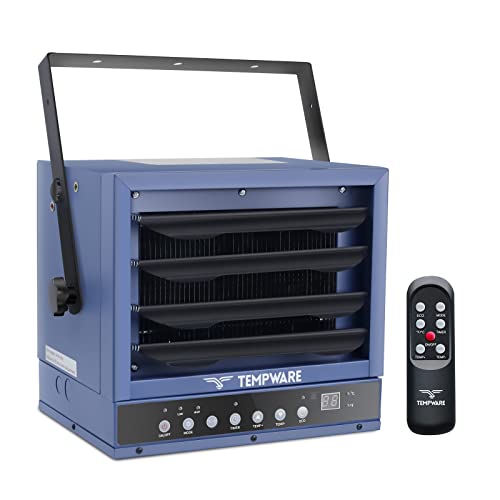
Key Features: 6,250–7,500 watts, adjustable louvers and mounting angle, digital thermostat, ECO mode, 12-hour timer, full-function remote, 240V hardwired design.
This ceiling-mounted heater emphasizes digital controls and energy-saving features such as an ECO mode and timer. While the listing notes a 240V hardwired configuration as common, many installers convert compatible units to plug-in setups when a proper high-voltage receptacle and plug are available. The adjustable louvers and remote expand usability for directed heating in garages and workshops.
For buyers seeking feature-rich control and automatic energy saving, this model’s digital interface and ECO functions provide programmable comfort. Electrical installation requirements should be verified; some setups require hardwiring or a specific plug adaptation by a qualified electrician.
CTSC 10000W Electric Garage Heater With Digital Thermostat

Key Features: Up to 10,000W, voltage display screen, SPCC cold-rolled steel construction, ETL listed, remote and digital touch controls, multiple heat settings.
This higher-capacity heater includes a voltage display to assist with installation troubleshooting and ensure correct supply voltage is present. The digital thermostat, remote, and multiple heat settings allow for precision temperature control in larger garages and commercial spaces. The listing positions the unit as a hard-wired ceiling heater, though some installations may use a heavy-duty plug and receptacle if permitted by local electrical codes.
The voltage readout can be a practical diagnostic tool if you suspect supply issues. Given the unit’s high wattage range, expect the need for significant electrical capacity and possibly a dedicated circuit when used in residential garages.
Buying Guide: Choosing A 220 Garage Heater With Plug
Voltage And Amperage Compatibility
Confirm Your Outlet Type: Identify the outlet in your garage (e.g., NEMA 6-30R, NEMA 14-30, or other 240V receptacles). Match the heater’s plug requirement to the outlet or plan for a professional electrical upgrade.
Circuit Capacity: High-wattage heaters require dedicated circuits and correct breaker sizing. Check your panel capacity and consult an electrician for installations above typical circuit ratings.
Plug-In Versus Hardwired
Plug-In Convenience: Plug-in heaters simplify installation when a compatible outlet exists. They are easier to move or replace.
Hardwired Considerations: Hardwired units are common for ceiling-mounted high-wattage heaters. They may offer cleaner installs but usually require an electrician.
Heating Technology And Coverage
Infrared vs Fan-Forced: Infrared heaters warm objects directly and can feel quicker at the point of use. Fan-forced heaters circulate warmed air to raise ambient temperature across the space.
Wattage To Square Foot Rule: As a general guide, allocate about 10–15 watts per square foot for insulated spaces; uninsulated garages may require more. Confirm the manufacturer’s coverage estimates for realistic expectations.
Mounting And Placement
Ceiling Or Wall Mount: Ceiling-mounted models save floor space and can distribute heat broadly. Ensure structural support and adequate clearance for airflow and safety.
Portable Units: Portable plug-in heaters provide positional flexibility but may occupy floor space and require a safe location away from combustibles.
Controls And Features
Thermostats And Remotes: Built-in thermostats and remotes help maintain stable temperatures and reduce runtime. Digital controls often provide better precision.
Timers And ECO Modes: Timers and energy-saving modes can cut operating hours and lower costs while maintaining comfort.
Safety And Certifications
Overheat Protection: Look for automatic shutoff and thermal cutoff features to reduce fire risk in enclosed spaces.
Certifications: ETL or UL listings indicate independent safety testing; IP ratings indicate weather resistance for covered outdoor or semi-exposed installs.
Noise And Environmental Considerations
Fan Noise: Fan-forced models produce variable noise. If noise matters (adjacent living spaces), look for quieter unit specs or infrared fanless alternatives.
Indoor Air Quality: Electric heaters do not burn fuel and thus avoid combustion byproducts. Consider units with enclosed elements and minimal dust disruption to preserve air quality.
Installation And Professional Advice
Electrical Work: For high-power 220–240V installations, hire a licensed electrician to verify wiring, install the correct receptacle or hardwire, and confirm breaker sizing.
Local Codes: Check local electrical and building codes. Some jurisdictions have restrictions on plug types or require permits for new 240V circuits.
Tips for Getting the Best HVAC Prices
- Prioritize Quality Over Cost
The most critical factor in any HVAC project is the quality of the installation. Don’t compromise on contractor expertise just to save money. - Check for Rebates
Always research current rebates and incentives — they can significantly reduce your overall cost. - Compare Multiple Quotes
Request at least three estimates before making your choice. You can click here to get three free quotes from local professionals. These quotes include available rebates and tax credits and automatically exclude unqualified contractors. - Negotiate Smartly
Once you've chosen a contractor, use the proven strategies from our guide — How Homeowners Can Negotiate with HVAC Dealers — to get the best possible final price.
Comparison Perspectives
- Ease Of Installation: Low-power 220V plug-in units with included plugs are easiest to set up where the correct outlet exists.
- Power And Coverage: Choose higher wattage models for larger or poorly insulated garages; ensure electrical infrastructure supports them.
- Portability Vs Permanent Mounting: Portable plug-in heaters offer flexibility; ceiling/wall-mounted units are better for permanent, evenly distributed heat.
- Feature Priorities: Prioritize remote control, thermostat accuracy, timers, and safety cutoffs based on how you use your space.