
Finding the right 220V space heater means matching power, installation type, and safety features to your space. Below is a quick comparison of five top 220V heaters suited for garages, workshops, and large rooms. Each product section includes the manufacturer features and what those mean for real-world use.
| Product | Type | Power / Voltage | Primary Use |
|---|---|---|---|
| Comfort Zone CZ220 | Ceiling-Mount Fan-Forced | 5000W / 240V | Garage, Warehouse |
| EnviMAX 220V Wall Panel | Wall-Mounted Fanless Panel | 1000W / 220V | Large Rooms, Continuous Use |
| Dr Infrared DR-988A | Hardwired Garage/Shop Heater | 4800–5600W / 208–240V | Garage, Workshop |
| Dr. Infrared 3000W | Infrared Ceiling/Wall Mount | 3000W / 220–240V | Patio, Garage, Indoor/Outdoor |
| NewAir 5600W Portable | Portable Fan-Forced | 5600W / 240V | Garage, Workshop, Large Rooms |
Content Navigation
- Comfort Zone Hard-Wired Ceiling Mount Garage Heater
- EnviMAX 220 Volt Wall Heater Panel
- Dr Infrared DR-988A Garage Shop Heater
- Dr. Infrared 3000W Infrared Heater
- NewAir 5600W Portable Garage Heater
- Buying Guide: Choosing The Right 220V Space Heater
- 1. Power, Coverage, And Heat Type
- 2. Electrical Requirements And Installation
- 3. Mounting And Space Constraints
- 4. Safety Features
- 5. Noise Considerations
- 6. Durability And Environment
- 7. Controls, Thermostat, And Automation
- 8. Energy Efficiency And Operating Cost
- 9. Outlet And Plug Type
- 10. Use Case Scenarios
- 11. Maintenance And Longevity
- 12. Regulatory And Local Codes
Comfort Zone Hard-Wired Ceiling Mount Garage Heater

This ceiling-mounted, hard-wired unit is designed for spaces where floor space matters. The heater is fan-forced and rated at 5,000 watt, 240 volt, making it suitable for garages, workshops, and warehouses where robust heating is required.
Key listed features include efficient ceiling mount to free floor area, heavy-gauge steel construction for durability, and adjustable louvers plus mounting angle for targeted heating. The unit also lists overheat protection and a thermal cut-out switch, helping prevent overheating in poorly insulated environments.
Applications: appropriate when you need powerful, overhead heating that distributes warm air via fan-forced flow and when a permanent hard-wired installation is acceptable.
EnviMAX 220 Volt Wall Heater Panel

Call 888-896-7031 for Free Local HVAC Quotes – Compare and Save Today!
The EnviMAX unit is a fan-less wall panel designed for silent, continuous operation. It runs on 220V and is promoted as a whole room heater with low surface temperature and safety sensors.
Highlighted features include Stack Convection fanless technology for totally silent operation, a Wall-Sens safety sensor that cuts power if removed, and a claim of cool-to-touch surfaces at about 90°F. The product positions itself as energy-efficient for targeted heating vs. central systems.
Applications: useful in living spaces, bedrooms, or offices where silent operation, low surface temperatures, and continuous low-wattage heating are priorities.
Dr Infrared DR-988A Garage Shop Heater

The DR-988A is a higher-capacity heater designed for 208–240V circuits and available in 4,800–5,600 watt variants. It requires a NEMA 6-30R receptacle for its NEMA 6-30P cord and offers plug-in or hardwired installation depending on model and wiring.
Manufacturer notes: 240V required, 5600-Watt power consumption on higher models, and specific outlet requirements (NEMA# 6-30R). This indicates the need for appropriate electrical upgrades in many residential garages.
Call 888-896-7031 for Free Local HVAC Quotes – Compare and Save Today!
Applications: best for users who need very high heat output and have or can install the required 240V circuit and receptacle for safe operation.
Dr. Infrared 3000W Infrared Heater
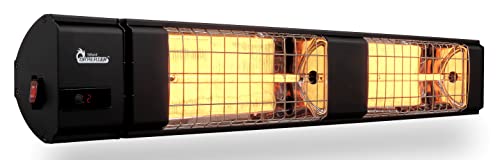
This 3000W carbon infrared heater operates from 220–240V and delivers 10,260 BTU of heat. It supports wall or ceiling mounting and includes a remote for changing power levels and standby mode.
Listed features emphasize instant infrared heat, IP55 weatherproofing for outdoor or patio use, and easy installation with mounting hardware. The unit is described as odorless and suitable for indoor or covered outdoor areas.
Applications: effective where focused radiant heat is preferred over convective fan-forced warmth, such as patios, overhead mount in garages, or zones needing instant warmth without blowing air.
NewAir 5600W Portable Garage Heater

The NewAir heater is a fan-forced portable unit rated at 5,600 watts, claimed to heat up to 600 sq. ft. The design focuses on rugged steel construction, thermostat control, and auto-fan temperature management.
Manufacturer features include a powerful fan for forced heating, sturdy powder-coated steel body, and an adjustable thermostat with auto-fan control to maintain set temperatures. Portability is enhanced with a carrying handle and cord wrap.
Applications: ideal for users who prefer high-output portable heating that can be moved between a garage, workshop, or other large spaces without permanent installation.
Buying Guide: Choosing The Right 220V Space Heater
Selecting a 220V space heater involves balancing power needs, installation constraints, safety expectations, and the intended use area. Below are key considerations and comparisons to guide a purchase decision.
1. Power, Coverage, And Heat Type
Wattage directly influences heat output. Units in this guide range from 1,000W panel heaters to 5,600W garage heaters. Higher wattage provides faster and higher temperature rise but requires compatible circuit capacity.
Compare heat delivery types:
- Fan-Forced (Convective): Moves heated air to warm a room rapidly. Good for whole-space warming in garages and workshops.
- Infrared (Radiant): Heats objects and people directly without heating all the air. Efficient for spot heating, patios, and focused areas.
- Fanless Convection Panels: Silent, gentle, good for bedrooms and continuous low-temperature heating.
2. Electrical Requirements And Installation
220–240V appliances often need dedicated circuits and specific outlets. Examples in this selection include NEMA 6-30R requirements for high-power plug-in units and hard-wired ceiling or wall mounts.
Before buying, verify existing wiring and breaker capacity. A licensed electrician can confirm whether a panel upgrade, new circuit, or outlet is required.
3. Mounting And Space Constraints
Choose between ceiling/Wall-mounted or portable options depending on space usage. Mounting saves floor space and centralizes heat; portable units provide flexibility.
For low ceilings or crowded workshops, overhead or wall panels keep floors clear. Portable high-output heaters are useful when you need to move heat to different locations.
4. Safety Features
Key safety attributes to compare:
- Overheat Protection/Thermal Cut-Out: Automatically shuts the unit down at unsafe temperatures.
- Cool-To-Touch Surfaces: Important in homes or workshops with pets and children; wall panels often advertise this.
- Tip-Over And Tilt Sensors: Relevant for portable units to prevent fires from accidental knocks.
- Certified Listings: ETL or similar third-party compliance indicates tested safety standards.
5. Noise Considerations
If the heater will operate in a sleeping area, office, or studio, fanless panel or low-noise infrared models are preferable. Fan-forced units are louder but generally heat faster and maintain even temperatures in larger spaces.
6. Durability And Environment
Materials and environmental ratings matter: heavy-gauge steel housings and powder coats resist dings and corrosion in workshop settings. For outdoor or patio use, look for IP-rated weatherproofing and labels specifying outdoor suitability.
7. Controls, Thermostat, And Automation
Consider control options such as built-in thermostats, remote controls, or simple on/off functionality. Units with thermostats and auto-fan controls maintain target temps more efficiently and avoid overshooting.
For continuous operation or zonal heating, units rated for 24/7 safe operation and with safety sensors are advantageous.
8. Energy Efficiency And Operating Cost
Electric heaters convert almost all input to heat, but the operating cost depends on wattage and runtime. Higher wattage heats faster but draws more current. Using targeted heating and lowering central heat can reduce total energy use.
Compare expected runtime and use-case: continuous low-wattage wall panels may cost less for maintaining moderate temperatures, while high-wattage units are best for short bursts of warmth or poorly insulated spaces.
9. Outlet And Plug Type
Confirm plug/receptacle compatibility. High-capacity heaters may require specific outlet types (e.g., NEMA 6-30R) or hard-wiring. Installing the correct plug and breaker is vital for safety and code compliance.
10. Use Case Scenarios
- Garage/Workshop With Existing 240V: High-wattage fan-forced or portable units provide robust heat for large, open spaces.
- Finished Room Or Bedroom: Fanless wall panels or infrared models that advertise cool-to-touch and silent operation.
- Patio Or Outdoor Covered Area: Weatherproof infrared heaters that focus radiant heat to occupants.
- Intermittent Spot Heating: Portable fan-forced or infrared units to warm a particular workspace only when occupied.
11. Maintenance And Longevity
Check for replaceable parts, accessible filters (if any), and corrosion-resistant housings. Fan-bearing longevity matters on forced-air units, while infrared elements should be rated for long life.
12. Regulatory And Local Codes
Always review local electrical codes and, if required, obtain permits for new 240V circuits. Using certified installers and ensuring the heater has proper listings reduces inspection issues and increases safety.
Using the considerations above, match your space size, electrical capacity, and noise/safety preferences to the heater type. A 220V heater can provide reliable, powerful heating for garages and workspaces when selected and installed to meet both performance and safety requirements.
Tips for Getting the Best HVAC Prices
- Prioritize Quality Over Cost
The most critical factor in any HVAC project is the quality of the installation. Don’t compromise on contractor expertise just to save money. - Check for Rebates
Always research current rebates and incentives — they can significantly reduce your overall cost. - Compare Multiple Quotes
Request at least three estimates before making your choice. You can click here to get three free quotes from local professionals. These quotes include available rebates and tax credits and automatically exclude unqualified contractors. - Negotiate Smartly
Once you've chosen a contractor, use the proven strategies from our guide — How Homeowners Can Negotiate with HVAC Dealers — to get the best possible final price.