
Infrared heaters on a 220–240V supply offer powerful, efficient warmth for patios, garages, workshops, and some indoor rooms. Below is a quick comparison of five 220V infrared and electric heaters selected for performance, installation type, and coverage. Read the short reviews and the buying guide to match a heater to your space and wiring.
| Model | Type / Power | Ideal Use |
|---|---|---|
| Dr. Infrared Heater 10,260 BTU (3000W) | Carbon Infrared / 3000W | Patio, Garage, Indoor/Outdoor |
| ThermoMate Infrared Patio Heater (3000W) | Carbon Fiber / 3000W | Patio, Deck, Garage (hardwired) |
| SunWave 4000-Watt Infrared Heater | Gold Quartz / 4000W | Commercial Patios, Large Outdoor Areas |
| Bromic Tungsten Smart Heat 6000W | Dual Quartz / 6000W | Large Commercial/Residential Patios |
| Dr Infrared DR-988A Garage Shop (5600W) | Electric Shop Heater / 4800–5600W | Garage, Workshop (NEMA 6-30R) |
Content Navigation
Dr. Infrared 3000W Carbon Infrared Heater
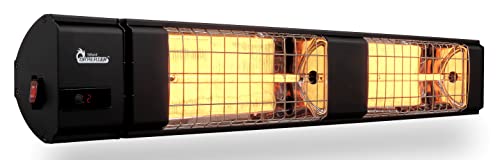
Power And Element: Carbon infrared heating element rated at 10,260 BTU / 3000W for rapid, radiant warmth.
Voltage And Weather Resistance: Designed for 220–240V operation and weatherproofed to IP55, making it suitable for both indoor and outdoor locations.
Installation And Controls: Includes mounting hardware for ceiling or wall installation and comes with a remote for two power levels and standby mode. A power plug is included for easier hookup where compatible.
Use Cases: Specified for patios, garages, restaurants, and indoor rooms where odorless, instant infrared heat is preferred. The product lists both residential and commercial suitability.
Call 888-896-7031 for Free Local HVAC Quotes – Compare and Save Today!
ThermoMate 3000W Infrared Patio Heater

Instant Heat: Carbon fiber heating tube claims 3 seconds instant heat, focusing on people and objects rather than warming air.
Coverage And Mounting: Rated at 3000W, recommended for about 100 sq. ft outdoors or 130 sq. ft in an enclosed area. Minimum mounting height and height recommendations (≈7.88 ft) are provided.
Electrical Requirements: Must be hardwired to a dedicated 240V circuit. A cable is supplied for hardwiring; professional installation is advised to meet local codes.
Controls: Remote control includes 24-hour timer and selectable low (1500W) and high (3000W) modes for flexible run-time and energy use.
SunWave 4000W Double Infrared Heater

Call 888-896-7031 for Free Local HVAC Quotes – Compare and Save Today!
Heating Technology: Uses patented gold quartz heating elements
Output And Application: 4000W output intended for larger patios, restaurant patios, and commercial spaces where even coverage and rapid warming are needed.
Design Considerations: Advertises ultra-low glare to reduce discomfort from bright heating elements and a wall-mounted configuration for flexible placement.
Electrical And Installation: Requires hardwiring to a 220–240V AC supply on a 15 amp 60Hz circuit. Installation is suited to built environments that can provide the required electrical feed and mounting support.
Bromic Tungsten Smart Heat 6000W

High Output Infrared: Dual quartz elements deliver 6000W160 sq ft
Construction And Durability: Built from premium stainless steel with corrosion-resistant finishes for long-term outdoor exposure and commercial-grade use.
Mounting Flexibility: Supports wall, ceiling, and optional recessed mounting with clearance specs for safe installation. An adjustable bracket provides directional control of heat.
Target Audience: Suited for higher-end residential patios or commercial hospitality spaces where fast, concentrated warmth and aesthetic integration are priorities.
Dr Infrared DR-988A Garage Shop Heater

Power And Requirements: Designed for 208/240V supply with selectable or specified 4800W–5600WNEMA 6-30R receptacle and corresponding 6-30P cord.
Intended Use: Marketed primarily for garages, shops, and workspaces where high output electric heating is needed and a dedicated outlet or circuit is available.
Installation Notes: Because of the plug/receptacle type and high amperage, installation often requires electrician assistance and assurance that the circuit meets local code for continuous load.
Performance Consideration: High-wattage air and infrared options are typically chosen when space has open volume, cold transfer, or when rapid recovery to set temperature is required.
Buying Guide: How To Choose The Right 220V Infrared Heater
Match Heater Type To Application
Carbon Infrared elements provide quick, broad radiant warmth ideal for close-range patio seating and people-focused heating. Quartz (tungsten/gold quartz) elements deliver strong, directional heat for larger areas and commercial settings. For enclosed rooms where air circulation is desired, consider electric panel or fan-assisted options.
Power (Wattage) And Coverage
Wattage roughly determines how much area a heater can serve. As a general guide: 1500–3000W suits small to medium patios or enclosed 100–130 sq ft. 4000–6000W models better serve larger patios or commercial areas up to ~160 sq ft or more depending on layout, wind exposure, and ceiling height.
Voltage And Electrical Requirements
All featured models operate on 220–240VNEMA 6-30R. Consult an electrician when in doubt.
Installation And Mounting
Decide whether you need wall, ceiling, recessed, or portable mounting. Clearance requirements are listed by manufacturers; maintain those clearances for safety and optimum performance. Outdoor-rated heaters require IP ratings for weather resistance if exposed.
Controls And Convenience
Remote controls, timers, and multi-power modes increase user convenience and energy management. Some units include timers up to 24 hours for scheduled operation, while others must be controlled by a separate switch or thermostat.
Safety Features
Look for weatherproof ratings for outdoor use and safety cutoffs for indoor models. For units used around children or pets, choose models with cool-to-touch housings or wall-sensor shutoff. High-wattage units should be protected by proper circuit protection and installed to code.
Energy Efficiency And Operating Cost
Infrared heaters heat objects and people rather than air, which can be more efficient in open or semi-open spaces. Compare wattage, runtime controls, and targeted heating capability to reduce overall energy use. Panel heaters with convection may be more efficient for small enclosed rooms.
Durability And Commercial Versus Residential Use
Commercial-grade heaters typically use heavier materials and higher IP ratings for long-term outdoor exposure. Residential models focus on convenience and sometimes plug-and-play installation. Match build quality to expected usage frequency and exposure to weather.
Tips for Getting the Best HVAC Prices
- Prioritize Quality Over Cost
The most critical factor in any HVAC project is the quality of the installation. Don’t compromise on contractor expertise just to save money. - Check for Rebates
Always research current rebates and incentives — they can significantly reduce your overall cost. - Compare Multiple Quotes
Request at least three estimates before making your choice. You can click here to get three free quotes from local professionals. These quotes include available rebates and tax credits and automatically exclude unqualified contractors. - Negotiate Smartly
Once you've chosen a contractor, use the proven strategies from our guide — How Homeowners Can Negotiate with HVAC Dealers — to get the best possible final price.
Comparison Perspectives
- Small Patio / Personal Use: 1500–3000W carbon models with remote and timer provide quick, directed warmth.
- Large Patio / Restaurant: 4000–6000W quartz or dual-element infrared units offer broader coverage and commercial finishes.
- Garage / Workshop: High-wattage hardwired units or plug-in NEMA 6-30R options supply the continuous, robust heat needed for open spaces.
- Enclosed Indoor Rooms: Consider panel or low-wattage convection infrared for gentle, quiet operation and lower surface temperatures.
Installation Checklist
- Confirm supply voltage and available breaker capacity in your electrical panel.
- Verify mounting surface strength and required clearances for heat and service access.
- Check local electrical codes for hardwiring, conduit, or outlet requirements.
- Plan for weather protection if the heater will be exposed to elements; select IP-rated units for outdoor use.
- Arrange professional electrician installation for high-amperage or hardwired units.