
Choosing the right 220V sauna heater means matching heater power, room volume, installation requirements, and safety features. Below is a concise comparison of reputable 220V sauna heaters to help you evaluate options for home, hotel, or spa installations.
| Product | Power / Type | Suitable Room Size | Control |
|---|---|---|---|
| VEVOR Sauna Heater (link below) | 9 kW Electric | 317–459 cu.ft | External Digital Controller |
| Mxmoonant Sauna Heater (link below) | 9 kW Electric | 250–425 cu.ft | Built-In Digital Display |
| ARSFUTU Sauna Heater (link below) | 9 kW Electric | 310–460 cu.ft | 3h Timer, External Controls |
| SINLJXDD Sauna Heater (link below) | 6 kW Electric | 100–260 cu.ft | Built-In Controller |
| Vanbolt Sauna Heater (link below) | 6 kW Electric | 100–300 cu.ft | Built-In Controller |
Content Navigation
- VEVOR Sauna Heater, 9KW 220V Electric Sauna Stove
- Mxmoonant Sauna Heater, 9KW 220V Electric Sauna Heater
- ARSFUTU Sauna Heater 9KW 220V Electric Sauna Heater
- SINLJXDD Sauna Heater 220V 6KW With Built-In Controller
- Vanbolt Sauna Heater 220V 6KW Electric Sauna Heater
- Buying Guide — How To Choose A 220V Sauna Heater
- 1. Power Rating And Room Volume
- 2. Heater Type: Electric Resistive vs Infrared vs Steam Generator
- 3. Controls And User Interface
- 4. Materials, Corrosion Resistance, And Durability
- 5. Sauna Stones And Heat Retention
- 6. Installation And Electrical Requirements
- 7. Safety Features And Certifications
- 8. Maintenance, Serviceability, And Parts Availability
- 9. Accessories And Included Items
- 10. Comparison Perspectives
VEVOR Sauna Heater, 9KW 220V Electric Sauna Stove

This 9 kW wall-mounted electric sauna heater is specified for 220–240V installations, designed to serve rooms approximately 317–459 cubic feet. The heater accepts around 33 lbs (15 kg) of sauna stones (stones not included) to store and radiate heat.
- Construction: Aluminized zinc shell for corrosion resistance; 304 stainless steel heating element for even heat delivery.
- Control: External digital controller mounted outside the sauna with modes including Normal and Preset automatic start/stop up to 3 hours.
- Installation Notes: Requires site-specific voltage verification and professional wiring; sauna stones sold separately.
- Dimensions: 16.1″ x 10.6″ x 22″.
Mxmoonant Sauna Heater, 9KW 220V Electric Sauna Heater

The Mxmoonant 9 kW model emphasizes digital precision and material durability. It is marketed for sauna rooms up to 425 cubic feet and integrates a built-in digital display for temperature and time control.
- Heating Performance: Designed for even heat distribution across the sauna room; suitable for dry or steam sauna environments within the stated volume range.
- Materials: Heating elements described as 840 stainless steel for improved heat resistance and longevity.
- Controls & Monitoring: Built-in digital display provides real-time temperature and timing adjustments for operational oversight.
- Installation Notes: Requires proper 220V wiring and mounting; check compatibility of room insulation and ventilation.
ARSFUTU Sauna Heater 9KW 220V Electric Sauna Heater

Call 888-896-7031 for Free Local HVAC Quotes – Compare and Save Today!
This 9 kW unit is a wall-mounted electric sauna stove offering a double-walled stainless steel housing and 304 stainless heating tubes. It is specified for rooms around 310–460 cubic feet and lists accessory items included in the kit.
- Kit Contents: Sauna heater plus a 2-in-1 thermo-hygrometer and a sauna accessory set (hat, seat pad, glove).
- Stone Capacity: Designed for 30–40 lbs of stones (not included) to stabilize temperature and produce steam when water is applied.
- Design: Wall-mounted to save floor space; includes mounting screws and options for positioning.
- Safety & Maintenance: Stainless housing targets corrosion resistance; confirm clearances and ventilation for heat dissipation.
SINLJXDD Sauna Heater 220V 6KW With Built-In Controller
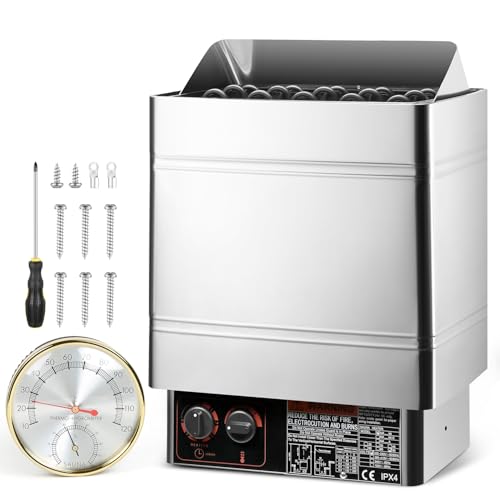
The SINLJXDD 6 kW electric heater fits smaller sauna rooms, specified for 100–260 cubic feet. It features a built-in controller and recommends a stone load of 28–35 lbs to ensure proper air circulation and heat retention.
- Applications: Residential saunas, spa centers, fitness centers where smaller room volumes are used.
- Materials & Service: Multiple heating elements for efficient heat distribution; no stones or power plug included—professional wiring recommended.
- Operational Note: Guidance to raise the stone rack to maintain airflow across heating elements and reduce noise.
- Energy Efficiency: Designed to maximize heat output while minimizing energy consumption for smaller sauna volumes.
Vanbolt Sauna Heater 220V 6KW Electric Sauna Heater
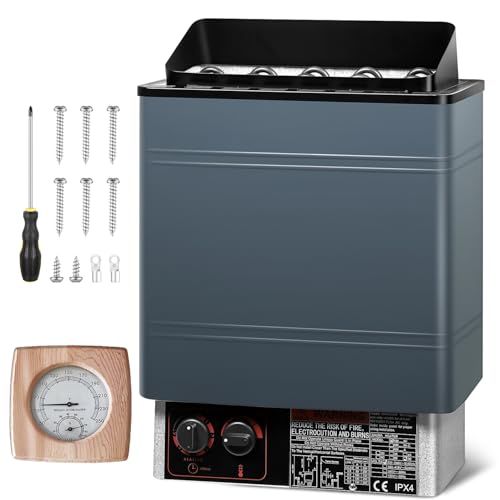
The Vanbolt 6 kW unit is positioned for 100–300 cubic feet sauna rooms and includes an internal controller. It emphasizes energy efficiency and universality for home and small commercial saunas.
- Suitability: Residential, spa, and small hotel saunas; recommended stone load 28–33 lbs (stones not included).
- Efficiency: Multiple heating elements for even heat and minimized energy draw relative to output.
- Installation: No cord or plug provided—requires electrician for wiring to 220V circuit and appropriate breaker sizing.
- Operational Advice: Verify room volume and insulation to ensure the listed kW rating meets desired temperature ramp-up times.
Buying Guide — How To Choose A 220V Sauna Heater
Selecting a 220V sauna heater requires aligning technical capacity, electrical setup, room characteristics, and safety features. The sections below present factual considerations and comparison perspectives.
Call 888-896-7031 for Free Local HVAC Quotes – Compare and Save Today!
1. Power Rating And Room Volume
Match heater kW to sauna room cubic feet rather than occupant count. Typical guidance: 3–6 kW for small rooms (<260 cu.ft), 6–9 kW for medium rooms (260–460 cu.ft). Under-sizing increases heat-up time; over-sizing can cause inefficient operation.
2. Heater Type: Electric Resistive vs Infrared vs Steam Generator
- Electric Resistive Heaters: Use stones to radiate heat and allow steam infusion when water is applied. Common for traditional saunas and labeled by kW.
- Infrared Heaters: Use panels to emit infrared radiation and heat occupants directly; rated by wattage and often require different control systems.
- Steam Generators: Produce steam for wet sauna/steam shower setups; separate product class with water safety and plumbing considerations.
3. Controls And User Interface
Controls can be built-in or external. External controllers mounted outside the sauna provide safer access and typically support preset timers and delayed start. Built-in displays are convenient but must be rated for the environment where installed.
4. Materials, Corrosion Resistance, And Durability
Stainless steel housings and 304 heating elements resist corrosion in humid environments. Check manufacturer materials for both housing and heating elements when longevity is a priority.
5. Sauna Stones And Heat Retention
Confirm the heater’s specified stone capacity and stone types recommended. Stone mass affects steam generation, temperature stability, and heat dispersion. Many heaters ship without stones—factor their purchase into planning.
6. Installation And Electrical Requirements
- 220V heaters require dedicated circuits sized to the heater’s amperage; consult local electrical codes and a licensed electrician.
- Confirm breaker sizing, conductor gauge, and grounding provisions. Some units do not include plugs or cords and need hardwiring.
- Verify that the sauna room’s construction and ventilation meet clearance and code requirements for the selected heater.
7. Safety Features And Certifications
Look for thermal cutoffs, dry-burn protection, over-temperature protection, and certifications or listings for electrical safety. External controllers and clearly documented installation instructions reduce installation errors.
8. Maintenance, Serviceability, And Parts Availability
Consider access to replacement heating elements, controller modules, and mounting hardware. Routine maintenance includes checking stones, clearances, and element condition. Stainless housings may reduce maintenance frequency.
9. Accessories And Included Items
Review whether the product includes a controller, thermometer/hygrometer, accessories (hats, gloves), mounting hardware, and whether stones or wiring are provided. Inclusion affects total installation steps and costs.
10. Comparison Perspectives
- Performance vs. Size: Higher kW models heat larger rooms faster but require heavier wiring and higher breaker ratings.
- Control Flexibility: External controllers support remote scheduling; built-in displays simplify single-location control.
- Material Trade-Offs: Thicker housings and stainless heating elements trade higher upfront weight/cost for improved corrosion resistance.
- Installation Complexity: Plug-in 110V models simplify setup but don’t offer the high output of 220V systems; 220V systems offer higher power but require electrician installation.
Use the guide above to compare product kW, room compatibility, control options, and installation needs. For any heater, confirm local electrical codes and consult a licensed electrician before purchase and installation.
Tips for Getting the Best HVAC Prices
- Prioritize Quality Over Cost
The most critical factor in any HVAC project is the quality of the installation. Don’t compromise on contractor expertise just to save money. - Check for Rebates
Always research current rebates and incentives — they can significantly reduce your overall cost. - Compare Multiple Quotes
Request at least three estimates before making your choice. You can click here to get three free quotes from local professionals. These quotes include available rebates and tax credits and automatically exclude unqualified contractors. - Negotiate Smartly
Once you've chosen a contractor, use the proven strategies from our guide — How Homeowners Can Negotiate with HVAC Dealers — to get the best possible final price.