
Choosing a reliable 240 volt heater depends on room size, installation type, and electrical capacity. Below is a concise comparison of five strong candidates selected for performance, installation flexibility, and safety features. The table summarizes model type and key power specs to help you compare at a glance.
| Product | Type | Power | Best For |
|---|---|---|---|
| Cadet Com-Pak CSC202TW | Wall Heater | 2000/1500 W (240/208V) | Small Rooms, Recessed Or Ceiling Install |
| Comfort Zone CZ220 | Ceiling Mounted | 5000 W (240V) | Garages, Workshops, Warehouses |
| Broan-NuTone 198 | High-Capacity Wall Heater | 4000/2000 W (240V/120V) | Large Rooms Or Dual-Voltage Flexibility |
| Dr Infrared DR-988A | Plug-In Electric Heater | 4800/5600 W (208/240V) | Workshops With Dedicated Outlet |
| Stiebel Eltron CK Trend | Wall-Mounted Fan Heater | 2000 W (240V) | Quiet Indoor Spaces, Bedrooms, Offices |
Content Navigation
- Cadet Com-Pak Electric Wall Heater CSC202TW
- Comfort Zone Hard-Wired Ceiling Heater CZ220
- Broan‑NuTone 198 High Capacity Wall Heater
- Dr Infrared DR-988A 208/240V Garage Heater
- Stiebel Eltron CK Trend Wall Heater
- Buying Guide: Choosing A 240 Volt Heater
- 1. Power And Room Size
- 2. Installation Type: Wall vs Ceiling vs Plug-In
- 3. Electrical Requirements And Outlet Types
- 4. Control And Thermostat Options
- 5. Safety Features
- 6. Noise And Aesthetics
- 7. Durability And Environment
- 8. Energy Efficiency And Operating Cost
- 9. Voltage Flexibility And Conversion
- 10. Matching Heater To Use Case
- Comparison Perspectives
Cadet Com-Pak Electric Wall Heater CSC202TW
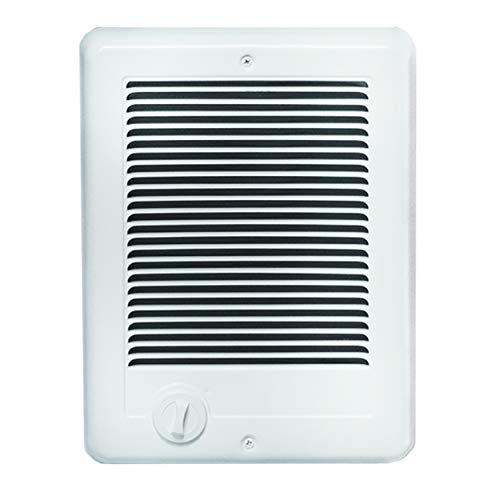
This Cadet Com‑Pak model is a complete wall heater unit with a built-in thermostat designed for 240/208 volt circuits. It produces 2000 watts (1500W at 208V) with a fast heating coil element suitable for spaces up to about 200 sq. ft., depending on insulation and climate.
Key features listed include a fast heating coil, quiet fan for even distribution, and safety cutoff if temperatures exceed normal operation. The unit supports ceiling installation on lower watt models and is intended to operate best under 10,000 feet elevation.
Installation notes: the unit is a recessed/receptacle style designed for wall mounting. The integrated thermostat simplifies temperature control without separate thermostatic wiring. This makes it suited for residential rooms where a compact, wall-mounted 240V heater is needed.
Comfort Zone Hard-Wired Ceiling Heater CZ220

Call 888-896-7031 for Free Local HVAC Quotes – Compare and Save Today!
The Comfort Zone CZ220 is a hard-wired, ceiling-mounted, fan-forced heater rated at 5000 watts on 240V. Its overhead installation preserves floor space and is intended for garages, workshops, storage rooms, or lightweight commercial spaces.
Features highlighted include heavy-gauge steel construction for durability in fluctuating temperatures, louvers and adjustable mounting angle for precise heat distribution, and a thermal cut-out for overheat protection. The design emphasizes ruggedness and targeted airflow.
Installation considerations: this model requires hard-wiring to a 240V circuit and mount support in the ceiling. It’s best matched to larger, open spaces where a powerful overhead heater can circulate warmth effectively without obstruction.
Broan‑NuTone 198 High Capacity Wall Heater
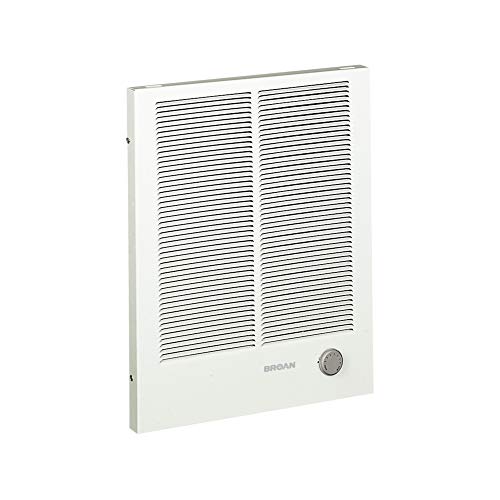
The Broan‑NuTone Model 198 is a high-capacity wall heater with a painted grille and downflow louvers. It operates at 4000W on 240VAC but can convert to 2000W at 120V, providing flexibility for different home electrical setups.
Its one-piece, baked enamel 18-gauge steel grille is intended to direct heat gently toward the floor for consistent room warming. The front-mounted adjustable thermostat provides straightforward control of output.
Call 888-896-7031 for Free Local HVAC Quotes – Compare and Save Today!
Best use cases include larger rooms or spaces where a heavy-duty wall heater with dual-voltage capability is useful. The ability to convert output voltage makes it adaptable for homes with different wiring or for situations where 120V operation is preferred.
Dr Infrared DR-988A 208/240V Garage Heater

The Dr Infrared DR-988A is a high-output shop/garage heater that requires a dedicated 240V circuit. It lists 5600 watts at 240V (4800W also noted for 208V) and comes with a NEMA 6-30P cord requiring a matching NEMA 6-30R receptacle or hard-wired connection.
This heater is intended for spaces where a large electrical draw is acceptable and where a plug-in or dedicated outlet is available. The product emphasizes high wattage and the need for proper electrical configuration to match the listed NEMA plug/receptacle.
Safety and circuit planning are critical: the unit will require a 30 amp 240V outlet or equivalent hard-wiring. This model suits garages or commercial bays where high power and portable placement are desired.
Stiebel Eltron CK Trend Wall Heater
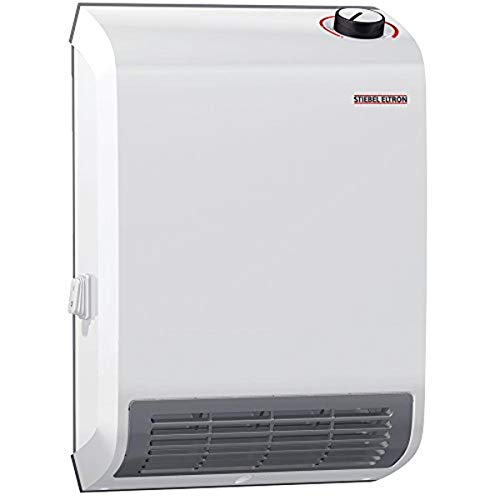
The Stiebel Eltron 236305 CK Trend is a 2000W, 240V wall-mounted fan heater with a sleek surface-mount design. It advertises quiet operation (around 49 dB(a)) and a built-in thermostat for direct temperature control.
Key features include a downdraft design to distribute heat evenly and a European styling that suits interior rooms where noise and appearance matter. This unit is intended for indoor living spaces such as bedrooms, offices, or small living rooms.
Installation requires a 240V supply and wall mounting; it is marketed for users who need a more discreet, quieter heating solution compared to bulkier shop heaters.
Buying Guide: Choosing A 240 Volt Heater
This guide covers the most important considerations to match a 240V heater to your space and electrical setup. Use these sections to compare models across installation type, power needs, safety, and long-term operation costs.
1. Power And Room Size
Wattage determines how quickly and effectively a heater warms a space. As a general rule:
- 1500–2000 W — Suitable for small to medium rooms (up to ~200 sq. ft.) with decent insulation.
- 3000–5600 W — Intended for larger garages, workshops, or poorly insulated spaces. Requires heavier circuits.
Estimate required wattage by multiplying room area by desired watts per square foot (often 10–20 W per sq. ft depending on insulation and climate).
2. Installation Type: Wall vs Ceiling vs Plug-In
- Wall Heaters — Good for living areas and rooms where downflow distribution is preferred. Often recessed or surface mount.
- Ceiling Heaters — Save floor space and serve large open areas; ideal for garages and warehouses.
- Plug-In/Portable — Offer flexibility but require matching outlet type (e.g., NEMA 6-30R for many 30A 240V devices).
Hard-wired units are permanent; plug-in models need a dedicated outlet with correct amperage and plug type.
3. Electrical Requirements And Outlet Types
Confirm your electrical panel and branch circuit capacity before choosing a high-wattage unit. Common requirements:
- 2000 W at 240V typically draws ~8.3 amps — may work on smaller dedicated circuits.
- 4800–5600 W at 240V draws 20–23.3 amps — typically requires a 30 amp protected circuit or appropriately sized breaker.
- Plug type matters; many high-power heaters use NEMA 6-30 connectors or require hard-wiring.
Consult a licensed electrician if you are unsure about wiring or breaker capacity.
4. Control And Thermostat Options
Consider whether you need a built-in thermostat, remote control, or compatibility with external thermostats. Integrated thermostats simplify setup, while remote or digital controls provide finer temperature management and programmable schedules.
5. Safety Features
Look for overheat protection, thermal cut-off switches, tip-over switches (for portable models), and durable construction. For ceiling and garage heaters, louvers and directional mounting can reduce direct contact risk and enhance even heating.
6. Noise And Aesthetics
Fan-forced heaters offer fast heat distribution but generate noise. If quiet operation is important, consider models that advertise lower decibel levels or use convective/downdraft designs.
7. Durability And Environment
For garages or semi-outdoor areas, choose steel-bodied, weather-resistant models. For indoor living spaces, finish quality and grille design may be more important.
8. Energy Efficiency And Operating Cost
Electric resistance heaters convert nearly all input electricity to heat, so higher wattage yields faster heating but greater instantaneous energy use. Consider insulation improvements and targeted heating strategies to reduce run time and operating costs.
9. Voltage Flexibility And Conversion
Some models (like the Broan unit) can operate on multiple voltages or be configured for different wattages. Voltage flexibility can be useful if you anticipate changing wiring or moving the unit.
10. Matching Heater To Use Case
- Bedrooms/Offices: quiet, 1500–2000W wall units with built-in thermostat (e.g., Stiebel Eltron).
- Garages/Workshops: higher wattage ceiling or plug-in units requiring 240V circuits (e.g., Comfort Zone, Dr Infrared).
- Large Rooms: high-capacity wall heaters with louvers and adjustable thermostats (e.g., Broan‑NuTone).
Comparison Perspectives
When comparing products, weigh:
- Installation Complexity: Does the model require hard‑wiring, a special outlet, or simple plug-in?
- Power Delivery: Is the wattage appropriate for room size and insulation quality?
- Durability: Is the housing suited to garage/industrial environments or residential interiors?
- Controls & Safety: Are thermostats, thermal cutoffs, and protective grilles included?
Using the guide above will help you select the right 240 volt heater based on electrical availability, space requirements, and safety priorities. For high-draw units, plan electrical upgrades and professional installation to ensure safe and reliable operation.
Tips for Getting the Best HVAC Prices
- Prioritize Quality Over Cost
The most critical factor in any HVAC project is the quality of the installation. Don’t compromise on contractor expertise just to save money. - Check for Rebates
Always research current rebates and incentives — they can significantly reduce your overall cost. - Compare Multiple Quotes
Request at least three estimates before making your choice. You can click here to get three free quotes from local professionals. These quotes include available rebates and tax credits and automatically exclude unqualified contractors. - Negotiate Smartly
Once you've chosen a contractor, use the proven strategies from our guide — How Homeowners Can Negotiate with HVAC Dealers — to get the best possible final price.